Mon Nov 2 · 2:15 staging · 3:00 service · 4:00–8:00 reception · ETHelp & Contact

Celebrating Elizabeth “Betty” Jean (Newman) Emison

DC & Arlington nowChecking weather…

Checking the latest National Weather Service observation.

Loading National Weather Service dataFull forecast
Mon, Nov 2Arlington · Eastern Time
2:15 PM · Arlington National CemeteryBe in ANC’s vehicle staging area, ready for the funeral procession.
3:00 PM / 4–8 PMBurial / reception
Bring IDOriginal REAL ID or accepted alternative for adults entering by vehicle
Burial details
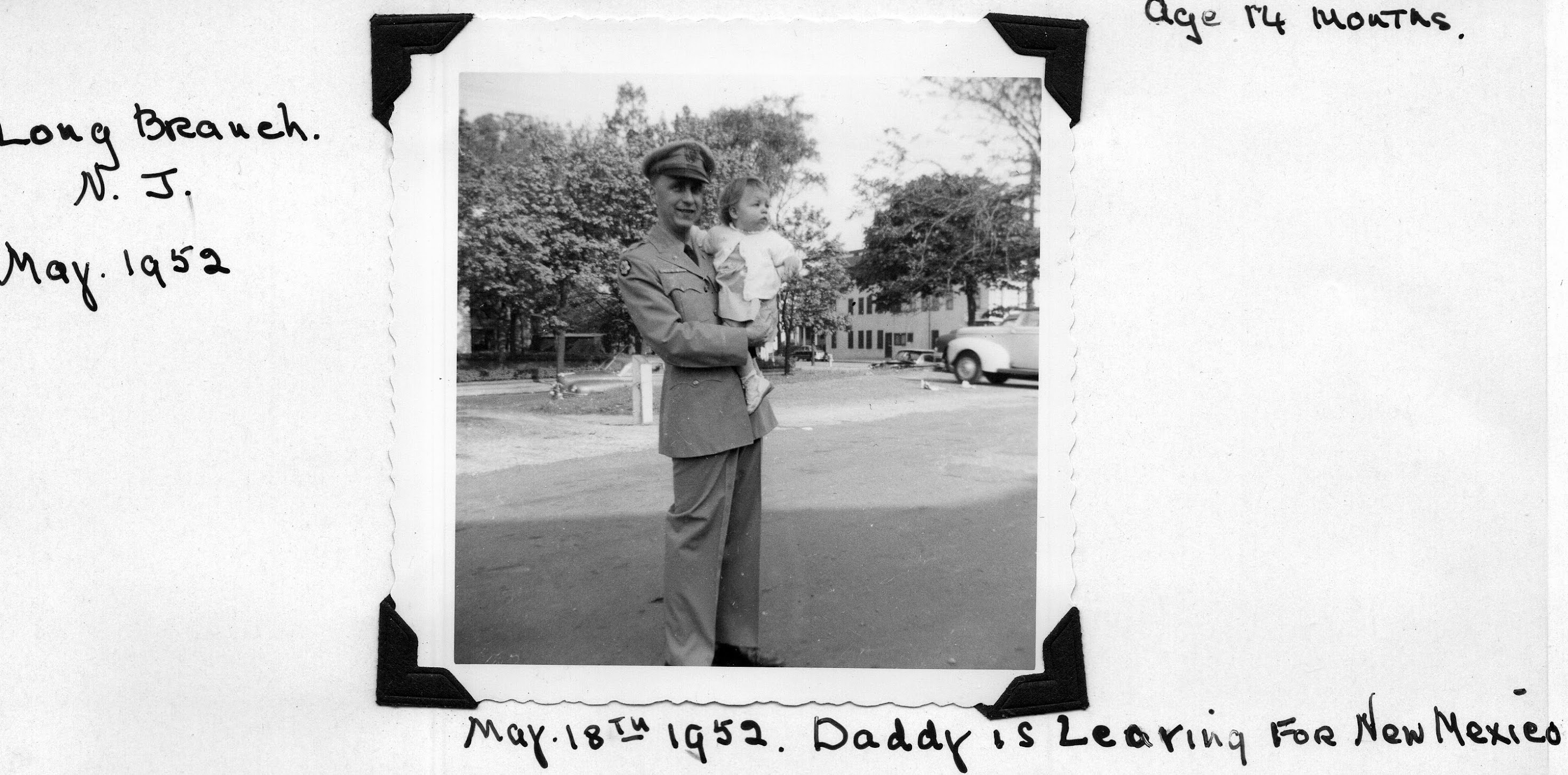
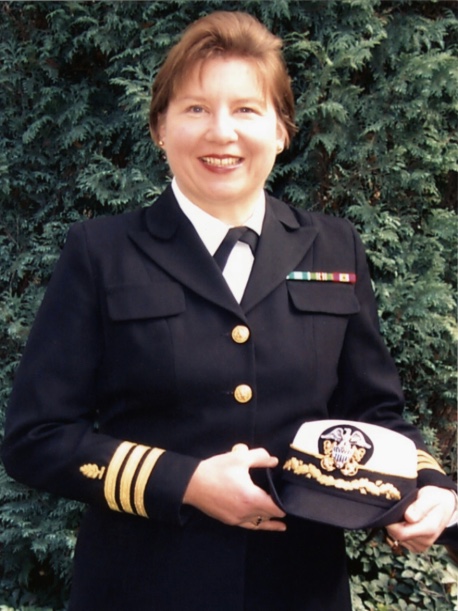
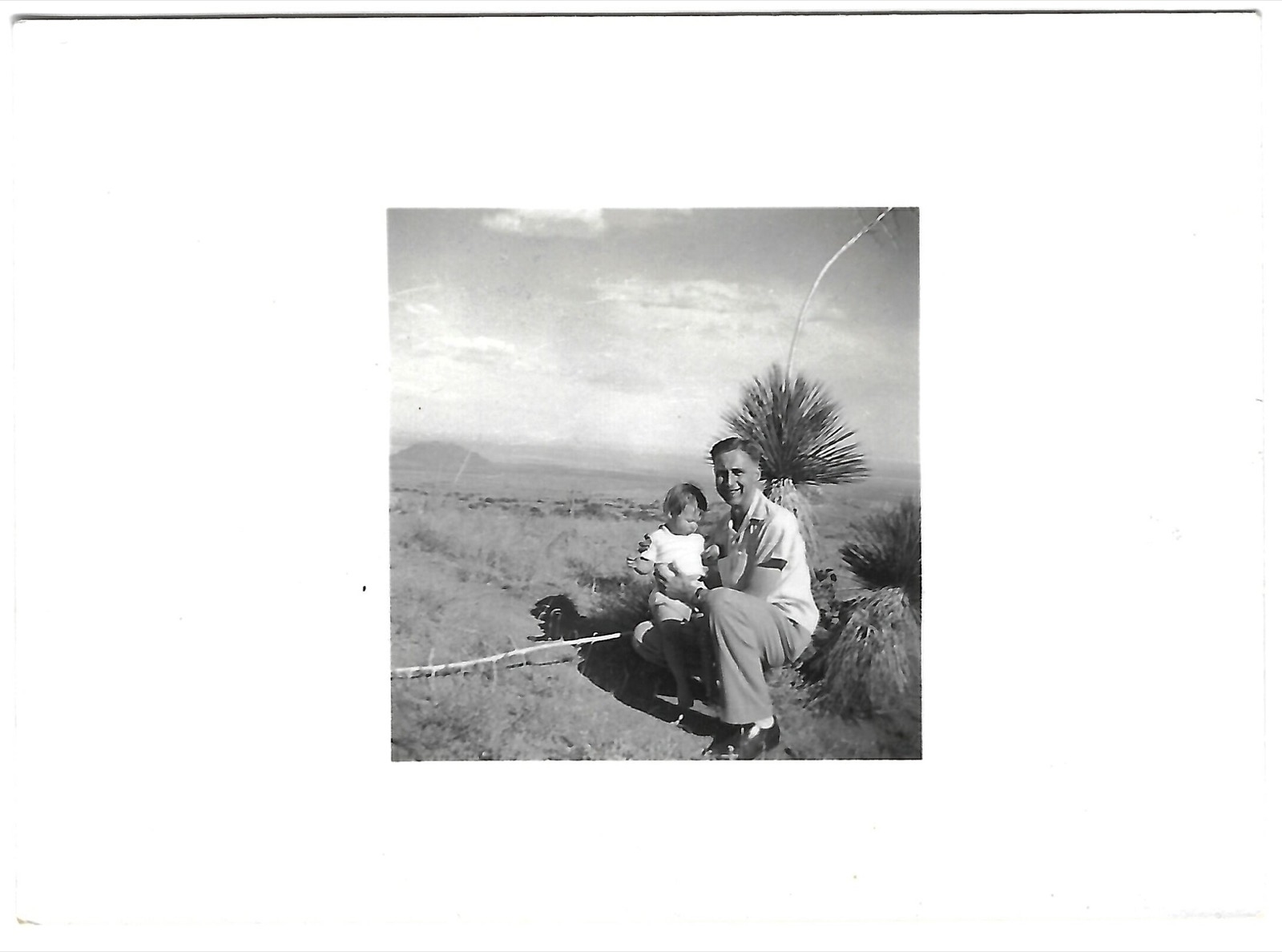
Betty, age 14 months, held by her father Jack at Long Branch, New Jersey, in May 1952Betty in her U.S. Navy uniformA life in chaptersBetty’s Fascinating Life!Baby Betty, childhood memories, family, service, and the stories beyond.Explore Betty’s Story
HomePlan Your Visit

November 1–3, 2026 · Eastern Time

Plan Your Visit

Start with the day of burial, then choose the practical details you need.

Monday: be in vehicle staging by 2:15 PM

The burial begins at 3:00 PM. Funeral-party entry is no earlier than 2:00 PM. Bring an original REAL ID-compliant license or an accepted alternative if entering in a vehicle. Parking plans remain pending.

Read arrival and ID details

Practical guides

HomeSchedule

02 / Monday, November 2, 2026

The day we gather

All times are Eastern. Please allow additional time for travel and cemetery screening.

2:00 PM — Earliest arrival time for our funeral at Arlington National Cemetery.

2:15 PM: Be in the vehicle staging area with your ride, ready to join the procession.

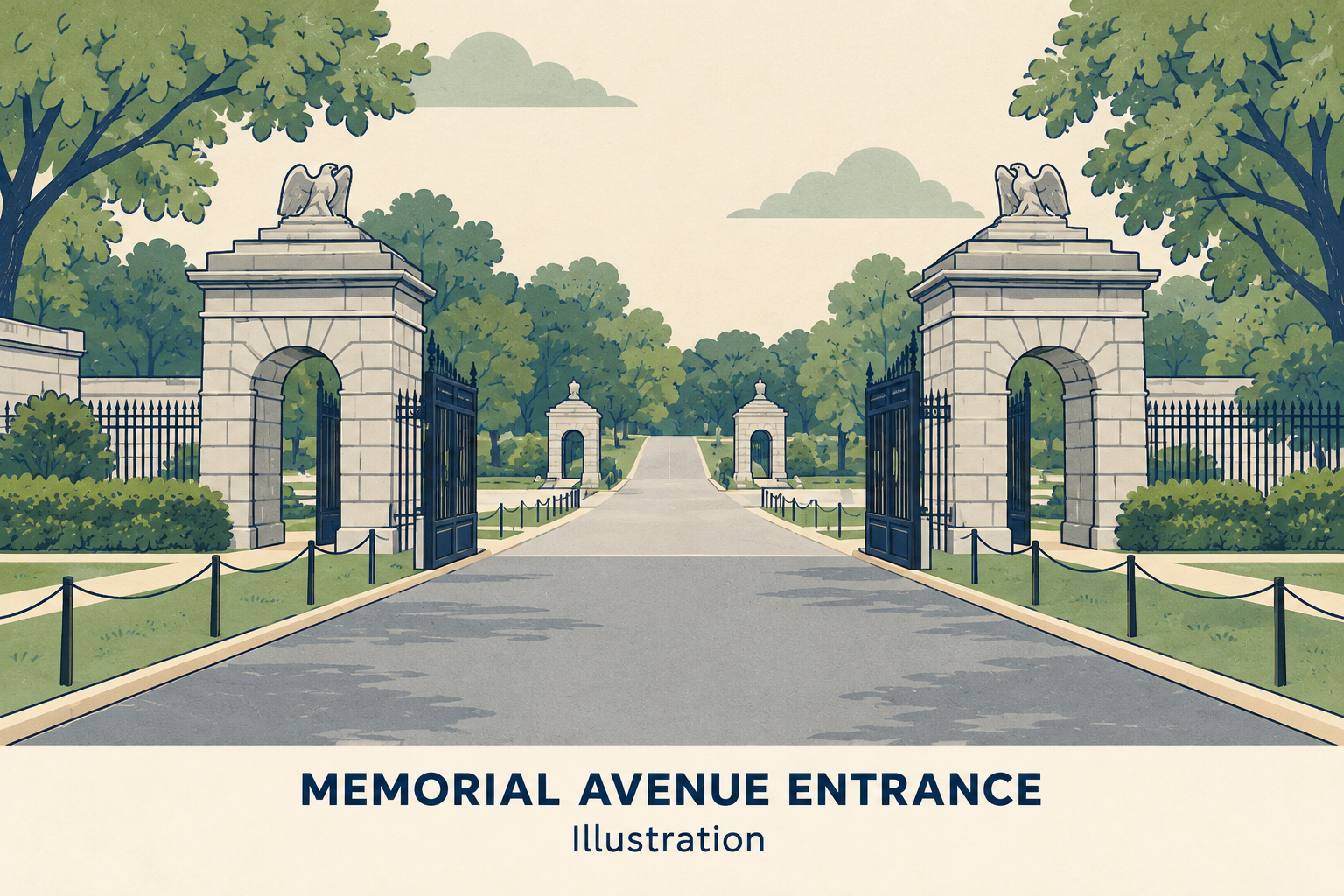
Funeral vehicles enter via Memorial Avenue. For GPS, use 1 Memorial Avenue, Arlington, VA 22211, then follow the gate guards to the Emison service queuing lane. This 2:00 PM time is for our funeral arrival, not the cemetery’s general opening hours.

ANC driving directions (opens in a new tab) · ANC funeral arrival guidance (opens in a new tab)

Illustration of the Memorial Avenue entrance gates and approach road
Our generated gate illustration. Follow posted signs and ANC staff for the actual route.
2:15 PM

Vehicle staging deadline

Ready for the funeral procession

Everyone must be in the vehicle staging area at Arlington National Cemetery, ready to join the funeral procession. At the gate, say you are attending Elizabeth Jean Emison’s service. Look for the Emison service lane and follow signs and guards’ directions to the designated vehicle queuing area near the Administration Building. Be in that starting area with your ride by 2:15 PM, rather than arriving at the entrance gate then. Close family will meet in a private family room inside the Administration Building. Other guests should wait in their vehicles or remain nearby in the designated staging area, following cemetery staff’s directions. Please stay close enough to return to your car promptly.

ANC order of events (opens in a new tab)
3:00 PM

Burial service

Honoring Betty at Arlington

The outdoor service begins at 3:00 PM. A cemetery representative directs the procession's departure, typically 10–15 minutes beforehand. Follow the representative and staff's instructions. Near the burial section, staff will direct you where to park and when to leave your car. Guests then follow staff on foot to Betty's in-ground gravesite.

ANC funeral guidance (opens in a new tab)

Closer to the day, check Arlington's Daily Funeral Schedule (opens in a new tab) and look for Elizabeth Emison's November 2 listing when that date is available. You can also search the funeral schedule by name (opens in a new tab) using the last name Emison. The family's confirmed 3:00 PM service and 2:15 PM staging instruction are the planning details to use now.

Before you leave: the full checklist

Before you leave: a short checklist

  • ID: Every adult entering in a vehicle needs an original REAL ID-compliant license or accepted alternative (opens in a new tab), such as a valid passport or military ID. Have it ready at the gate.
  • Ride: Every funeral guest needs a vehicle seat for the procession. If you need a ride, arrange a match with Eileen before the service day.
  • Timing: On Monday, November 2, be in the designated funeral vehicle staging area with your ride by 2:15 PM Eastern—not merely arriving at the gate then. Funeral-party entry begins no earlier than 2:00 PM; the service begins at 3:00 PM.
  • Parking: Family vehicle approval and reception parking remain pending; do not assume a pass or drop-off point. The visitor garage closes at 6:00 PM.
  • Dress: Betty would want this to be a celebration, so please choose something other than black. Navy, other colors, and tasteful patterns are welcome. Dresses, skirts, pantsuits, dress trousers, and suits are appropriate. Keep shoulders covered during the service and wear stable shoes for grass.
Official Arlington visitor map

Arlington National Cemetery map

Use Arlington’s visitor map to get your bearings. It does not show Betty’s gravesite or our procession route; follow cemetery staff on the day.

Official ANC map pageANC Explorer map
HomeArrival & IDs

Monday · before 3:00 PM

Arrival & IDs

Be in the designated funeral vehicle staging area with your ride by 2:15 PM Eastern. Entry begins no earlier than 2:00 PM.

Use 1 Memorial Avenue for GPS, then follow the guards to the Emison service lane. Every adult entering in a vehicle should bring an original, physical REAL ID-compliant license or an ANC-accepted alternative.

Security & identification

Every adult driver and passenger entering in a vehicle should bring a physical REAL ID-compliant license or another accepted ID, such as a valid passport or military retiree/dependent ID. Pedestrian, Metro, rideshare, and visitor-garage entry uses standard screening without the vehicle REAL ID rule. That screening route does not provide transportation for the funeral procession. Rules may change.

Read ANC’s accepted ID list (opens in a new tab)
Arrival and vehicle staging details
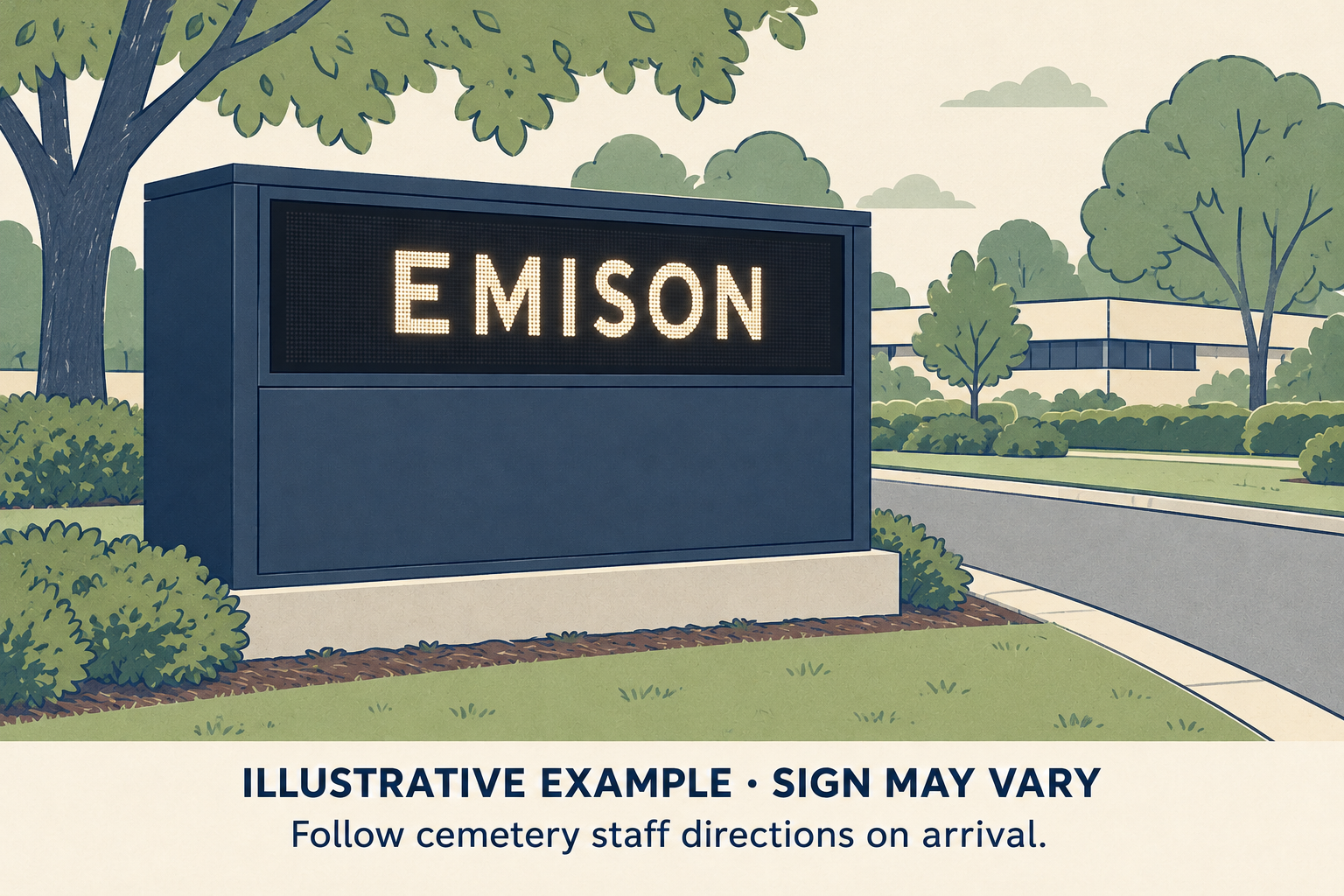
Flat illustration of a dark roadside electronic sign reading EMISON. A banner on the illustration says this is an illustrative example and the sign may vary.
Look for the Emison service lane and follow cemetery staff directions. This illustration is an example, not a photograph of Betty's assigned sign or lane. For visual orientation, see the electrical contractor's photos of the queuing area (opens in a new tab). Follow ANC for current arrival instructions.
Flat illustration of the Memorial Avenue entrance gates, trees, and approach road; this is an artistic view, not a current traffic diagram.
Memorial Avenue entrance · family-approved illustration. Follow posted signs and ANC staff for the actual route.
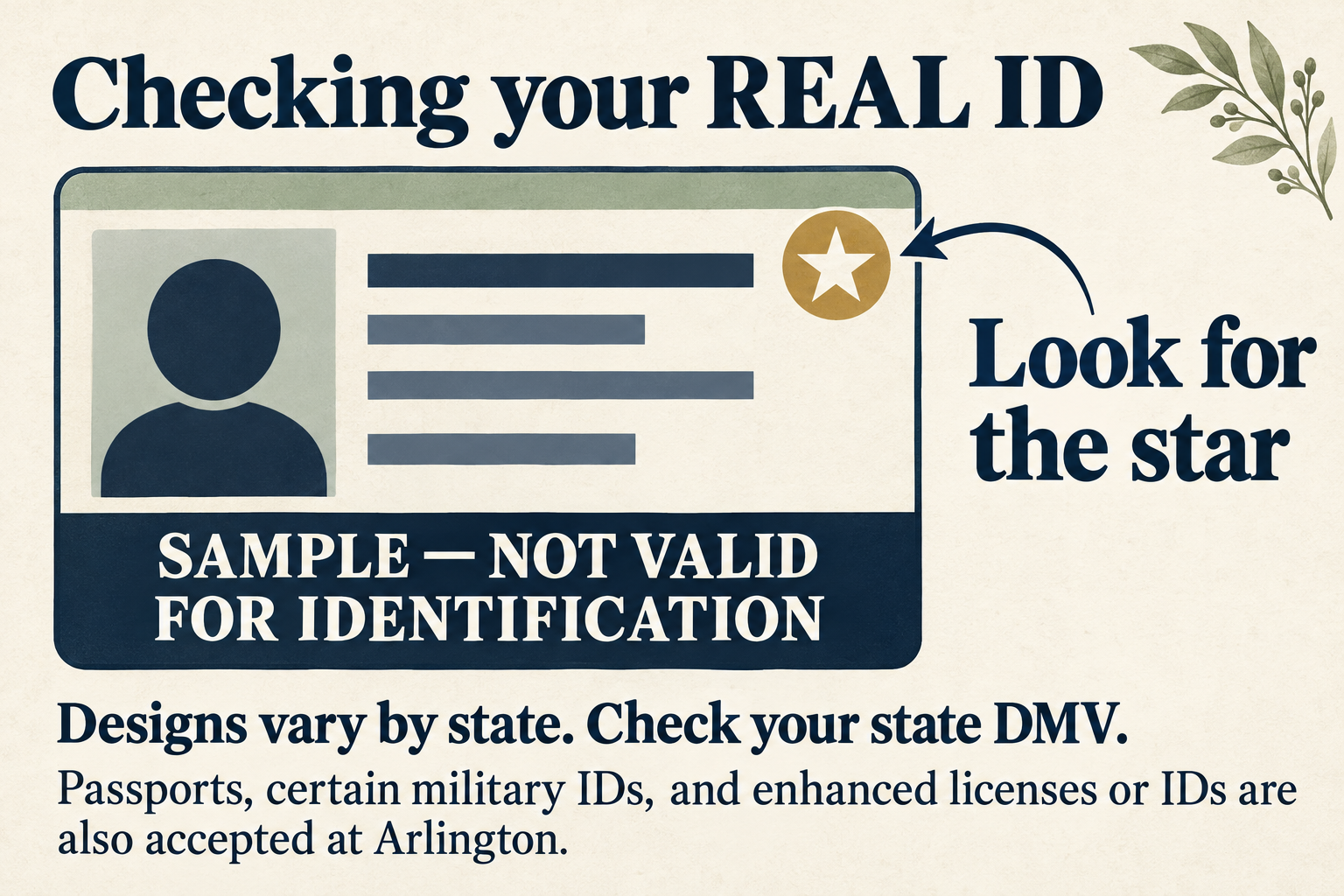
See a sample REAL ID and accepted alternatives
Generic SAMPLE identification card with a star cue and silhouette. It is not a valid ID; designs vary by state.
Illustrative sample only. Your state’s design may differ; this image is not valid identification.

Check the physical document you will carry

For adult drivers and passengers entering Arlington in a funeral vehicle, bring your original, physical REAL ID-compliant license or an ANC-accepted alternative. The star is a common cue, but state designs vary. Valid passports, certain military IDs, and enhanced licenses or IDs may qualify. A photo on your phone is not a substitute.

Pedestrians and guests entering through the Welcome Center use standard screening instead of the vehicle REAL ID rule. They still need a vehicle seat for the funeral procession.

Check ANC’s current accepted ID list (opens in a new tab)
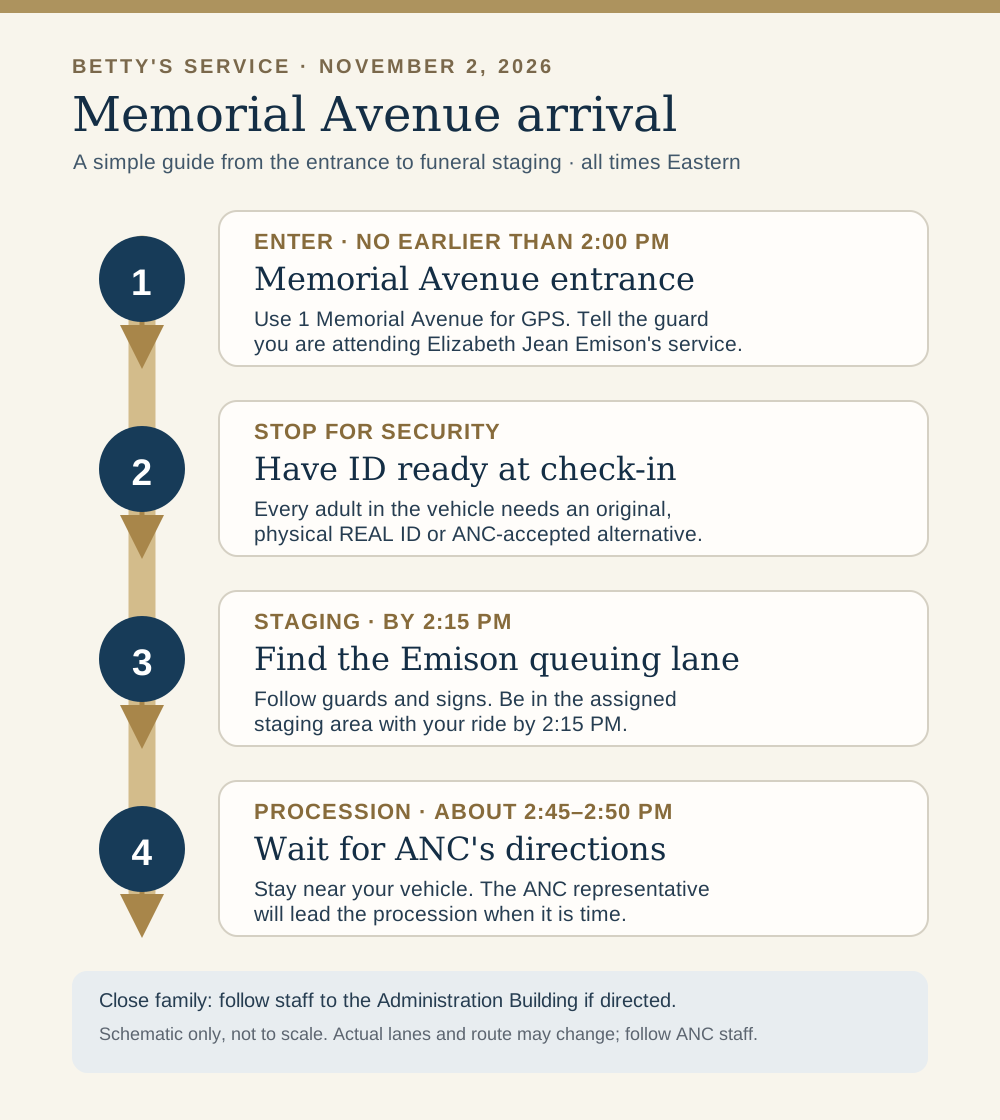
Arrival route and permanent restrooms maps

These family diagrams are for orientation only. Follow Arlington staff and signs on the day.

Schematic Memorial Avenue arrival steps to the funeral staging area
Arrival steps; not a road map.

Open the permanent restroom map (PDF)

HomeParking

Plan your ride

Parking & mobility

Vehicle access and reception parking still await cemetery approval. Do not assume a pass, specific drop-off, or free parking.

Parking and vehicle entry remain pending. The cemetery has not yet approved the family’s November arrangements. Do not assume a pass, group parking, drop-off location, or permission for a particular vehicle. The visitor garage closes promptly at 6:00 PM and cannot cover the full 4:00–8:00 PM reception. See official parking guidance (opens in a new tab).

Joining the funeral procession
01

Arlington National Cemetery

1 Memorial Avenue
Arlington, VA 22211

Funeral vehicles enter from Memorial Avenue. The Arlington Cemetery Metro station is on the Blue Line near the Welcome Center. If you use Metro, a taxi, rideshare, or the visitor garage, arrange a seat in a funeral vehicle before the procession; ANC does not provide that ride.

Getting to the service

The journey to Rosslyn is separate from the funeral procession. On Monday, November 2, be in the designated funeral vehicle staging area with your ride by 2:15 PM Eastern, not merely arriving at the entrance then. Funeral-party vehicles may enter no earlier than 2:00 PM; the service begins at 3:00 PM. If you reach Arlington by Metro, rail, airport transfer, taxi, or rideshare, you still need a seat in a funeral vehicle. Rideshare drop-off is at the Welcome Center, 1 Memorial Avenue; do not count on a ride directly to the Administration Building or gravesite. The exact meeting point for joining a funeral vehicle will follow ANC staff direction.

Need a ride for the procession?

Text Eileen before the day of the service, and she’ll match you with a wonderful guest who can “adopt” you for the ride. Everyone needs a seat in a vehicle for the procession, so we’ll get you paired up ahead of time.

Text Eileen · 414-379-2960
Accessibility and the walk to the gravesite

Accessibility

Accessible spaces are listed at the visitor garage, and Arlington Cemetery Metro station is wheelchair accessible. ANC’s interpretive tram and gravesite shuttle are visitor services, not funeral transportation. ANC does not rent wheelchairs. Please arrange an accessible seat for the funeral procession. At the burial section, guests follow staff on foot from roadside parking; the route may include grass and uneven ground. If walking or standing is difficult for you, let Eileen know in advance so we can discuss assistance with cemetery staff. The walking distance, accessible path, and any assisted transport have not been confirmed.

Read ANC accessibility guidance (opens in a new tab)
HomeHotel

A place to stay

Hilton Arlington Rosslyn The Key

1900 N Fort Myer Drive, Arlington, VA 22209.

02

Hilton Arlington Rosslyn The Key

1900 N Fort Myer Drive
Arlington, VA 22209

This is the family’s named hotel, about one block from Rosslyn Metro. It has no airport shuttle. The hotel listed covered self-parking at $45 per day, with in/out privileges and no valet, when checked October 12, 2026; confirm the current rate before arrival. Use the hotel’s own page for availability and public rates.

Planning your stay

We hope you can stay for the full 4:00–8:00 PM reception and make Monday night part of your travel plans. An optional gathering in the hotel hospitality suite will follow; see the celebration invitation for more.

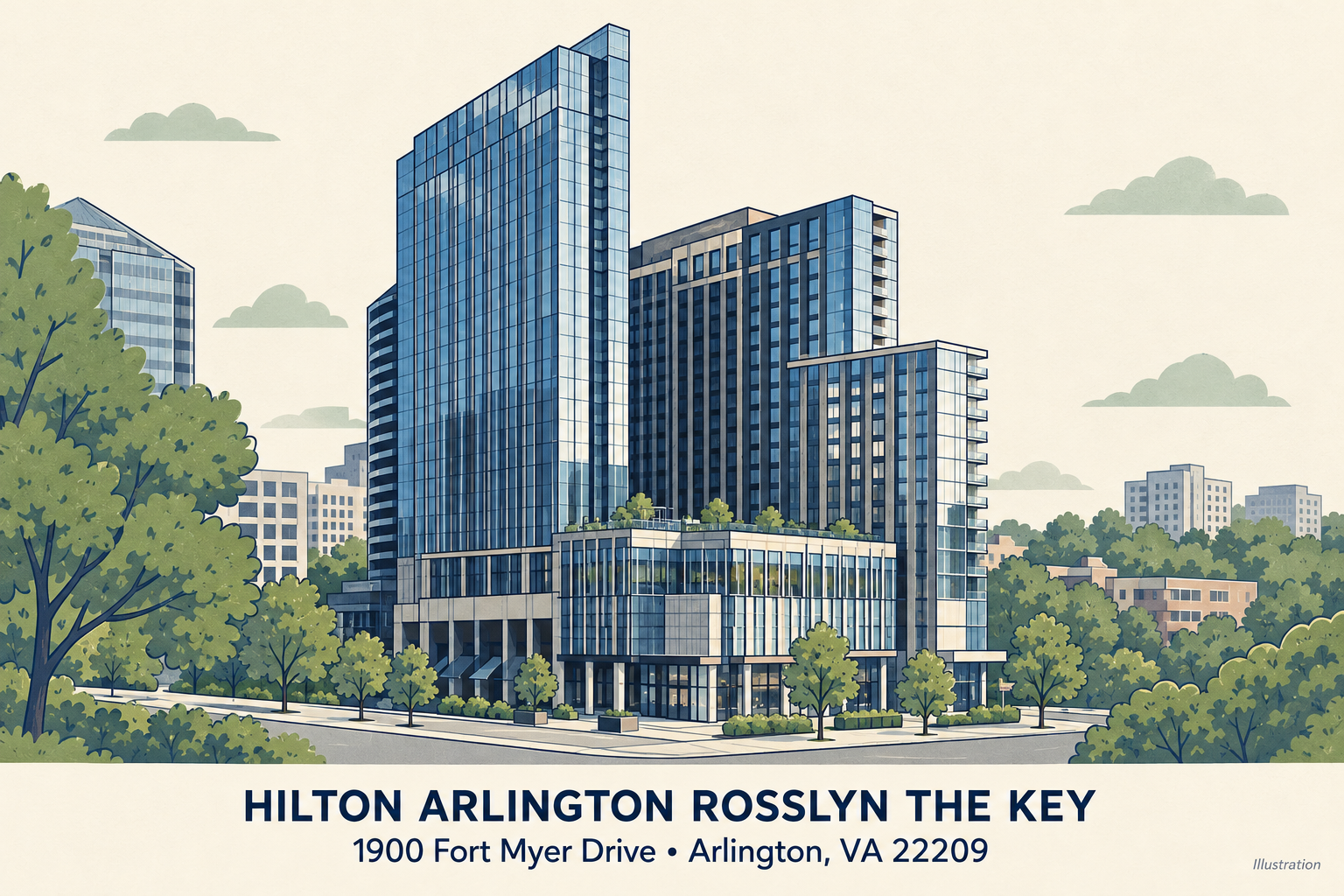
See a hotel illustration
Illustration of a modern hotel building in Rosslyn; not a verified architectural rendering
Hilton Arlington Rosslyn The Key · 1900 N Fort Myer Drive. Illustration, not a current exterior photograph. Use the hotel’s official location page (opens in a new tab) for directions.
HomeAirports & Metro

Travel to Rosslyn

Airports & Metro

Official rail and airport links, with dated travel estimates. Check live service and fares before leaving.

Reagan National (DCA) has a direct Blue Line train to Rosslyn. Dulles (IAD) connects by Silver Line. BWI uses a rail shuttle and MARC or Amtrak into Washington. All routes still require a separately arranged vehicle seat for the funeral procession.

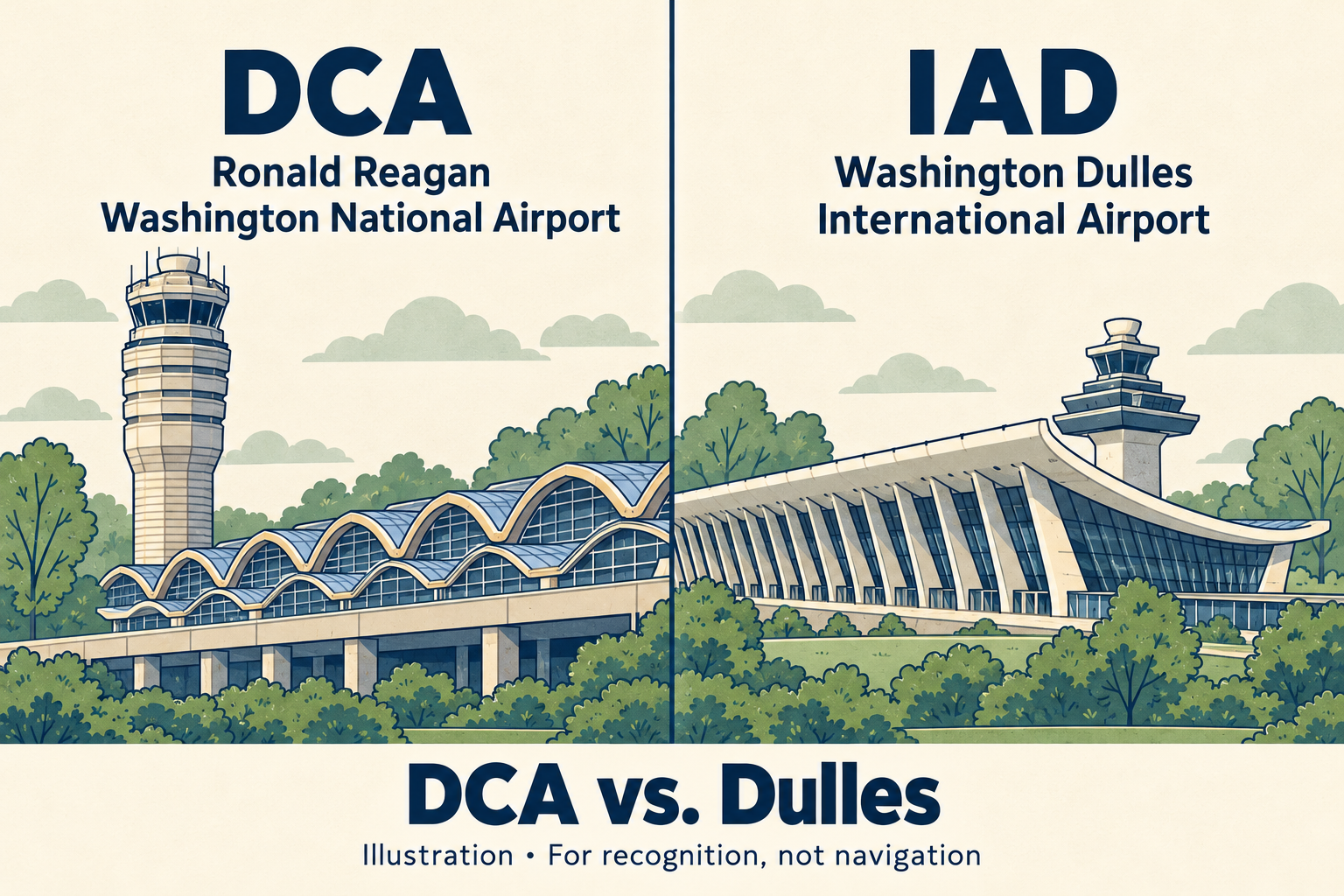
See DCA and Dulles airport illustrations
Side-by-side illustrative views labeled DCA and IAD; visual comparison only, not navigation
DCA and IAD · illustration for recognition, not a route or airport map. Check DCA Metro (opens in a new tab) and Dulles Silver Line (opens in a new tab).
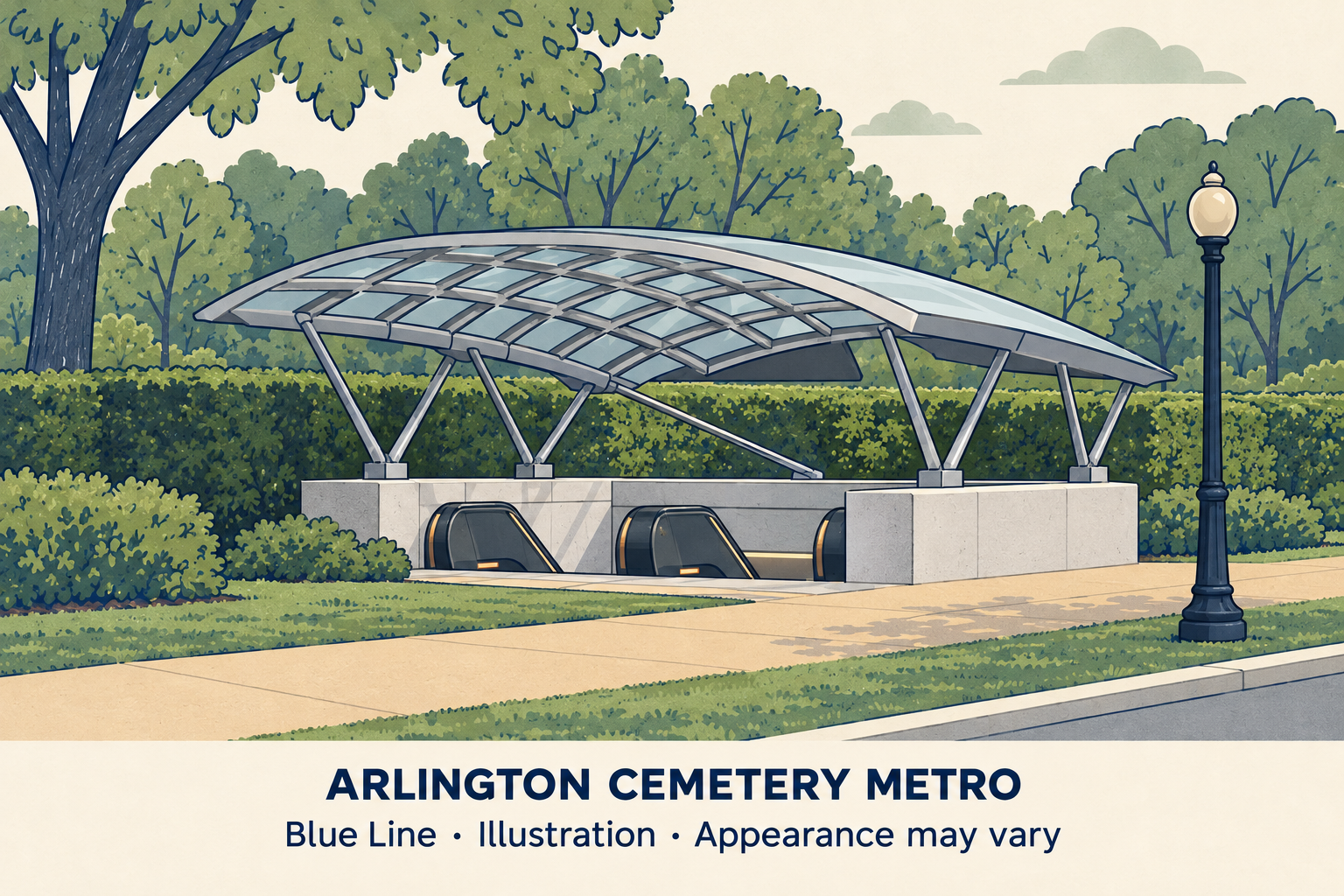
See the Arlington Cemetery Metro illustration
Artistic view of the Arlington Cemetery Metro entrance and canopy; appearance may vary
Arlington Cemetery Metro · Blue Line. Illustration; the station may look different. Official station information (opens in a new tab) · official vicinity map (opens in a new tab).
Compare airport, train, Metro, and driving routes

Getting here

These are planning routes to Rosslyn, where the named hotel is located. Metro fares are per person; rideshare examples are historical UberX averages per vehicle to the Rosslyn neighborhood, not quotes for your trip or exact hotel. Times, prices, service, and accessibility can change with traffic, demand, and transit schedules. Figures were checked October 12, 2026.

By plane

Dulles · IAD

Take an eastbound Silver Line train toward Downtown Largo or New Carrollton to Rosslyn. The airport estimates 50–55 minutes on Metro to Rosslyn, plus walking and waiting. The terminal-to-station connection is roughly 600 feet and has elevators; the station has no platform wheelchair service.

Road comparison: historical UberX average about 24 miles, 30 minutes, and $53 per vehicle to Rosslyn.

By plane

Baltimore/Washington · BWI

Take the free, accessible terminal shuttle to BWI Rail Station, then MARC Penn Line or Amtrak to Washington Union Station. MARC is $8 per person one way; Amtrak fares vary. Penn Line runs on weekends, but an interim weekday timetable applies October 12–November 13; check your travel date.

Road comparison: historical UberX average about 38 miles, 60 minutes, and $75 per vehicle to Rosslyn.

Metro fare guide: adult one-way system fare is $2.25–$6.75 on weekdays before 9:30 p.m. and $2.25–$2.50 on nights and weekends, per person. Your route’s fare may differ; check the WMATA fare page (opens in a new tab) and service alerts before travel. For mobility planning, check live elevator status (opens in a new tab) and Metro alerts (opens in a new tab).

HomeDress Code

Practical clothing

Dress Code

Family guidance for Betty’s outdoor service.

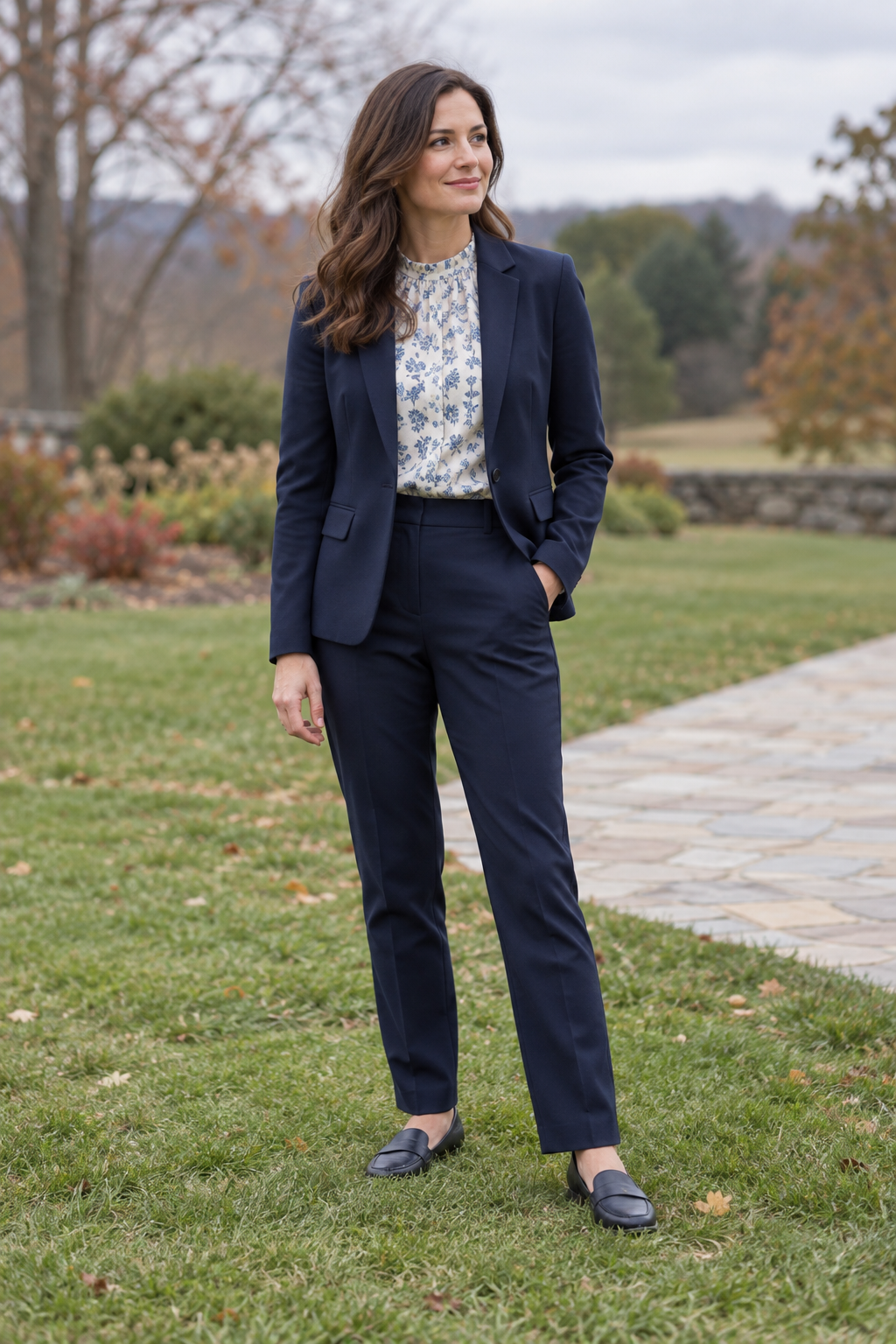
Please choose colors other than black. Navy, other colors, and tasteful patterns are welcome. Keep shoulders covered and wear sturdy shoes for grass and uneven ground. Bring a layer for November weather.

Woman in a navy blazer, blouse, dress trousers, and flat loafers on grass
Dressy trousers and flats
Antonio Melani Carter navy short-sleeve crepe sheath midi dress, shown on a model
Antonio Melani navy dress · Dillard’s (opens in a new tab)
Man in a navy jacket, gray dress trousers, and comfortable loafers
Jacket, trousers, and loafers

Dress image: Dillard’s. The other outfit photos are illustrative. These are examples, not Arlington dress rules; choose stable shoes for grass.

What to bring and ground conditions

Dresses, skirts, pantsuits, dress trousers, and suits are all appropriate. A cardigan, jacket, or wrap works over a sleeveless outfit. Loafers, supportive flats, or low boots with a broad heel are practical; thin heels and open-toe sandals are poor choices for the walk. Bring the identification required for your entry route and keep bags light for screening. This is the family’s request, not an Arlington National Cemetery dress rule.

Check current weather and forecast
See outfit ideas

Optional examples, not required attire. Listed prices were checked October 12, 2026, before tax and may change. Links go to the retailer; stock and sizes vary. Shoes should be stable for grass.

Women’s options

Other options: Quince silk skirt (opens in a new tab) ($69.90) or extended sizes (opens in a new tab) ($72).

Men’s options

An optional Target blue stretch jacket (opens in a new tab) was $89.99. Add a shirt and practical shoes to any option.

HomeReception

Monday · 4:00–8:00 PM ET

Reception at the Military Women’s Memorial

Vaught Center, Memorial Avenue, Arlington. Stay for dinner, music, and time together.

Memorial physical location: Memorial Avenue & Schley Drive, Arlington, VA 22203. This differs from the Memorial’s mailing address. Use it to locate the reception venue; for the burial, follow ANC staff to funeral staging. It is not a vehicle entry or parking instruction. Official Memorial location

Later together

At the reception

The following food and music details are part of the family’s planning. Final arrangements may change.

Stay and celebrate Betty with us

Join us for an evening worth staying for: a catered dinner, a wine and beer bar, and the String Poets string quartet playing familiar pop songs alongside music that holds special meaning for our family. Please plan to enjoy the full celebration, from 4:00 to 8:00 PM. There will be time to eat, listen, laugh, share stories about Betty, and really catch up. David is especially looking forward to having everyone together, and we hope you’ll settle in and stay awhile.

Make a night of it: stay Monday night, join us in the hotel hospitality suite afterward if you’d like, and head home Tuesday. The suite location and timing will be shared when confirmed.

Driving and parking details are forthcoming.

The family has proposed guest parking on Memorial Avenue, including a larger guest vehicle, but cemetery approval is still pending. Final vehicle access, parking, route from the burial, and departure instructions will follow. Do not plan to drop off at or around the Memorial or on Schley Drive. The ANC visitor garage closes at 6:00 PM and is not a place to park for the full reception.

Explore the planned menu and music
Planned menu · not final

Catering

Planned with Elegance To Simplicity Caterers (E2S), led by Andrew “Andy” P. Schneider, Master Gunnery Sergeant, U.S. Marine Corps (Ret.).

The menu and dietary information will be confirmed closer to the event.

Caterer’s official site (opens in a new tab)Meet Chef Schneider (opens in a new tab)
Music information

String Poets

The quartet will play familiar pop songs alongside music meaningful to the family. Specific selections and performance timing may change. Videos play only if you choose to open them.

String Poets official site (opens in a new tab)Listen on their site (opens in a new tab)Official YouTube channel (opens in a new tab)
Music and memories Songs and stories ↓

String Poets share recordings and information about their ensemble online. Explore their official site (opens in a new tab), listening page (opens in a new tab), and YouTube channel (opens in a new tab) whenever you choose; nothing plays automatically.

Family selections and requests

These songs have been requested. The final performance program may vary. Eileen will add fuller family memories about them after review.

  • “Eternal Father, Strong to Save” (the Navy Hymn)Requested to honor Betty’s Navy service.
  • “Rhymes and Reasons” · John DenverMeaningful to the family; more of the story to come.
  • “Barbara Allen” · Art Garfunkel version preferredEileen especially likes this version; more family notes to come.
  • “I’ll Never Find Another You” · The SeekersA song Betty and David loved together.
  • “Mary’s Boy Child” · Glee version preferredBetty especially liked the Glee version.
  • “Hallelujah”Version and family note to come.

More from the requested repertoire

These are among the family’s requested selections that also appear in String Poets’ published repertoire (opens in a new tab). They are ideas for listening, not an itemized final set list.

  • “Ashokan Farewell” · Jay Ungar
  • “Danny Boy” · traditional
  • “What a Wonderful World” · Louis Armstrong
  • “Annie’s Song” · John Denver
  • “Stand by Me” · Ben E. King
  • “You Raise Me Up” · Josh Groban
  • “Wind Beneath My Wings” · Bette Midler
  • “Come What May” · Moulin Rouge

No recordings or lyrics are hosted here. Specific music and timing will be confirmed separately.

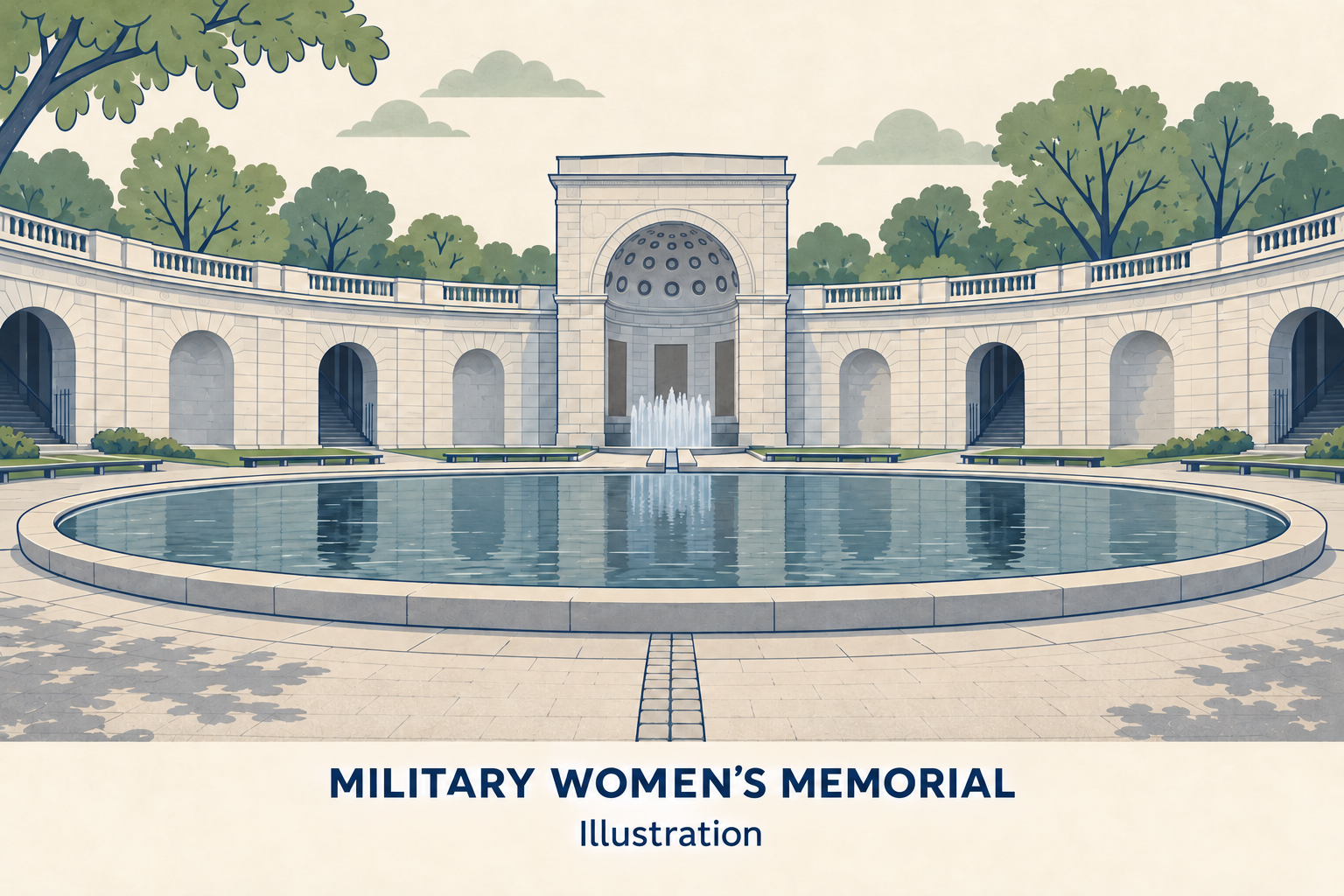
Flat illustration of the Military Women’s Memorial facade, central arch, and reflecting pool.
Military Women’s Memorial · family-approved illustration. The event is at its Vaught Center; this is not an access map.

The Meaning Behind the Design

Pavers, water, and stairways connect the Memorial’s architecture to women’s service stories.

Read more

Also incorporated into the design is the historic line that connects the Lincoln Memorial to Arlington House—symbolically linking the North and South after the Civil War and represented by a trail of pavers running from the Lincoln Memorial up the center of Memorial Bridge and Memorial Drive. The pavers are extended onto the Women’s Memorial Court of Valor. The runnel connecting the pool and fountain projects the line through the Great Niche and into the Memorial, where it is picked up by a band of polished black granite leading to the Register Room. On this historic line, the individual stories of women’s military service can be found.

Four stairwells leading to the upper terrace breach the original wall and symbolize women breaking through barriers in the military. Behind the original wall is an exhibit gallery chronicling the collective history of military women’s service from the American Revolution to the present. It also features the Vaught Center which serves as a multipurpose event space, a gift shop, and the Hall of Honor where a tribute is paid to servicewomen who were killed in action, died in the line of duty, held prisoner of war, or were recipients of our nation’s highest awards for service and bravery.

Source: Military Women’s Memorial · Our Legacy

HomeBetty’s Story & Photos

Four generations

Betty’s Family

From Jean and Jack to Eileen’s and David’s families. Fourth-generation details will be added after family review.

Betty’s parentsRegina “Jean” Newman & John “Jack” Newman
Betty and her husbandElizabeth “Betty” Emison & David L. Emison
Their childrenEileen · David
Fourth generation
Eileen’s familyFamily stories and photos to come.
David’s familyFamily stories and photos to come.
HomeBetty’s StoryChapter 1 of 6

01 / West Point and family beginnings

Born into a Military Family at West Point

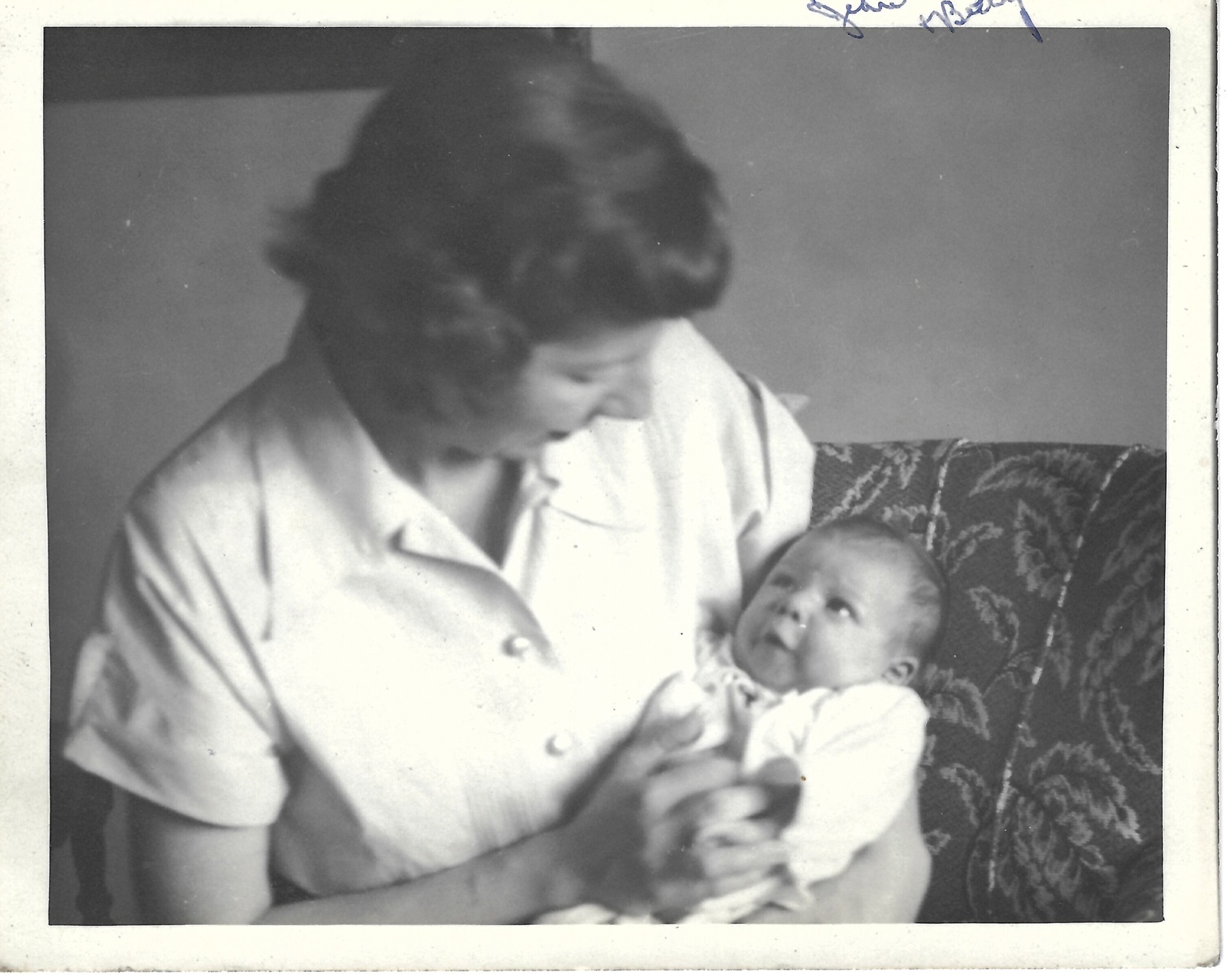
16 photographs + 1 card · Chapter 1View Chapter PhotosBaby Betty with Jean

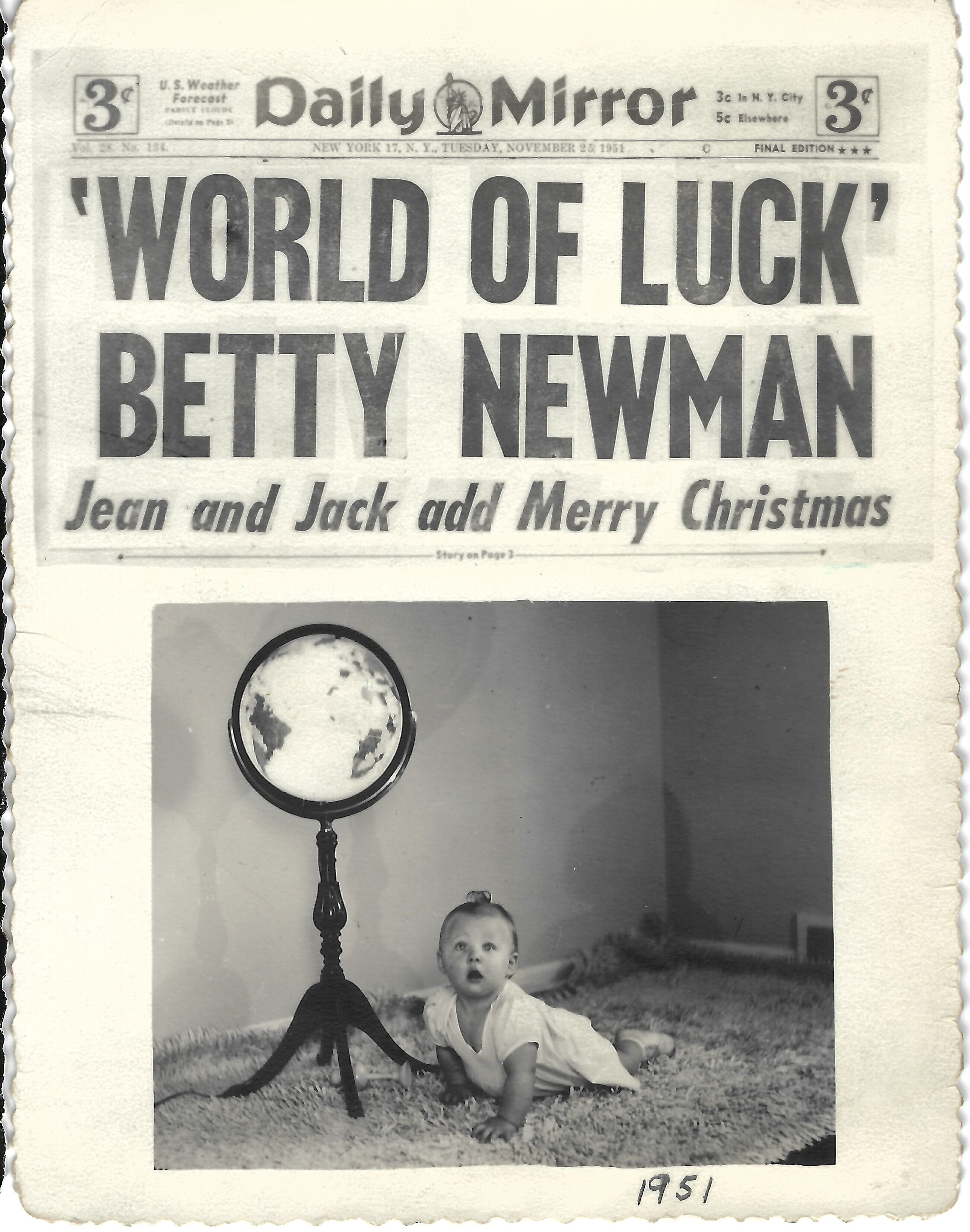
Betty was born on March 19, 1951, at West Point, New York. Her parents, Jean and Jack Newman, had married there on June 4, 1949. Jack was an Army officer; Jean had served in the Army Nurse Corps. Their daughter entered a family whose photographs and handmade cards left a lively paper trail.

Fourteen-month-old Betty held by her father Jack outdoors at Long Branch, New Jersey

Betty and Jack, May 1952

Betty, 14 months old, with her father Jack at Long Branch, New Jersey, in May 1952.

Enlarge the family photograph

A family at West Point

Photographs of Jean and Jack at West Point and of baby Betty are gathered in this chapter’s album. The family’s 1951 “World of Luck” Christmas card names Betty. Later cards follow their Army family into the childhood years.

The Newmans’ newspaper-style World of Luck Christmas card naming Betty
1951 · World of Luck · Enlarge

Browse all of Grandpa Jack’s cards

Sources

Sources: Family photograph and identification supplied by Eileen; dated Newman family cards; Jean’s Military Women’s Memorial Register account. Jean and Jack’s wedding date was provided by Eileen. Jean and Jack research notes

HomeBetty’s StoryChapter 2 of 6

02 / An Army childhood

An Army Brat Childhood

84 photographs + 7 cards · Chapter 2View Chapter PhotosYoung Betty in New Mexico

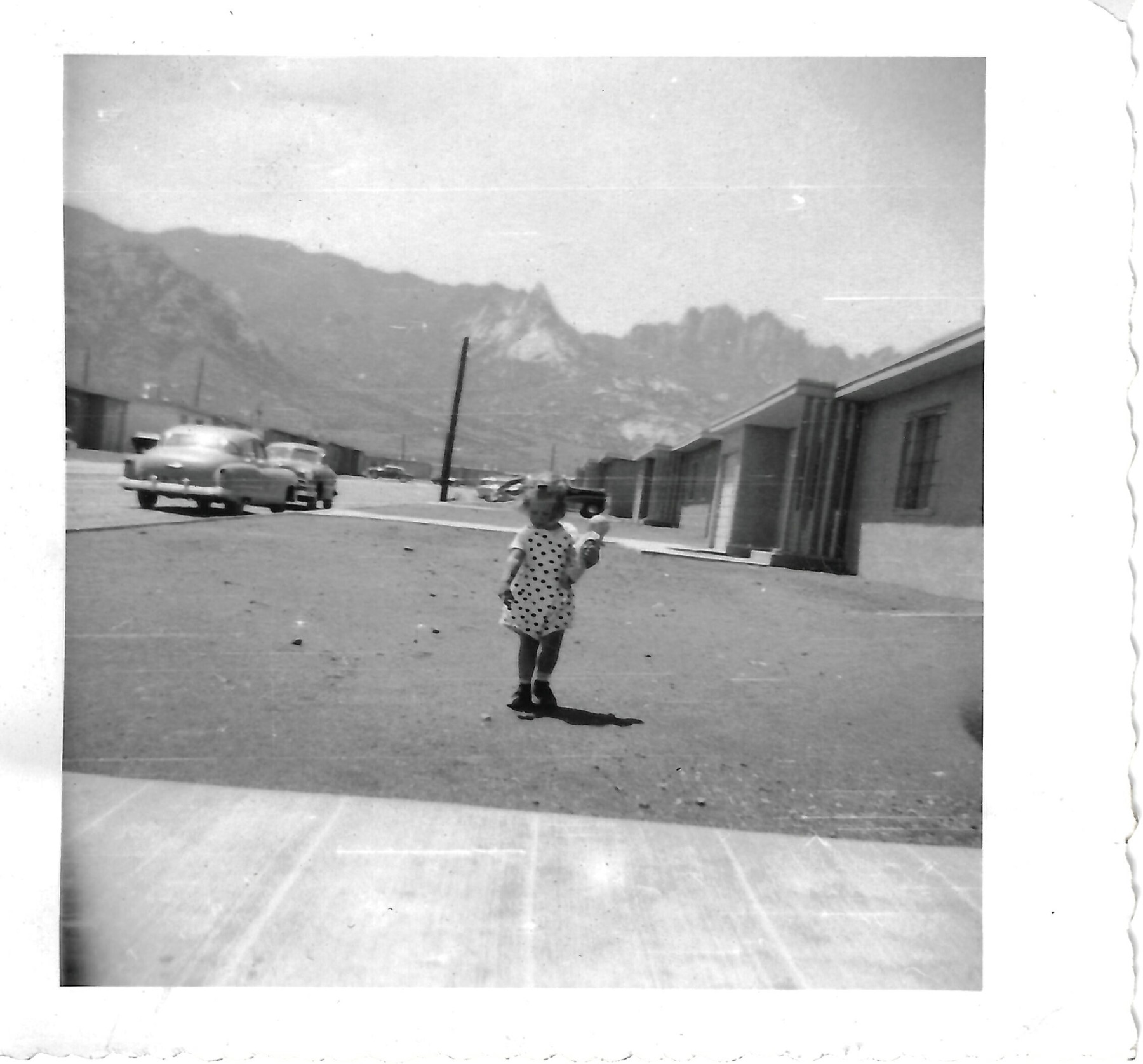
Army moves shaped Betty’s childhood. Family-labeled photographs place her as a small child in New Mexico and later as a Brownie in Huntsville. The Newmans spent about three years in England in the early 1960s, according to family accounts, then settled in Falls Church, Virginia.

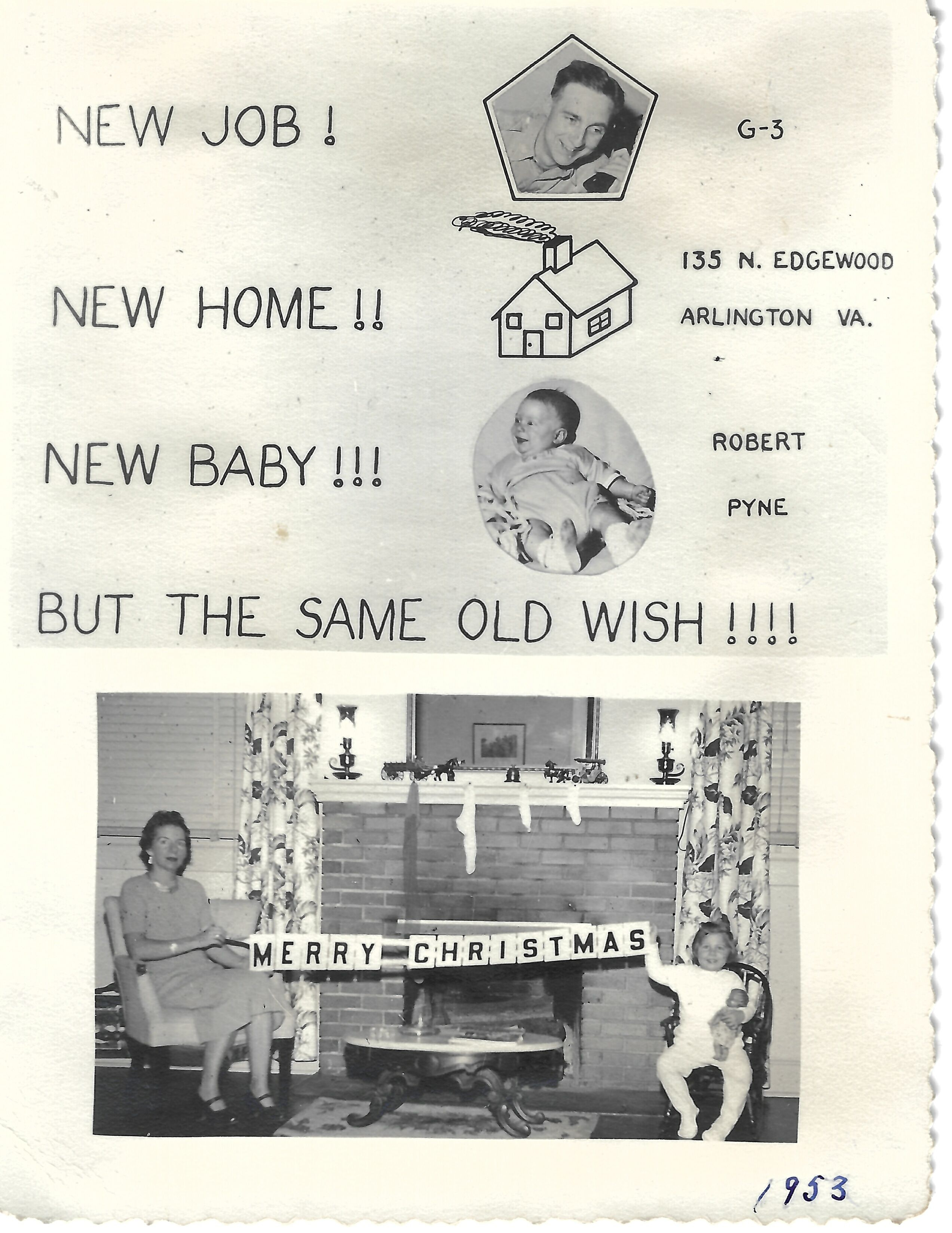
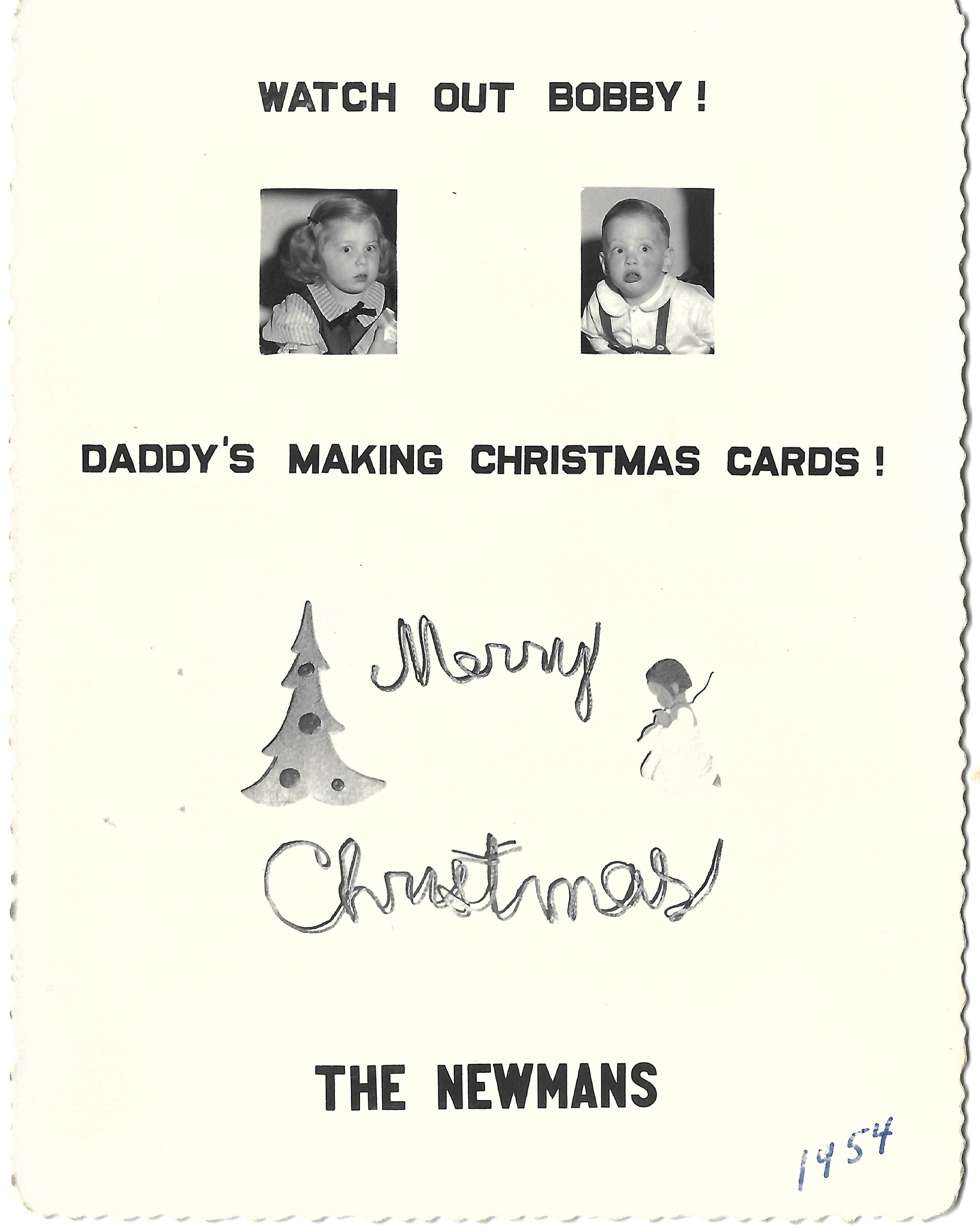
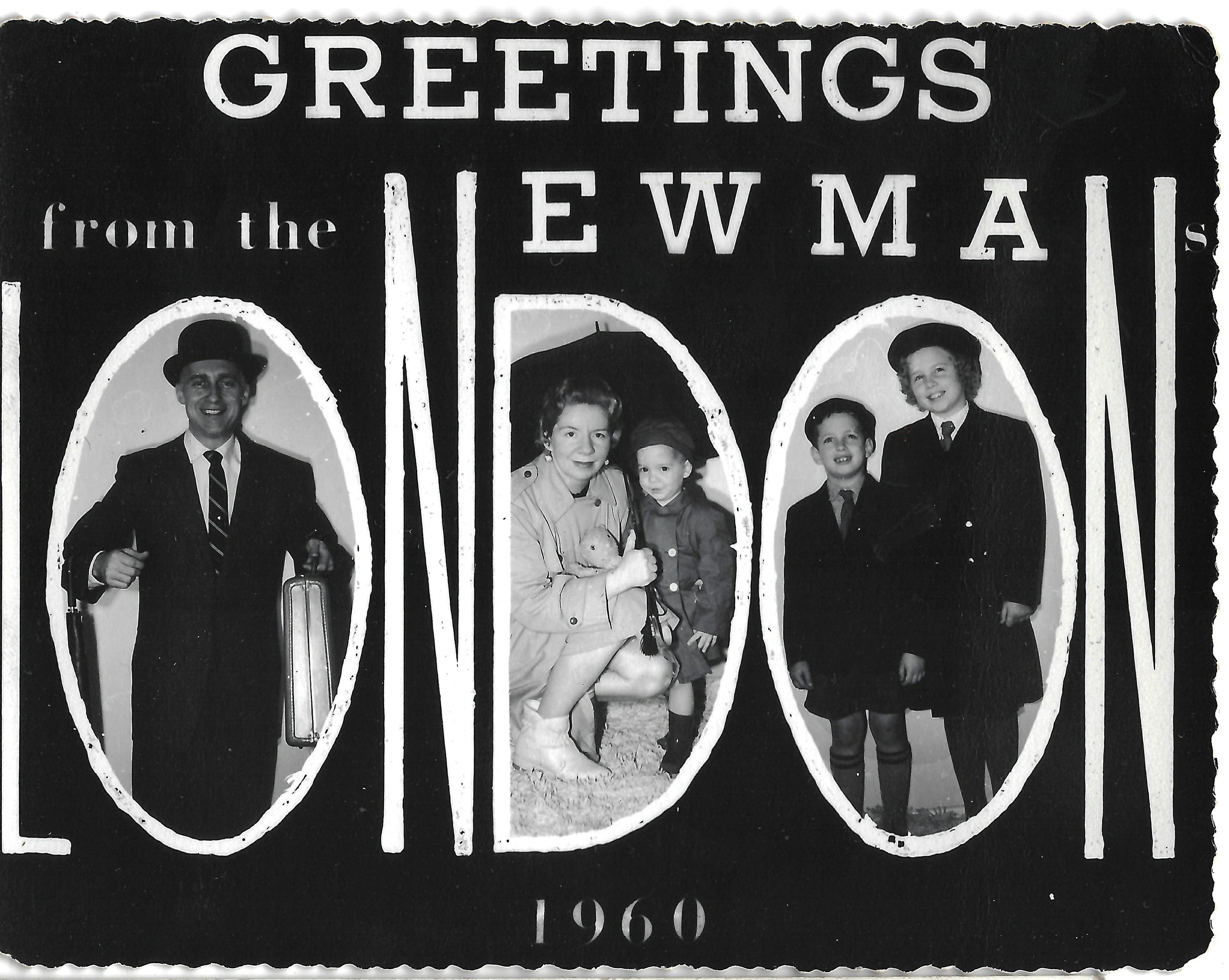
The family’s 1953 Christmas greeting mentions a new job, a new home, and a new baby. Jack’s 1954 card turns the making of Christmas cards into a family scene. A surviving 1960 greeting comes from London.

July 14, 1953 · El Paso, TexasBetty’s brother Bob was born.

August 10, 1958 · Huntsville, AlabamaBetty’s brother Bill was born.

The Newmans’ 1953 Christmas card about a new job, home, and baby
1953 · A year of changes. Newman family Christmas card. Enlarge
The Newmans’ 1954 Daddy’s Making Christmas Cards family greeting
1954 · Daddy’s making cards. Newman family Christmas card by Jack. Enlarge
Newman family Christmas card with greetings from London, dated 1960
1960 · Greetings from London. Newman family Christmas card. Enlarge

Browse all of Grandpa Jack’s cards

Sources

Sources: Eileen’s family account; labeled childhood photographs; family-held Newman Christmas cards. The 1960 greeting is dated from London.

HomeBetty’s StoryChapter 3 of 6

03 / Schools, college, and a commission

J.E.B. Stuart, Virginia Tech, and the University of Maryland

5 photographs + 1 card · Chapter 3View Chapter PhotosVirginia Tech commissioning, 1973

Betty attended J.E.B. Stuart High School in Falls Church, now Justice High School. At Virginia Tech she studied Human Nutrition and Foods and was selected for the Army Student Dietitian Program in 1972. Her education continued through a dietetic internship at Walter Reed and a master’s degree at the University of Maryland.

Before her commissioned service, Betty worked in a civilian Navy office role, as her family recalls. Civilian office work and later military service are distinct parts of her story. About J.E.B. Stuart’s historical name

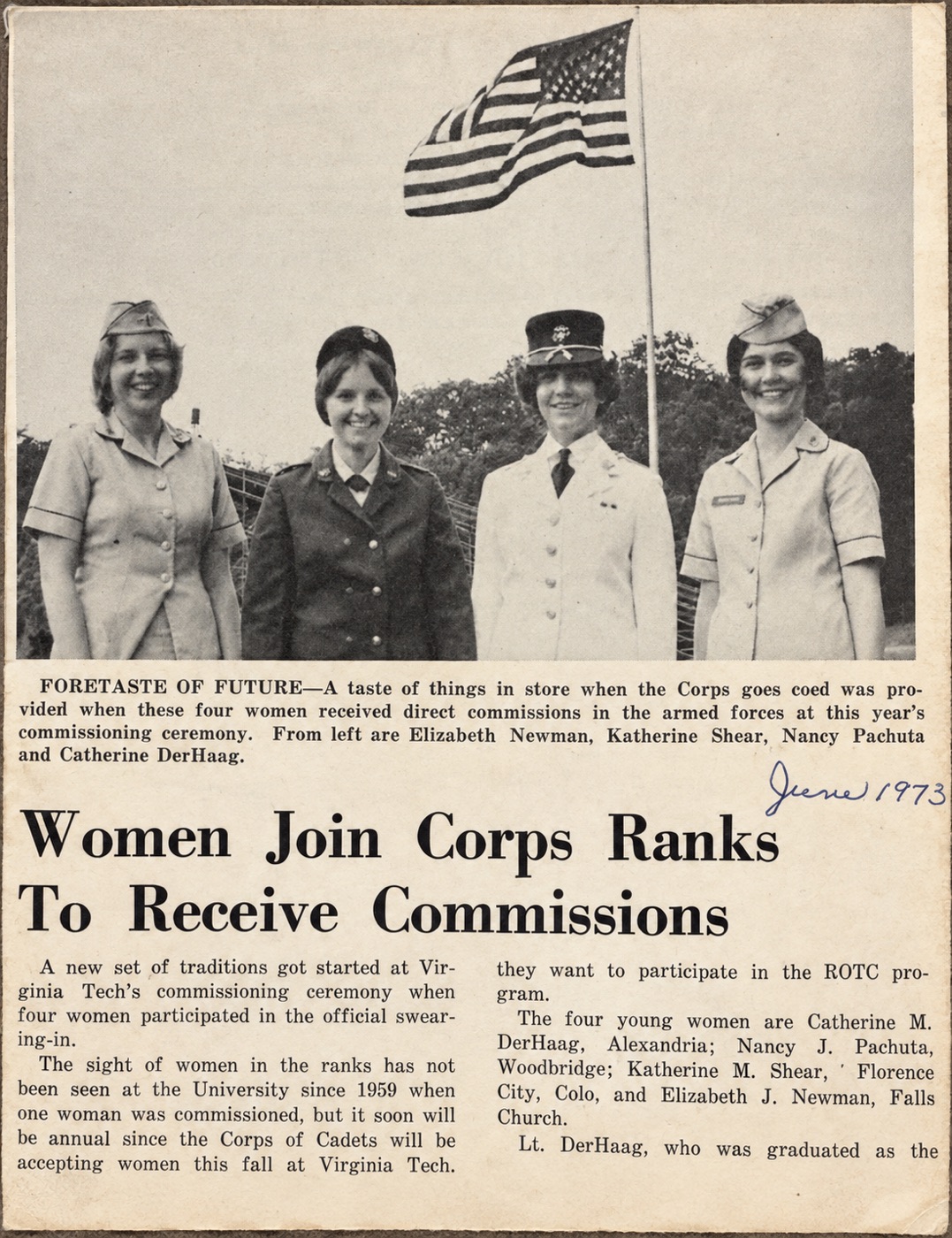
1973 newspaper photograph of four women at Virginia Tech’s commissioning ceremony; Betty stands at left
Virginia Tech commissioning ceremony, 1973 · Enlarge

Betty graduated from Virginia Tech in 1973. On June 8 she joined three other graduating women in the university’s commissioning ceremonies and Corps review; her signed Army officer’s oath is dated June 10. She was not a Corps of Cadets or ROTC member. Her Walter Reed internship ran from August 1973 to May 1974, and the University of Maryland awarded her M.S. in Nutrition in August 1974.

Read the Virginia Tech research update

Sources

Sources: Eileen’s family school history; family-held academic, internship, and commissioning records; 1973 Techgram and Collegiate Times. The civilian Navy office role is from Eileen’s account.

HomeBetty’s StoryChapter 4 of 6

04 / Dietetics and service

An Army Dietitian

7 photographs · Chapter 4View Chapter PhotosBetty at Fort Holabird, 1972

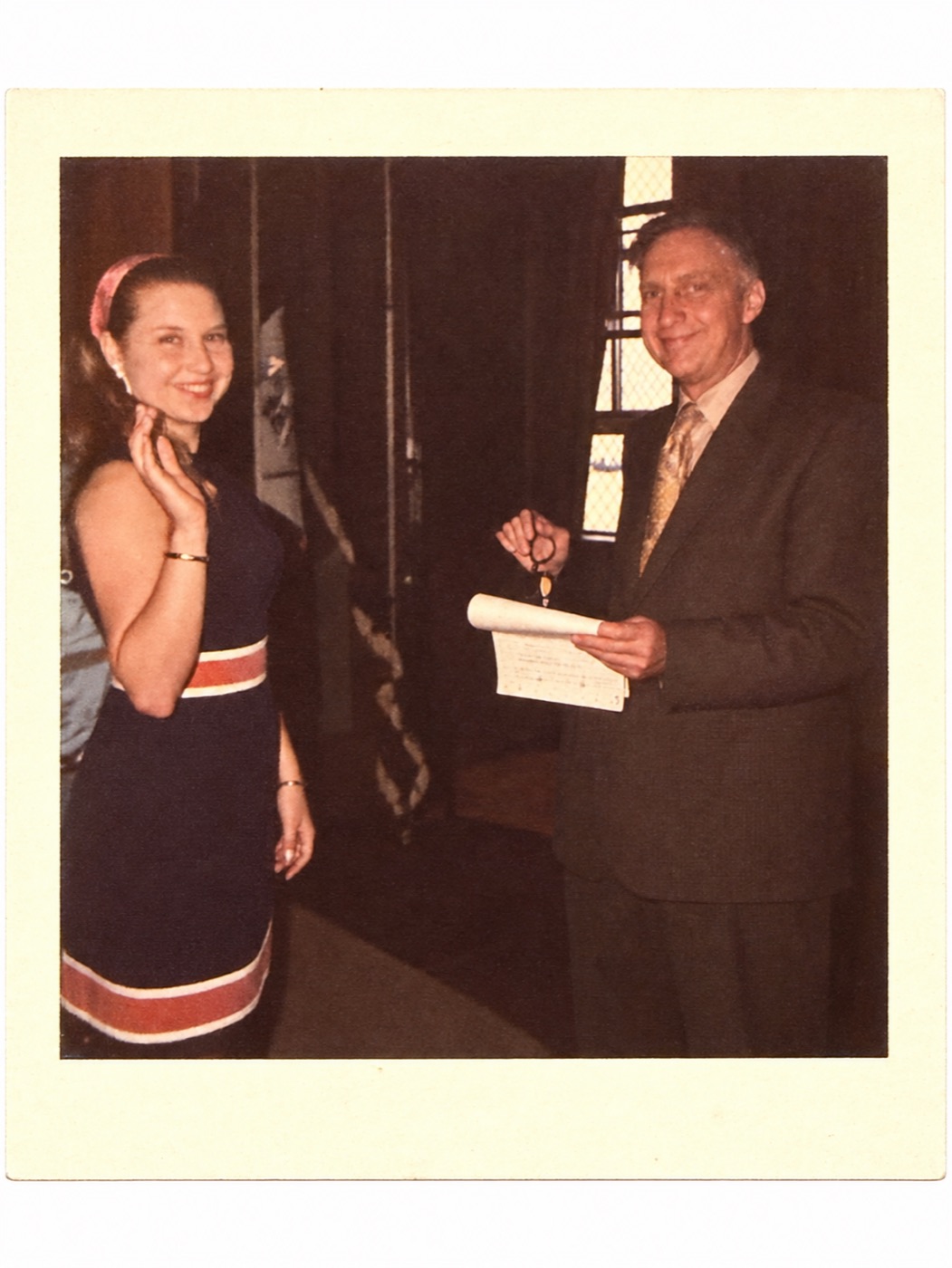
Betty’s Army dietetics career began while her education was still underway. A family photograph shows her father, Col. John Taylor Newman, swearing her in at Fort Holabird, Maryland, in 1972. Her clinical work and military service continued through years that also brought marriage and children.

Betty being sworn in by her father, Col. John Taylor Newman, at Fort Holabird, Maryland, 1972
Fort Holabird, 1972 · Enlarge

Her dietetic internship at Walter Reed ran from August 1973 to May 1974. At Womack Army Hospital, Betty worked as a clinical dietitian and later led the Clinical Dietetics Branch. Her career continued through Army Reserve and Navy Reserve service alongside civilian dietitian work. The family and Reserve years overlap, and the next chapter tells that part of her life together.

Sources

Sources: Eileen’s confirmed identification of the Fort Holabird photograph; family-held internship and service records; Eileen’s family account.

HomeBetty’s StoryChapter 5 of 6

05 / Home, family, and Reserve service

Meeting Dad and Starting a Family

52 photographs · Chapter 5View Chapter PhotosBetty and Dave together

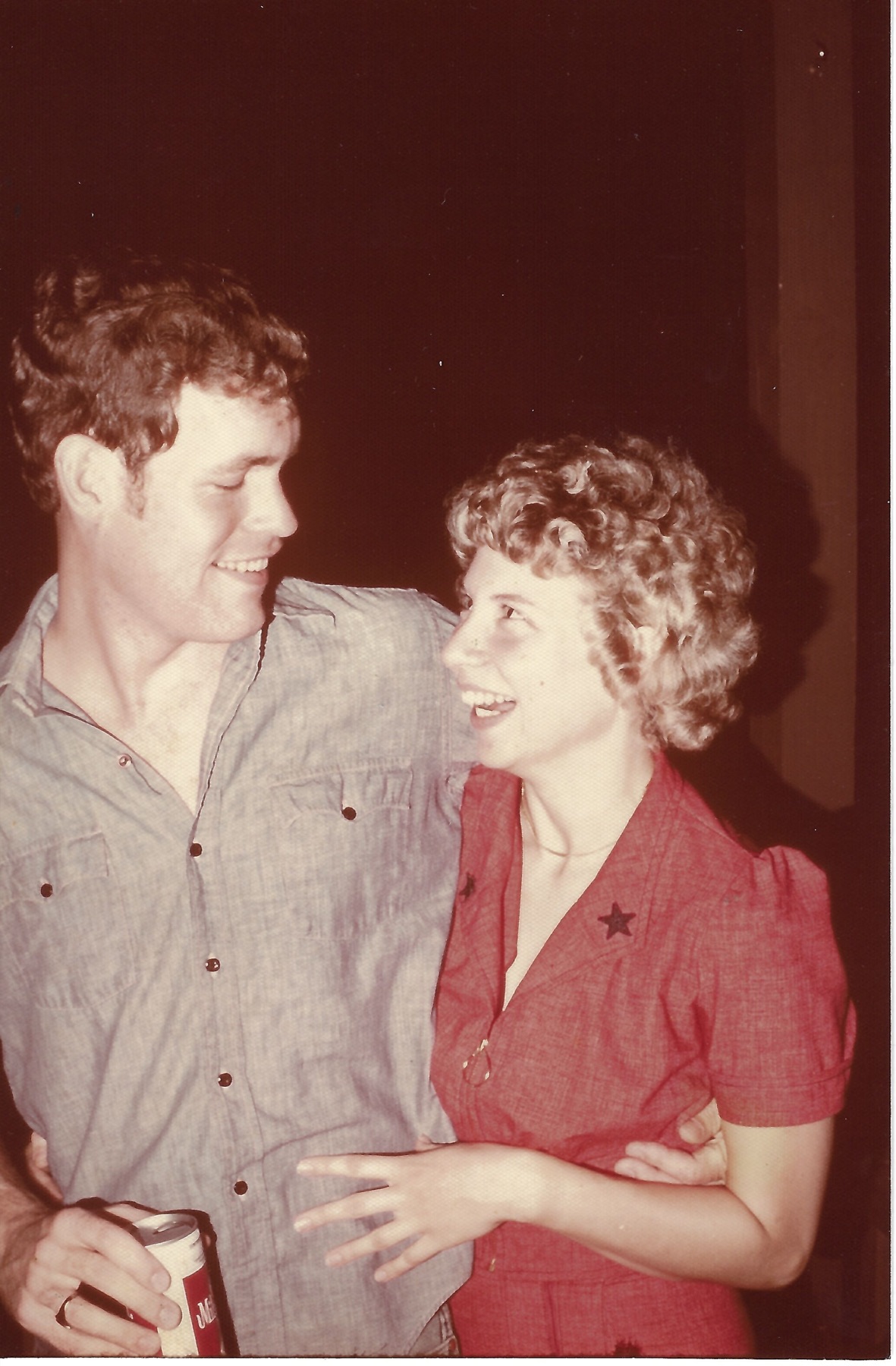
Betty and Dave met at Fort Bragg, North Carolina, and married in 1976. Eileen was born there. The family later made a home in Redding, Connecticut, where Betty and Dave raised Eileen and David. Her Reserve service ran alongside family life.

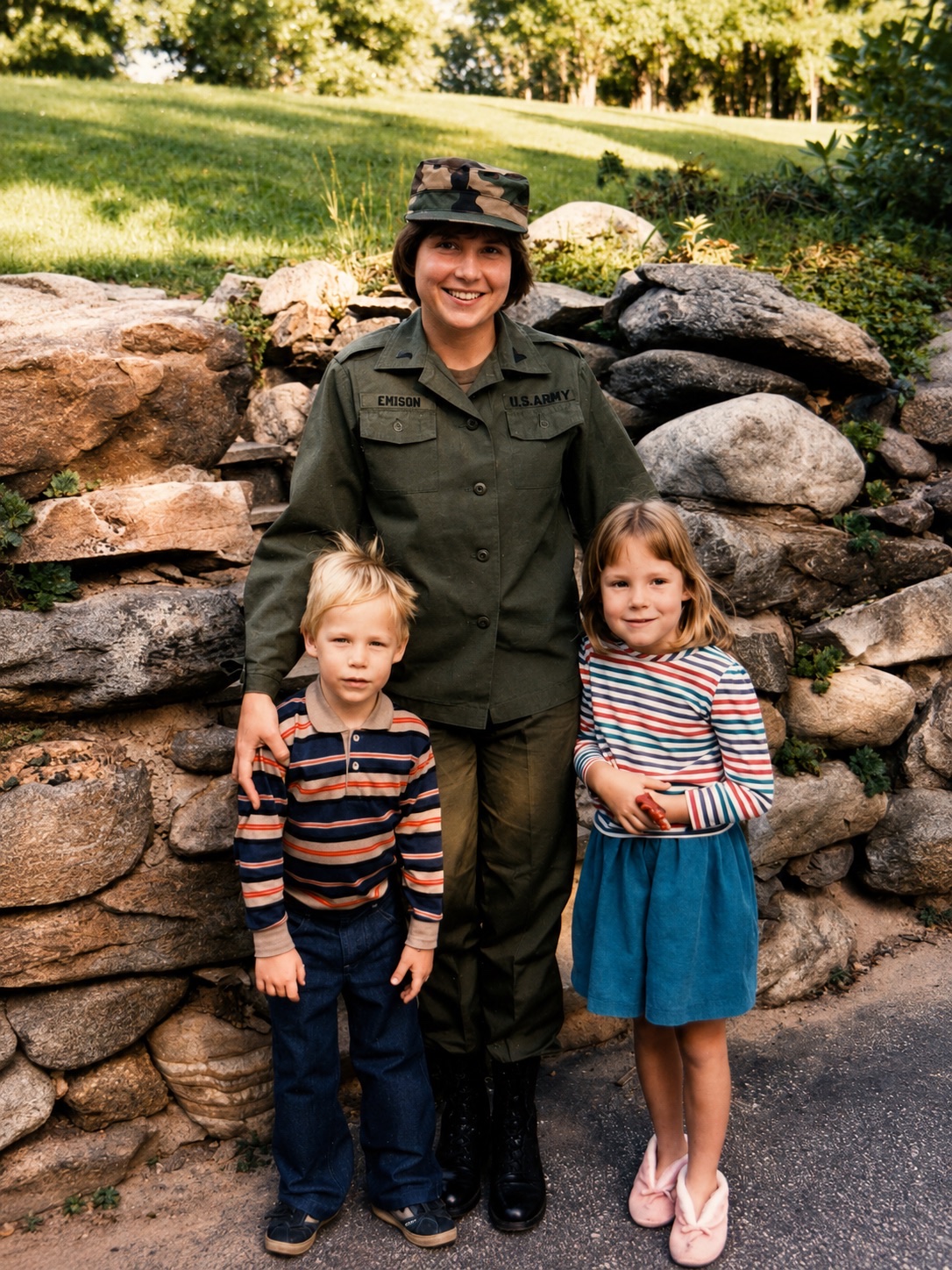
Betty with her family in a photograph labeled 1985
Family photograph, 1985 · Enlarge

Betty continued Army Reserve and Navy Reserve service alongside civilian dietitian work and raising her family. A public Senate record shows her nomination to Navy Reserve commander in 1995; a Virginia Tech alumni note reported her retirement at that rank in 1997. The chapter album also includes a 1972 photograph of Dave from before their marriage, identified by its own date.

Sources

Sources: Eileen’s family account and photographs; family-held service records; Senate nomination record; Virginia Tech class note.

HomeBetty’s StoryChapter 6 of 6

06 / The Florida years

Retirement and Florida Life

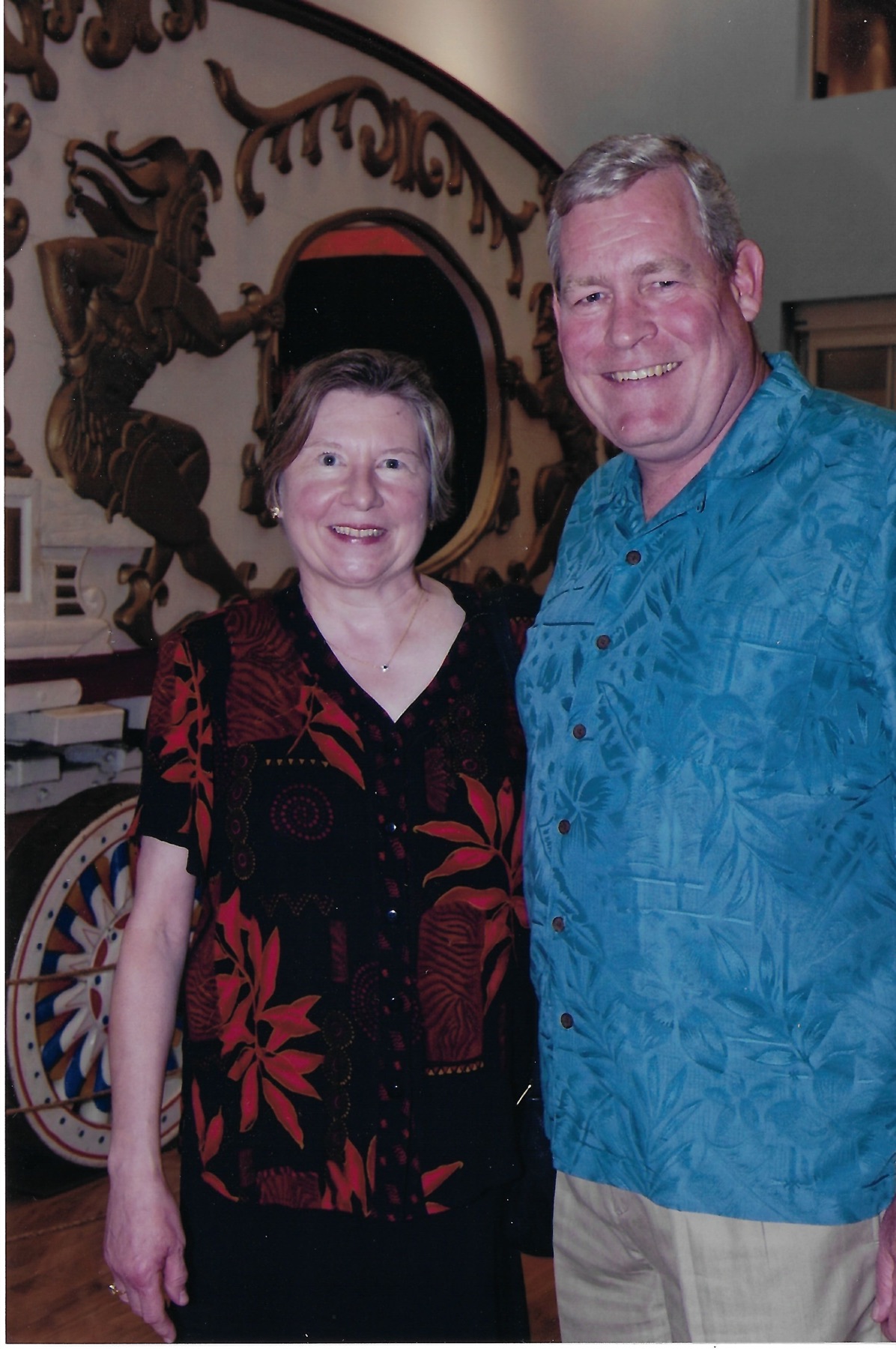
2 photographs · Chapter 6View Chapter PhotosBetty and Dave at the Ringling Circus Museum

Betty and Dave moved to Florida in 2006. Lakewood Ranch became Betty’s later home. For her grandchildren she was Grandma Betty, with family visits and vacations among the memories still being gathered.

Betty and Dave at the Ringling Circus Museum in October 2011
Betty and Dave at the Ringling Circus Museum, October 2011 · Enlarge

Her published obituary records civilian dietitian work in Florida at Manatee Memorial Hospital and in renal care. Family stories about her interests, travels, and time with grandchildren can deepen this chapter as their details are verified.

Sources

Sources: Eileen’s family account and photographs; published obituary.

HomeBetty’s StoryMore research and records

07 / Betty’s story

Research notes: learning, service, and care

Six earlier research notes from public sources and family-held records. Choose a note below to read its details and sources.
Historical names and context

Choose a research note

01 / West Point, 1951

Born into a military family

Newspaper-style 1951 family Christmas card for Betty Newman
World of Luck · 1951 family card

Betty was born March 19, 1951, at West Point, New York, into a military family. Her father, John Taylor “Jack” Newman, was an Army officer.

Read more

Surviving family Christmas cards mark an Arlington home in 1953, Jean’s greetings from Montgomery in 1959, and a London greeting in 1960. Family notes say the Newmans spent about three years in England before settling in Falls Church, Virginia.

Sources: Eileen’s family account and labeling notes; family-held Christmas cards from 1951, 1953, 1959, and 1960. The 1959 message is Eileen’s transcription.

Explore the family cardsMeet Grandma Jean and Grandpa Jack
02 / A Virginia Tech beginning

Nutrition and service

Betty being sworn in by her father, Col. John Taylor Newman, at Fort Holabird, Maryland, 1972.

Nutrition studies and the Army Student Dietitian Program shaped Betty’s Virginia Tech years.

Read more

Betty graduated in Human Nutrition and Foods in 1973. Her family-held transcript records graduate-level nutrition courses while she was still an undergraduate, and family records document her selection for the Army Student Dietitian Program in 1972. Her education and Army medical service grew together.

Sources: family-held academic records; published obituary and Virginia Tech alumni notes.

Published obituary (opens in a new tab)Virginia Tech note (opens in a new tab)
03 / Four women, 1973

A changing tradition

Virginia Tech commissioning · 1973

At Virginia Tech in June 1973, Betty joined three other women in public commissioning ceremonies.

Read more

On June 8, Betty and three other graduating women—Katherine Shear, Nancy Pachuta, and Catherine Derhaag—took part in Virginia Tech’s commissioning ceremonies and Corps review at Lane Stadium. Women entered the Corps that fall; these four received commissions through other pathways. Betty’s signed officer’s oath, administered by her father, retired Colonel John Taylor Newman, is dated June 10.

Sources: July 1973 Techgram, “Women Join Corps Ranks To Receive Commissions”; May 30, 1973 Collegiate Times; family-held oath.

04 / Walter Reed & Maryland

Training as a dietitian

Portrait · 1974

Betty trained at Walter Reed and earned her nutrition master’s degree from the University of Maryland in 1974.

Read more

Betty’s Walter Reed Army Medical Center dietetic internship ran from August 20, 1973, to May 23, 1974, alongside graduate study. The University of Maryland awarded her M.S. in Nutrition on August 23, 1974. Her coursework spanned clinical and community nutrition, research, administration, and education. At Walter Reed, she also helped organize student training and improve medical food-service education.

Sources: family-held internship, university, and service records; public biographical outline in her obituary.

Published obituary (opens in a new tab)
05 / A dietitian and leader

Clinical care and teaching

Army dietitian · 1977

At Womack and later in the Navy Reserve, Betty combined clinical care, teaching, and leadership.

Read more

At Womack Army Hospital at Fort Bragg, Betty served as a clinical dietitian and later led its Clinical Dietetics Branch. She advanced to captain and received the Army Commendation Medal. In Navy Reserve Medical Service Corps service at Groton, her recorded work included patient counseling, nutrition-clinic access, professional education, and weight-management materials.

Source: family-held service evaluations and records.

06 / A public record of service

Commander and a lifelong career

Navy service

Public records trace Betty’s promotion to commander and her later civilian dietitian work.

Read more

A Senate record names Elizabeth J. Emison among Navy Reserve Medical Service Corps officers nominated to commander in 1995; the nomination was confirmed that September. Virginia Tech’s summer 1997 class notes reported her retirement as a commander and dietitian service in the Army, Army Reserve, and Naval Reserve. Her obituary also records civilian dietitian work in Connecticut and, after moving to Florida in 2006, at Manatee Memorial Hospital and in renal care.

Senate record (opens in a new tab)Virginia Tech note (opens in a new tab)Obituary (opens in a new tab)
A colleague also remembered at Arlington

Colonel Llewellyn J. Legters served as the reviewing officer on Betty’s 1977–1978 Army evaluation at Womack Army Hospital. His connection to her career is preserved in her service records. He is also remembered at Arlington National Cemetery. This is a documented professional overlap; we do not infer a personal friendship or a gravesite route.

Sources: family-held service evaluation; secondary burial transcription (opens in a new tab), which states it was obtained from the Office of Army Cemeteries Database API on September 22, 2025. Check ANC Explorer for current records before visiting.

Grandma Jean & Grandpa Jack · their lives together

The family before and around Betty

Grandma Jean & Grandpa Jack

Two lives of service, study, and family, traced through records and the Newmans’ surviving Christmas cards.

Grandma Jean

Regina Gertrude Smith Newman · October 28, 1921, Baltimore – December 24, 2013, Lakewood Ranch.

Jean served in the U.S. Army Nurse Corps. Her Military Women’s Memorial Register entry records service from 1944 to 1949 and the rank of First Lieutenant. It also recalls her time in the China-Burma-India theater. In her own account, she remembered meeting Jack while still on active duty; they married at West Point.

Read Jean’s Register story

Grandpa Jack

John Taylor Newman · November 26, 1919, England – November 3, 2006, Ormond Beach.

Jack earned a B.E.E. from Ohio State in June 1941 and an M.S. in electrical engineering from MIT in 1947. His Army career ran from 1941 to 1966. Eileen’s family notes place him at the Army War College at Maxwell in 1960; Jean’s 1959 card describes his interest in that study.

Education, service dates, and locations: Eileen’s family records.

Their life together

Jean’s Register account says they married at West Point and welcomed Betty as their first child. No marriage date is asserted here. The family cards mark an Arlington home in 1953, greetings from Montgomery in 1959, and London in 1960. Family notes describe about three years in England before the family settled in Falls Church, Virginia.

1953 Newman family Christmas card about a new job, Arlington home, and new babyArlington · 19531960 Newman family Christmas card greeting from LondonLondon · 1960

Sources: Eileen’s family dates, education notes, and Christmas-card labels; Jean’s Military Women’s Memorial Register profile; surviving family Christmas cards. Family sources differ on Jack’s exact English birth town, so only England is stated.

Return to Betty’s childhood chapter
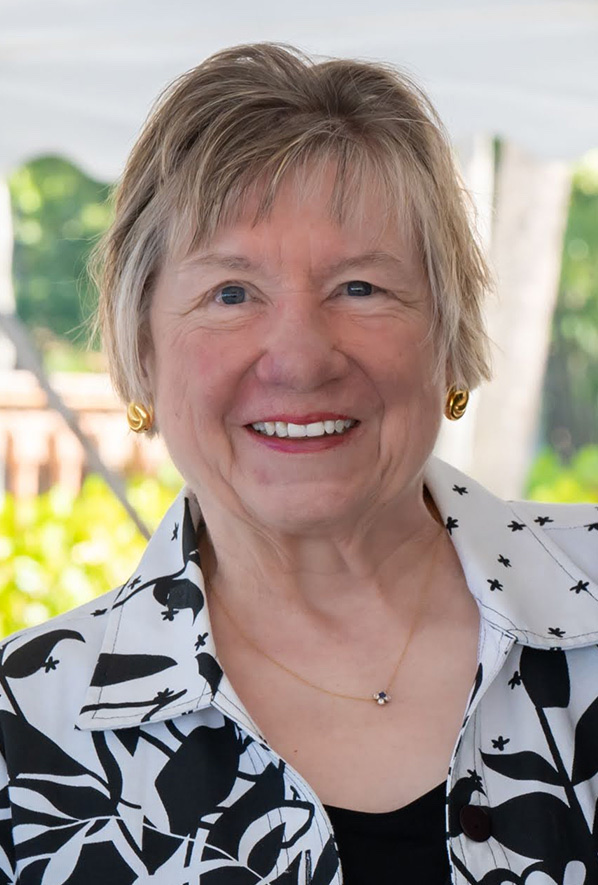
Betty smiling outdoors
Betty · family photograph

06 / Remembering Betty

A life of service
and many stories

March 19, 1951 – December 29, 2024

United States flagArmy · Army Reserve · Navy Reserve

Elizabeth “Betty” Jean (Newman) Emison was known to family and friends as Betty. A 1973 graduate of Virginia Tech in Human Nutrition and Foods, she was commissioned in 1973. Her service included the Army and later the U.S. Navy Reserve, from which she retired as a Commander.

These photographs were shared by family. More stories can be added after family review.

Read Betty’s published obituary (opens in a new tab)

Browse photographs of Betty through the years, with a larger view and captions.

Open Photo Albums
Betty’s team · Washington Commanders

Betty’s team: the Washington Commanders

Betty loved the Washington Commanders. It is one more small thing family and friends can remember about her. If you have a football memory with Betty, Eileen can add it after family review.

Schedule & scores (opens in a new tab)Team stats (opens in a new tab)
Virginia Tech · class of 1973

Betty at Virginia Tech

Betty graduated in 1973 with a degree in Human Nutrition and Foods. That June, she took part in the university’s commissioning ceremonies and Corps review with three other graduating women. Her signed Army officer’s oath is dated June 10, 1973. Her studies and service shaped her work as a dietitian. Betty was not a member of the Virginia Tech Corps of Cadets or ROTC; the ceremony and review should not be read as Corps membership.

Sources: family-held academic and commissioning records; 1973 Techgram and Collegiate Times.

Betty at Virginia Tech · research updatesVirginia Tech alumni note (opens in a new tab)Hokies schedule & scores (opens in a new tab)Hokies team stats (opens in a new tab)
Places Betty called home and schools she attended

Betty’s places and schools

A beginning from the places and dates we know so far. We can add other family homes as details are confirmed.

Places

  • West Point, New York: Born in 1951 while her parents were a military family.
  • England: Her family lived there for about three years in the early 1960s.
  • Falls Church, Virginia: The family settled here after England.
  • Fort Bragg, North Carolina: Betty and Dave met and married here, and Eileen was born here.
  • Redding, Connecticut: Betty and Dave raised Eileen and David here.
  • Florida: Betty and Dave moved to the state in 2006; Lakewood Ranch was her later home.

Schools and training

  • J.E.B. Stuart High School, Falls Church: Betty’s high school, now named Justice High School.
  • Virginia Tech: Human Nutrition and Foods degree, 1973.
  • University of Maryland: M.S. in Nutrition, 1974.
  • Walter Reed Army Medical Center: Dietetic internship, 1973–1974.
Betty’s published obituary
Historical names and context

J.E.B. Stuart High School and its new name

Betty’s high school opened in 1959, when Virginia and Fairfax County were resisting court-ordered school desegregation. It was named for James Ewell Brown “J.E.B.” Stuart, a Confederate cavalry commander. The school’s “Raiders” symbol depicted a rider carrying a Confederate battle flag; the flag appeared on school gear and the gym floor before being replaced.

Students, alumni, and neighbors later pressed for a name that reflected the school’s diverse community. Supporters of the Stuart name spoke of history and heritage; critics connected the name and Confederate imagery to segregation. The timing and imagery made the name a political issue, although the available records do not establish the original board’s precise intent in choosing it.

After a student petition and public debate, the Fairfax County School Board voted 7–4 on October 26, 2017, to rename the school. The Justice High School name took effect July 1, 2018, honoring civil rights advocate Barbara Rose Johns, Supreme Court Justice Thurgood Marshall, and Col. Louis G. Mendez Jr. Students chose the Wolves to replace the Raiders mascot. Stuart himself is buried in Richmond, Virginia.

J.E.B. Stuart · National Park ServiceJ.E.B. Stuart · American Battlefield TrustHow the school became Justice HighFairfax schools and desegregation

Fort Bragg, Fort Liberty, and Fort Bragg again

Fort Bragg in North Carolina was where Betty and Dave met, married, and welcomed Eileen. During their years there, it was named for Confederate general Braxton Bragg. The Army renamed the installation Fort Liberty in 2023. In 2025, it returned to the name Fort Bragg, this time honoring Private First Class Roland L. Bragg, a World War II soldier recognized for his actions during the Battle of the Bulge.

Braxton Bragg · World History EncyclopediaFort Liberty redesignation · 2023Fort Bragg redesignation · 2025

Washington football’s changing name

Betty’s favorite NFL team also changed its name during her lifetime. On July 13, 2020, the franchise announced it would retire the “Redskins” name and logo. It played the 2020 and 2021 seasons as the Washington Football Team, then unveiled the Washington Commanders name on February 2, 2022.

Native advocates had challenged the old name for decades. The Stillwater History Museum describes protests that took place long before the 2020 change, including one before the 1992 Super Bowl. The Native American Rights Fund welcomed the name’s retirement in 2020 and explained why it considered Native-themed team names and imagery harmful. The team’s own announcements document each step of the change.

Stillwater History Museum · team-name historyNative American Rights Fund perspectiveTeam announcement · July 2020Washington Football Team nameCommanders name · February 2022
Military dietitians · a short history

Nutrition as military medicine

Betty’s career belonged to a profession that brought nutrition science into military medicine. Its history connects patient care, hospital leadership, education, and women’s changing opportunities to serve. The milestones below are profession history; Betty’s own service details are documented separately in her story.

1917–1918Civilian hospital dietitians

Dietitians served as civilian employees in Army hospitals, including overseas, without the full protections and benefits of military status.

Army Medical History (opens in a new tab)
1922Walter Reed training

Walter Reed General Hospital established a dietitian training course combining scientific instruction with practical hospital experience.

Army Medical History (opens in a new tab)
1942–1944Military status and commissions

Legislation on December 22, 1942 granted Army dietitians military status with relative rank; a June 22, 1944 law authorized full commissioned status in the Army of the United States.

Army Medical History (opens in a new tab)
1947Women's Medical Specialist Corps

Established April 16 in the Regular Army, the corps brought together dietitians, physical therapists, and occupational therapists.

Army Medical History (opens in a new tab)
1951–1952Postwar internship

Walter Reed opened its postwar dietetic internship in September 1951. The American Dietetic Association confirmed its approval on June 12, 1952.

Army Medical History (opens in a new tab)
1955Army Medical Specialist Corps

Legislation allowed men to receive Reserve commissions in these specialties, and the corps was renamed the Army Medical Specialist Corps.

Army Medical History (opens in a new tab)
1969A graduate-study pathway

By fiscal 1969, Walter Reed offered an optional internship path toward a master's degree with additional University of Maryland credits. This is context for Betty’s era, not independent proof of her particular enrollment path.

Army AL&T archive, printed p. 21 (opens in a new tab)
Care that begins with nutrition

After World War II, Army dietitians took broader responsibility for hospital food service, staff training, and systems for appropriate patient meals. Today Navy dietitians provide individualized nutrition treatment, teach patients and personnel, and supervise hospital feeding operations. These are roles in the profession, not claims that Betty performed every listed activity.

Army history (opens in a new tab) · Navy Dietetics & Food Management (opens in a new tab)

Learning at Walter Reed

The training tradition predates Betty. Historical internship records describe hospital rotations, nutrition teaching, diet therapy, food-service management, and increasing responsibility. They do not establish her exact 1973–1974 curriculum. The 1969 graduate pathway helps explain the era, but Betty’s Walter Reed internship and University of Maryland degree are supported by her own records.

Internship history (opens in a new tab) · 1969 Army archive, printed p. 21 (opens in a new tab)

Women building professional careers

The American Dietetic Association began in 1917, led by women including Lenna F. Cooper and Lulu C. Graves amid wartime food conservation and public nutrition concerns. Army dietitians’ path from civilian service to commissions established the professional tradition Betty entered in 1973. We do not claim she was the first to serve.

Academy history (opens in a new tab) · Army Medical History (opens in a new tab)

See her proposed headstone

The marker to come

Reading Betty's proposed headstone

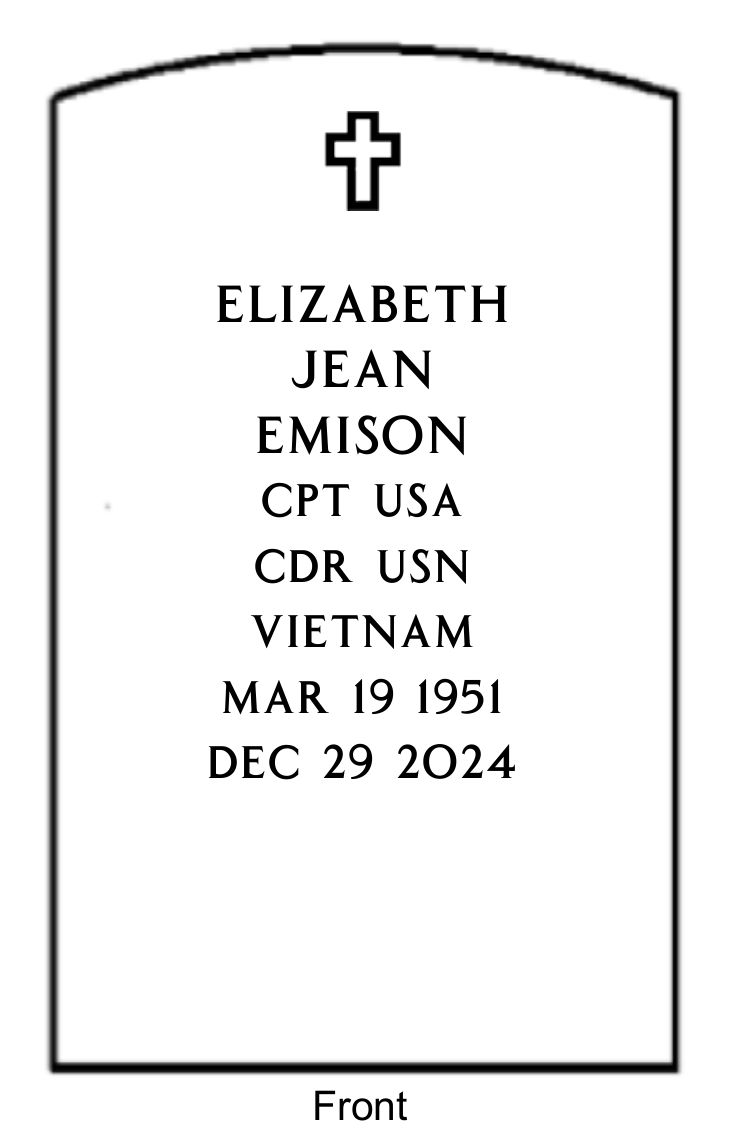
ANC's proposed front design, dated September 24, 2026, is still under family review. The genuine front proof is shown below; it is not a claim that the permanent stone is installed.

Proposed · not final approved

The proposed front

ANC proposed headstone front proof, September 24, 2026: Christian cross; Elizabeth Jean Emison; CPT USA; CDR USN; Vietnam; March 19, 1951; December 29, 2024. Not final approved.
ANC’s proposed headstone design, September 24, 2026 · unsigned and not final approved.
Read the inscription as text
ELIZABETH
JEAN
EMISON
CPT USA
CDR USN
VIETNAM
MAR 19 1951
DEC 29 2024

The design's back is blank. A section or grave number is not yet verified.

What each line means

Christian cross
An emblem of belief reflecting Betty's faith.
ELIZABETH JEAN EMISON
Betty's name, set across three lines.
CPT USA
Captain, United States Army.
CDR USN
Commander, United States Navy. Together, the two service lines recognize her military career.
VIETNAM
A designated period of active-duty service. This inscription alone does not establish deployment to Vietnam or combat service.
MAR 19 1951 / DEC 29 2024
Betty's birth and death dates, not her years in uniform.

The cemetery's form says a temporary black metal stake will mark the grave until the permanent stone is ordered after the service and installed.

HomeWomen’s Memorial

A place for their stories

Why this place matters

Dedicated to the more than 3 million women who have served our country since the American Revolution, the Military Women’s Memorial is located at the gateway to Arlington National Cemetery and is the nation’s only major national memorial to honor all women who have defended the nation—from the Revolution to the present.

The Heart of the Memorial is the Register—where visitors are offered a unique look at some of the individual stories that make up the collective history of women’s service and where a tribute can be made to a specific woman who has served.

The Memorial reports records for more than 300,000 servicewomen in its Register.

Source: Military Women’s Memorial · Our Legacy · Register information

Family in the Register

Four women to remember

These four portraits and service summaries come from matched Memorial Register profiles. Open a story for details, or choose the original record link.

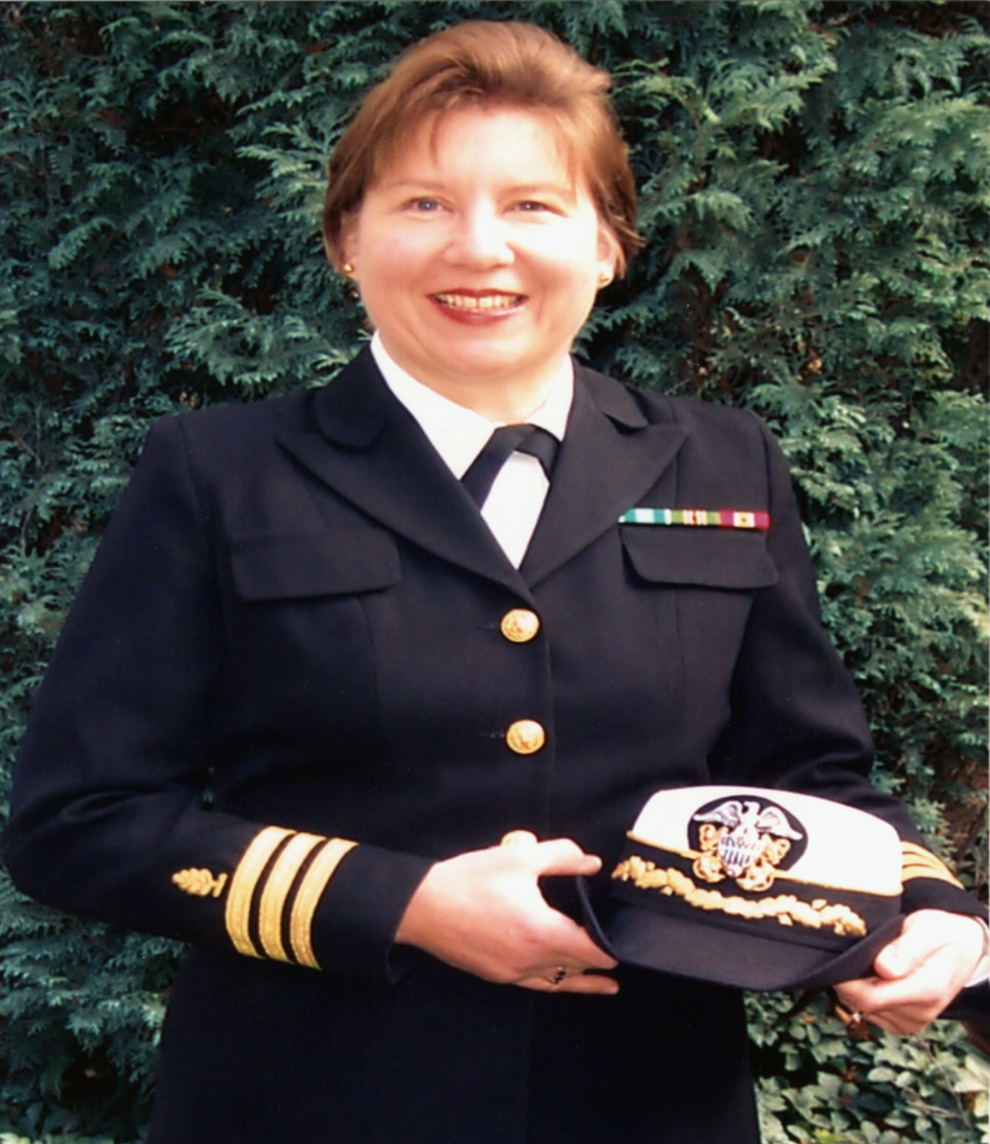
  • Elizabeth “Betty” Jean Emison in U.S. Navy uniform
    Elizabeth Jean (Newman) EmisonCommander (CDR), U.S. Navy Reserve, retired · previously Captain, U.S. ArmyCharter Member 544819 · Army 1973–1978; Army Reserve 1985–1988; Navy Reserve 1988–1996

    A dietitian and teacher whose Army and Navy Reserve service spanned more than two decades.

    Her Register story

    Betty wrote of her memorable experience as a dietitian at Walter Reed Army Medical Center at the end of the Vietnam War in 1973. Her profile also records clinical work, education, Army and Navy Reserve service, and her family.

    Read Betty’s Register profile (opens in a new tab)
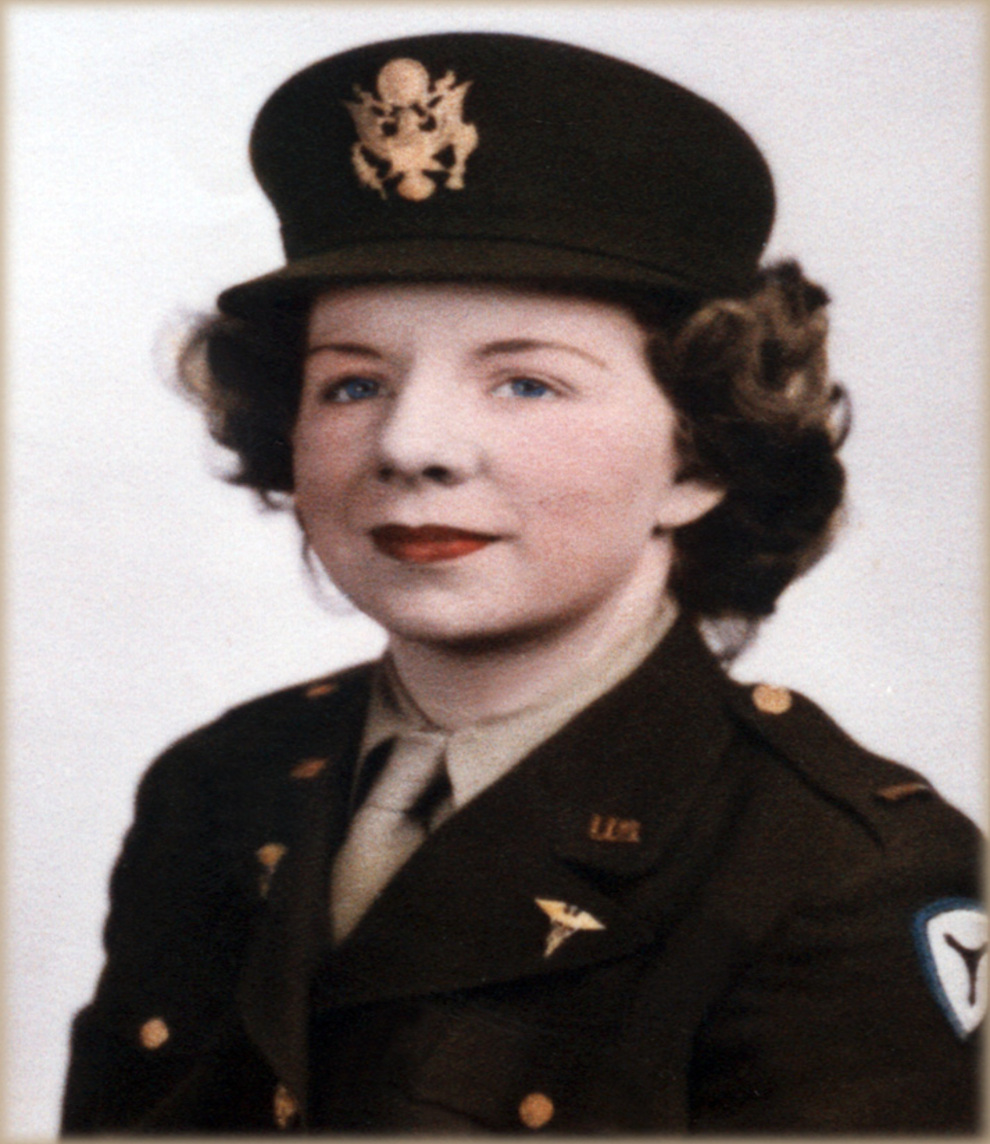
  • Regina “Jean” Newman in U.S. Army uniform
    Regina G. NewmanBetty’s mother, known as Grandma Jean · First Lieutenant (1LT), U.S. Army Nurse CorpsCharter Member 363306 · served 1944–1949

    An Army nurse in the China-Burma-India theater who met Betty’s father, Jack, while on active duty.

    Her Register story and honors

    Her profile lists service in the China-Burma-India theater, the Asiatic-Pacific Campaign Medal, and the World War II Victory Medal. Regina wrote:

    “Meeting my Husband while still on active duty at West Point-married there and having first baby, Betty (now CDR USNR Retired) plus, quitting smoking for good on New Year's Eve 1948, and surprise kissing superintendent MG Maxwell Taylor to seal the Resolve.”
    Read Regina’s Register profile (opens in a new tab)
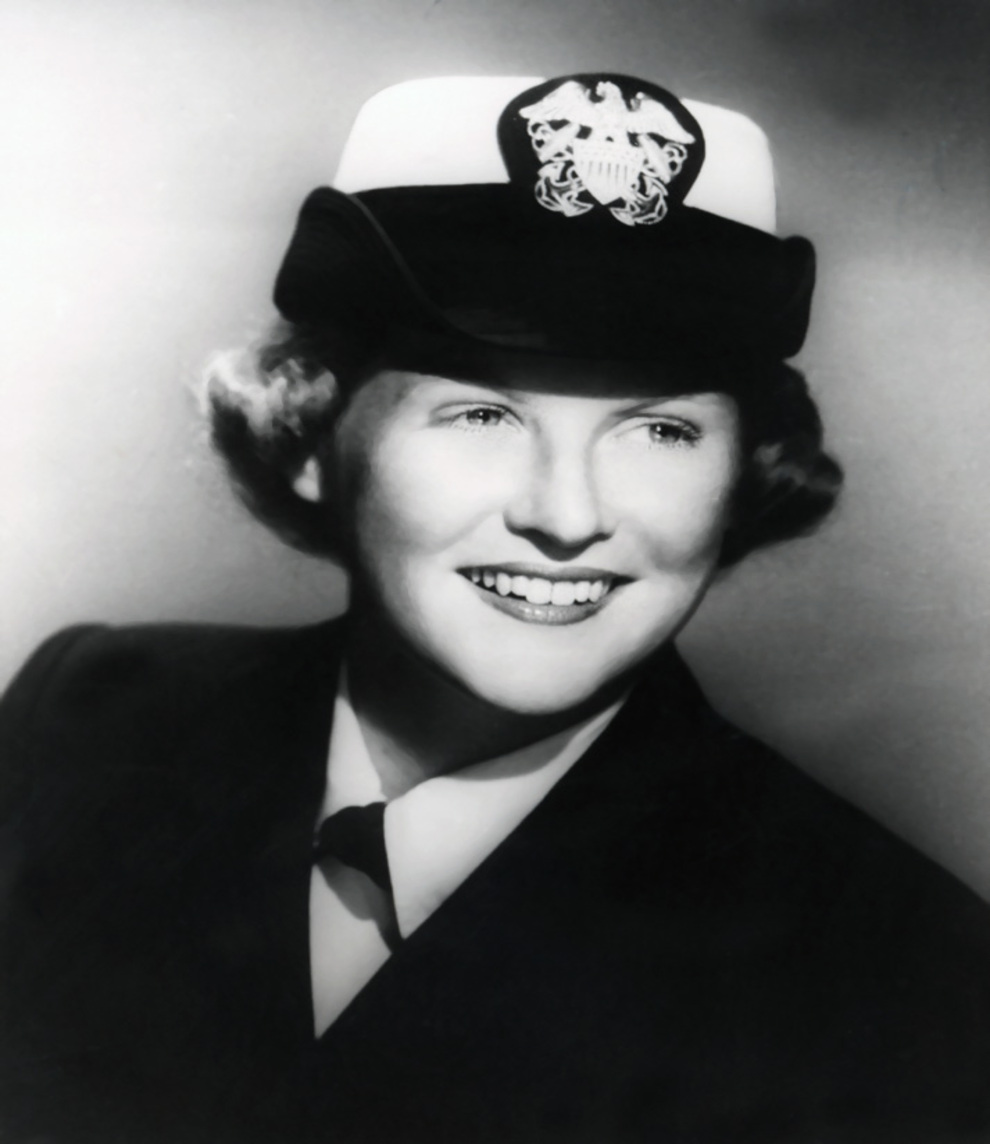
  • Virginia Elizabeth Smith in U.S. Navy uniform
    Virginia Elizabeth SmithBetty’s aunt · Lieutenant Junior Grade (LTJG), U.S. Navy Nurse CorpsCharter Member 171631

    A Navy nurse who earned the National Defense Service Medal.

    Her Register record

    The saved profile records the National Defense Service Medal. It has no personal narrative. Its service dates are incomplete, so this website does not state a date range.

    Read Virginia’s Register profile (opens in a new tab)
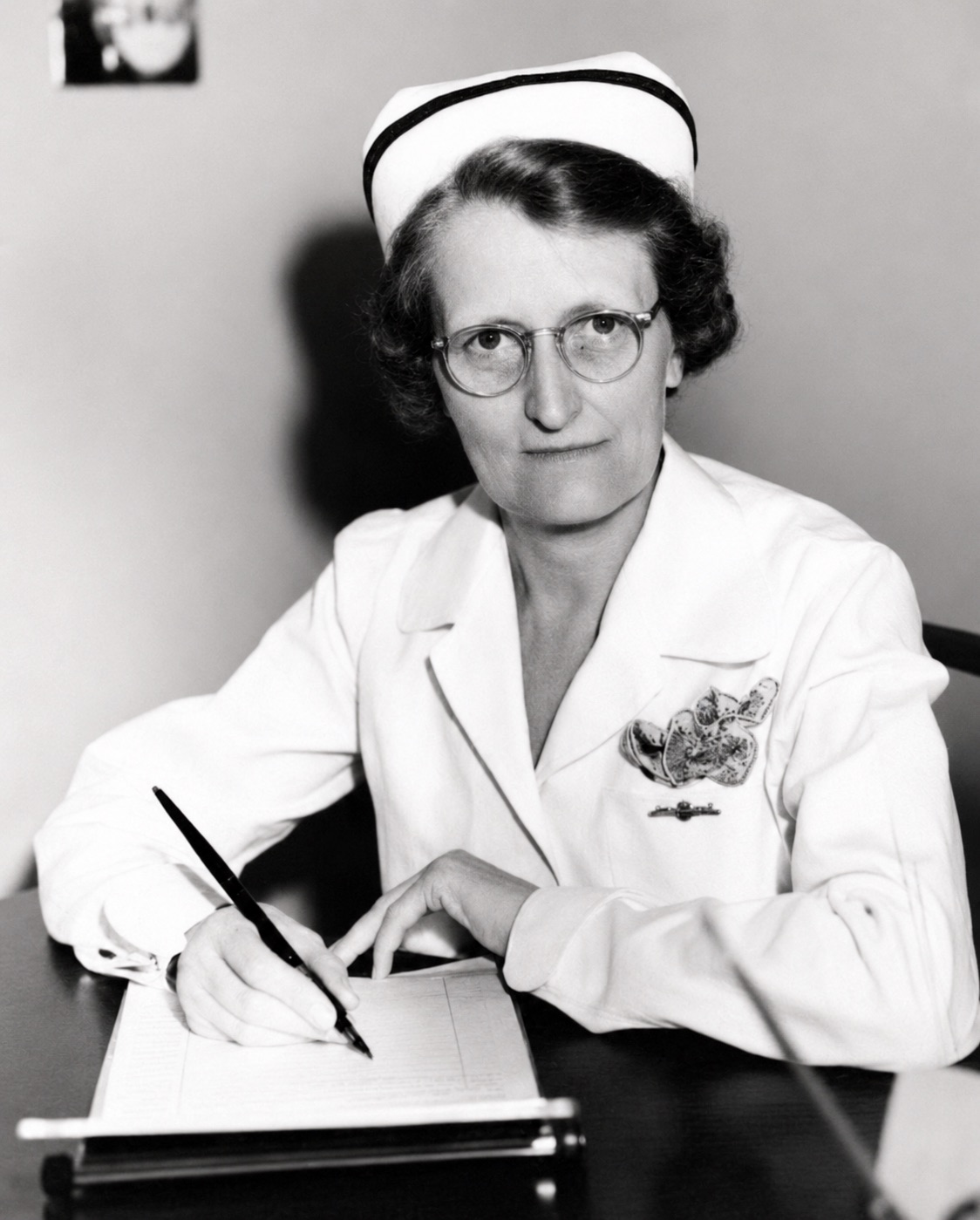
  • Clara Bertha Kennepohl Sullivan in a nurse uniform
    Clara Bertha Kennepohl (later Sullivan)Betty’s grandmother-in-law · Nurse, Army Nurse CorpsMember 816560 · served 1918–1919

    “Of course, the high happiness in life is making others happy.”

    Read Clara’s story and 1919 letter

    Clara Bertha (Kennepohl) Sullivan served in the Army Nurse Corps at Camp Stuart Embarkation Hospital, Newport News, Virginia, from August 24, 1918 to September 26, 1919. She cared for returning soldiers amid World War I troop movements and the 1918 influenza pandemic. Her Register profile lists the World War I Victory Medal. “Nurse” is its displayed title; no officer rank is inferred.

    The following letter is reproduced in her Military Women’s Memorial Register entry:

    We have admitted three thousand overseas patients this week. You imagine that we have been busy. All our wards are overcrowded [but] the boys say this is heaven compared to the hospitals overseas…Yes, we had a happy Xmas. The boys were so delighted with the dinner. And it was a feast. Every ward had a big Xmas tree beautifully decorated, and lit up with electric lights. The Red Cross gave every man a Christmas box. They contained socks, handkerchiefs, candy, nuts, gum, cigarettes, a piece of fruit cake and a Christmas letter from someone who packed the box.

    We let the boys who were able help decorate the tree in our ward and had it all lit up on Christmas Eve. Then the night nurse put the Red Cross boxes on each patient’s bed before she awakened any one. She said they were like a crowd of youngsters shouting back and forth what they had received, reading their letters to each other, and wondering of course, if she was a sweet young thing or somebody’s mother. Some of the nurses did not give the boxes until they got on duty. They wanted to see the fun.

    All in all it was a very happy day. Of course, the high happiness in life is making others happy.

    A boat docked tonight but it has been pouring rain all evening so they will not unload ’til morning. There are 1,700 on board. The fourth boat is due with 1,200 and the sixth one with 2,800. It takes twelve days for most of them to make the trip so if I do not write often you will understand it is because I am busy. Of course we have some free time, but after a hard day’s work one does not always feel in the mood for letters.

    The Register cites “Richmond, Indiana · Tue, Jan 21, 1919 · page 6.” It does not name the newspaper.

    Read Clara’s Register profile (opens in a new tab)

The four optional links lead to the matched original presentations. The Memorial manages account access and may ask visitors to sign in. Betty, Virginia, and Regina are Charter Members: women registered before January 1, 1998. After-hours access to the on-site Register and exhibits during Betty’s reception is not confirmed.

Memorial history (opens in a new tab)About the Register (opens in a new tab)Plan a visit (opens in a new tab)Explore exhibits (opens in a new tab)Official virtual tour (opens in a new tab)
HomeBetty at Virginia Tech

Elizabeth Jean Newman Emison · Class of 1973

Betty at Virginia Tech

Education, commissioning, and the records that help tell Mom’s story.

June 8, 1973 · University Relations photographs

At the commissioning ceremony

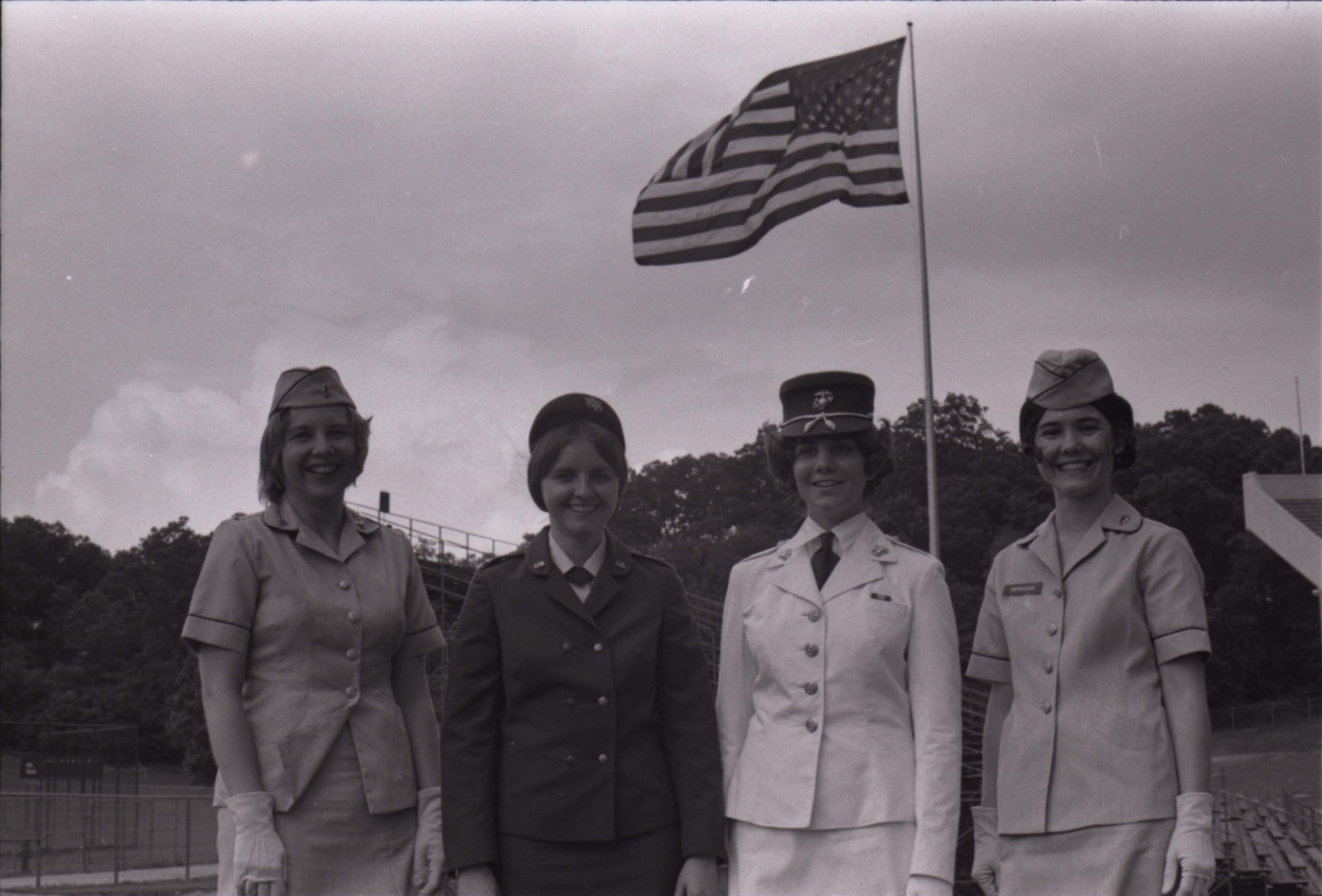
Betty Newman, Katherine Shear, Nancy Pachuta, and Catherine Derhaag standing beneath the United States flag at Lane Stadium
Betty Newman, Katherine Shear, Nancy Pachuta, and Catherine Derhaag, left to right, at Lane Stadium. Enlarge
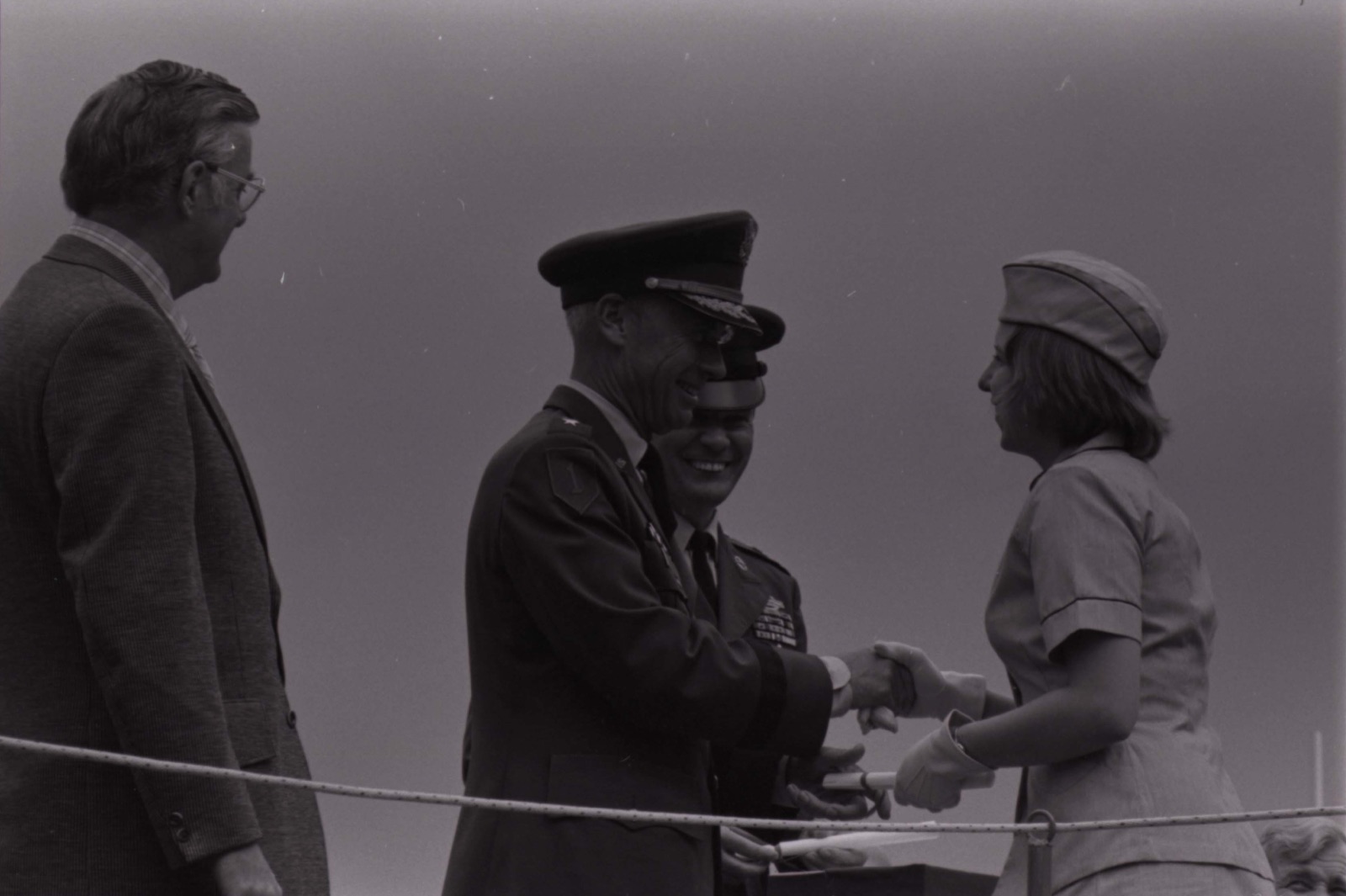
Major General Orwin C. Talbott congratulating Betty Newman while Virginia Tech President T. Marshall Hahn Jr. watches
Major General Orwin C. Talbott congratulates Betty Newman; Virginia Tech President T. Marshall Hahn Jr. stands at left. Enlarge

Source: Virginia Tech University Relations Photograph Collection, Special Collections and University Archives, University Libraries, Virginia Polytechnic Institute and State University. Archive image identifiers: UR_negs_4713_19730608_003 and UR_negs_4713_19730608_007. Identifications and date follow Eileen’s prepared Virginia Tech 1973 Commissioning Photo Booklet.

On June 8, 1973, Betty and three other women became the first women at Virginia Tech formally included in the Corps of Cadets commissioning ceremony. Mom graduated that year with a degree in Human Nutrition and Foods; her studies in dietetics led her toward service as an Army officer.

Read about Betty’s 1973 commissioning

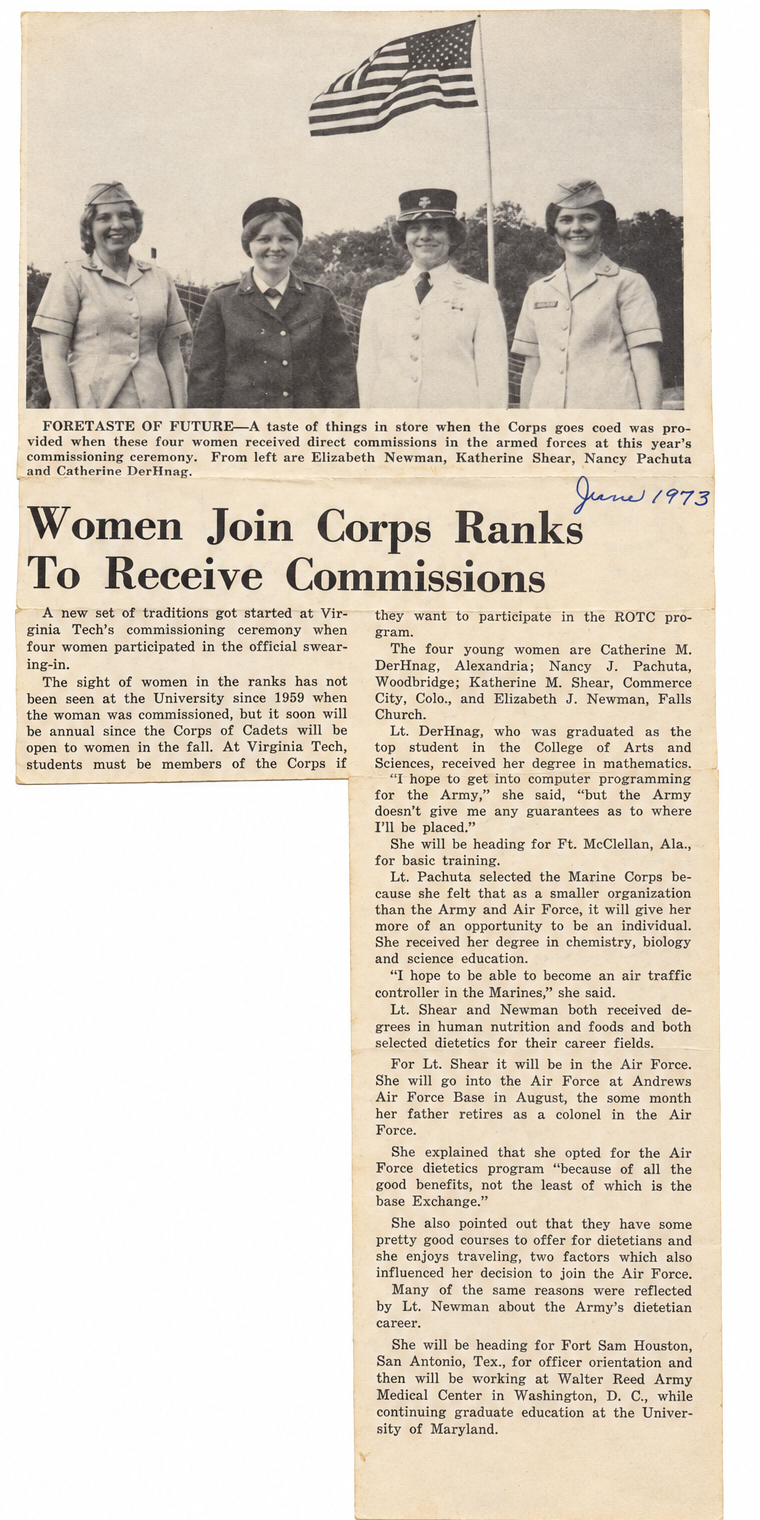
The university’s July 1973 Techgram identified the four women as Elizabeth J. Newman, Katherine Shear, Nancy Pachuta, and Catherine Derhaag and reported their participation in the official swearing-in.

Mom’s route into the Army was through professional training in dietetics; she was not a member of Virginia Tech’s Corps of Cadets. The ceremony took place shortly before women entered the Corps that fall. Virginia Tech’s history already records Patricia Ann Miller’s 1959 commission and the arrival of L Squadron in 1973. Mom’s experience adds another part of that history.

Dated updates

Recent Discoveries

In September 2026, research with Virginia Tech Special Collections and University Archives brought together contemporary newspaper coverage and a set of University Relations photographs dated June 8, 1973. The surviving images include the four women together and scenes from the commissioning ceremony. A family clipping could finally be traced to the July 1973 Techgram.

Contemporary coverage · 1973

The articles that recorded the moment

Open each clipping to read the original scan larger. These article-only crops omit surrounding newspaper items; the Roanoke scans end before the full articles do.

Original clipping of Women Join Corps Ranks To Receive Commissions, showing four women and the article text
Women Join Corps Ranks To Receive CommissionsTechgram, July 1973 · Virginia Tech Division of Information Services. Family-held clipping; source file June 1973 Commissioning.png.Read larger
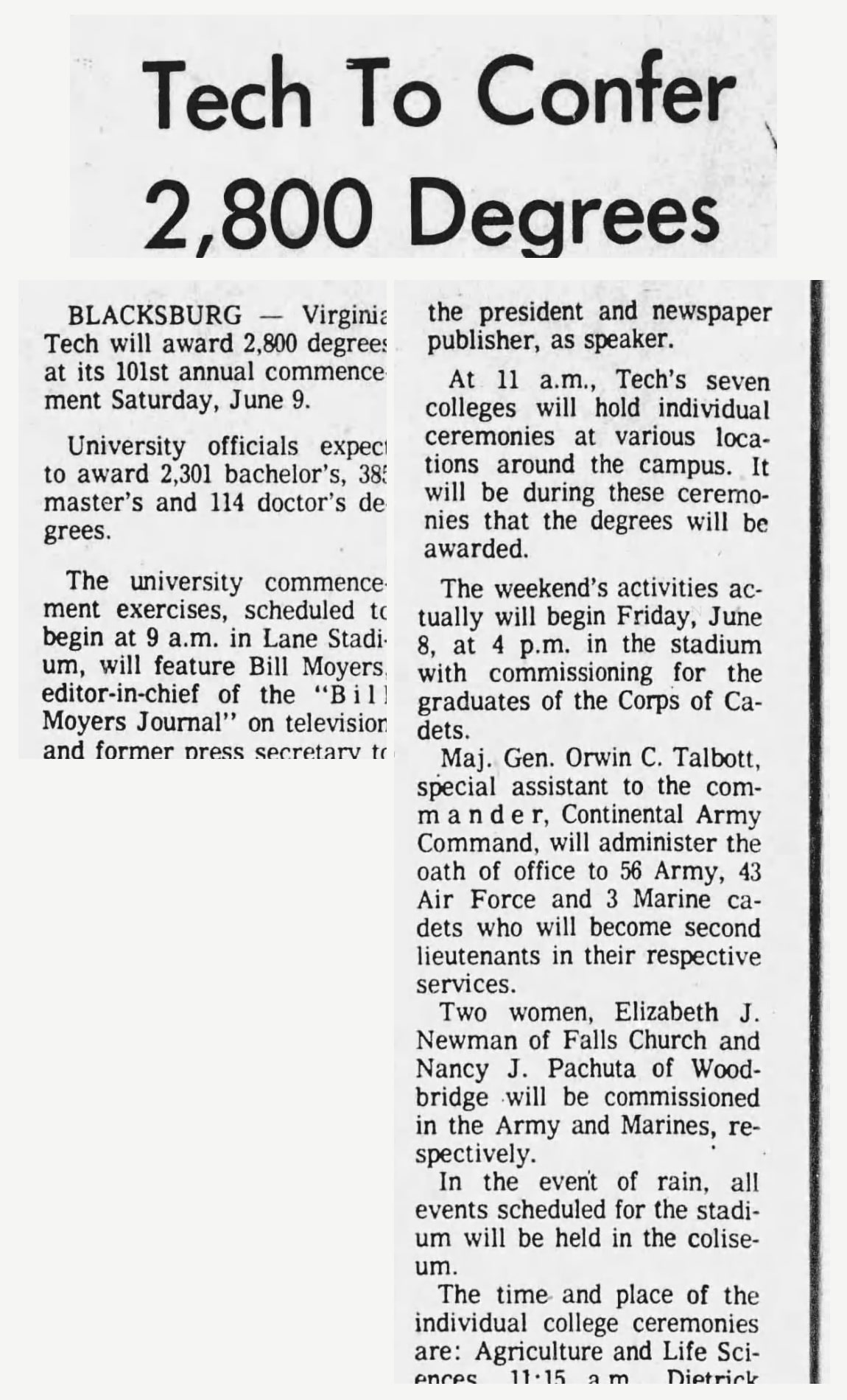
Article excerpt headed Tech To Confer 2,800 Degrees, naming Elizabeth Newman among the women to be commissioned
Tech To Confer 2,800 DegreesThe Roanoke Times, May 31, 1973. Commissioning preview naming Elizabeth J. Newman and Nancy J. Pachuta; source scan The_Roanoke_Times_1973_05_31_2.pdf. Excerpt.Read larger
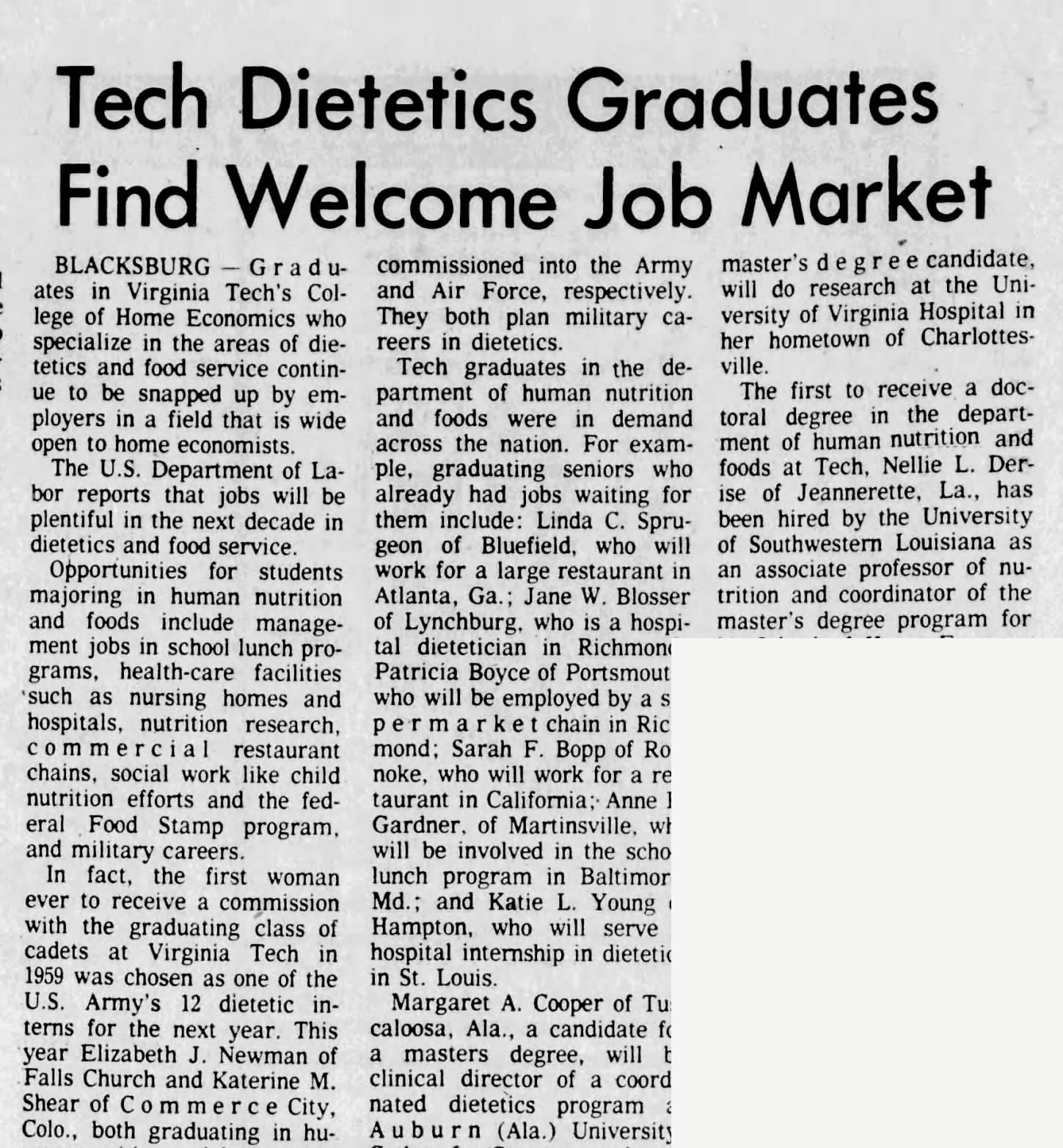
Article excerpt headed Tech Dietetics Graduates Find Welcome Job Market, naming Elizabeth Newman and Katherine Shear
Tech Dietetics Graduates Find Welcome Job MarketThe Roanoke Times, June 14, 1973. Betty and Katherine Shear appear in the article; source scan The_Roanoke_Times_1973_06_14_76.pdf. Excerpt.Read larger

Sources and photographs

“Women Join Corps Ranks To Receive Commissions,” Techgram, July 1973, Division of Information Services, Virginia Tech. Scans supplied by Special Collections and University Archives.

Women in the Corps of Cadets · Virginia Tech ArchivesPatricia Miller’s 1959 commission · Virginia Tech Archives

The two University Relations photographs shown above are credited by their archive image identifiers.

HomeBetty’s Story & PhotosBetty’s Photo Album

Family photographs

Betty’s Photo Album

Family history · 1951–1964Betty’s early years alongside Army life

Family photographs and cards tell one part of the story. The wider events below happened in the same years; they do not imply Betty or Jack took part in those events.

Jean holding baby Betty

A family begins

Betty & family: Betty was born March 19 at West Point. Jean and Jack had married there in 1949.

Jack’s record: Jack was an Army officer; the family photographs place him at West Point.

View West Point photographs
Betty with an adult at White Sands, September 1952

Las Cruces and White Sands

Betty & family: Family labels place toddler Betty in Las Cruces and at White Sands, including an August 1953 photograph.

Jack’s record: These images identify family places, not Jack’s assignment or work.

Explore New Mexico photos

Rocket Kindergarten

Betty & family: A family-held certificate records five months at Rocket Kindergarten at Redstone Arsenal, completed in May 1957. A separate family photo labels Betty at Redstone at age seven.

Jack’s record: The certificate and photograph establish a family connection to Redstone; they do not specify his role there.

View the Redstone photo

Greetings from Montgomery

Betty & family: Eileen’s transcription of a Newman Christmas card says the family was enjoying Maxwell in 1959.

Jack’s record: The same note says Jack found War College interesting. The year comes from the family note, not the selected scan.

View the Air War College card

Across the Atlantic

Betty & family: A 1960 Christmas card sends greetings from London. Family-labeled photographs place Betty in Redhill and the family in England in the early 1960s.

Jack’s record: The surviving family items do not identify a specific assignment in England.

Explore England photos
Wider Cold War context and sources

During Betty’s West Point infancy, the Korean War was underway. White Sands was an Army proving ground for early missile work. Explorer 1 launched from Cape Canaveral in January 1958 using a vehicle developed by the Army Ballistic Missile Agency at Redstone. The Cuban Missile Crisis took place in October 1962, while family records place the Newmans in England. These are parallel historical events, not claims that Betty or Jack witnessed or worked on them.

Sources: U.S. Army history; White Sands Missile Range Museum; NASA Explorer 1 history; U.S. State Department. Family dates come from approved photographs, Christmas cards, Eileen’s notes, and the family-held kindergarten certificate.

Chapter 1: Born into a Military Family at West Point

16 photographs · 1 Christmas card

Family origins, West Point, and Betty’s earliest years.

17 items

Chapter 2: An Army Brat Childhood

87 photographs · 7 Christmas cards

Childhood across Army postings, England, and Virginia.

Explore by place

Choose a place to browse photos with confirmed family labels. Other childhood photographs remain in the full chapter.

Chapter 3: J.E.B. Stuart, Virginia Tech, and the University of Maryland

5 photographs · 1 Christmas card

6 items

Chapter 4: An Army Dietitian

7 chapter photographs · 1 linked Navy portrait

Commissioning, dietetics, and uniformed service.

8 items

Chapter 5: Meeting Dad and Starting a Family

61 photographs

Betty, Dave, and the family years; some service and family dates overlap.

Chapter 6: Retirement and Florida Life

2 photographs

Florida and the later years together.

Date or period still unknown

28 photographs

These photographs remain separate until their period can be confirmed.

Read Betty’s Story
HomeBetty’s Story & PhotosGrandpa Jack’s Christmas Cards

Family card designs

Grandpa Jack’s Christmas Cards

Open full-size image
Know more about this photo?

Recognize a person or place, or remember when this was taken? Please contact Eileen with the photo number shown above. She reviews details before any caption changes.

HomeGuestbook

10 / Memories to keep

Share a memory of Betty

A guest book is being prepared for family and friends.

When it opens, guests will be able to leave their name and a memory, then choose whether the message may be shared with other guests or kept for the family. Eileen will review every message before anything is displayed. The website is not collecting guest entries yet.

Guest book not open yet
HomeCeremony

At the gravesite

Betty’s military ceremony

Full military funeral honors with escort are arranged for her in-ground interment.

Expect a military band and escort, a bearer team carrying Betty’s urn, three loud rifle volleys, Taps, and the folding and presentation of the flag. Follow cemetery staff’s cues.

Procession, honors, and ceremony guide

How the funeral procession works

  1. Be ready by 2:15 PM. Guests and vehicles should already be in the designated funeral staging area, with everyone seated in a vehicle for the procession.
  2. Leave when directed. A cemetery representative directs departure, typically 10–15 minutes before the 3:00 PM service. Follow the actual instructions from staff that day.
  3. Drive together. Cars move slowly as one line. Keep pace with a safe following distance, stay in line, and do not pass other procession vehicles.
  4. Park and walk to the service. Staff will direct you where to park near the burial section and when to leave your car. Roadside or curbside parking is expected; if directed to a curb, park alongside it rather than on top of it. Guests will then be guided on foot to Betty's in-ground gravesite. The walk may involve grass and uneven ground; choose stable shoes. Distance and accessible path conditions are not yet confirmed. If you need mobility help, let Eileen know in advance.

Betty's military funeral honors

Betty's in-ground burial is arranged with full military funeral honors with escort. The honors arranged for her service include a military band, escort, casket team, bugler, and firing party. For Betty's cremation interment, the military bearer team will carry her urn. The cemetery representative directs guests' movements; the military officer in charge gives the ceremonial commands.

At the gravesite, guests can expect three rifle volleys, the playing of Taps, and the folding and presentation of the American flag to Betty's next of kin. The rifle volleys will be loud. Please prepare children and anyone sensitive to sudden sound.

What the ceremony means

Interment. Betty's cremated remains will be buried in an urn in the ground. Cremation can be followed by burial; at Arlington, placement in a columbarium niche is called inurnment. Navy ceremonial bearers will carry Betty's urn. A military escort and band will provide a formal Navy tribute.

Rifle volleys and Taps. The firing party will fire three coordinated volleys with blank ammunition. These are three sudden, loud bursts, so please prepare anyone who may be startled. This rifle salute is different from a 21-gun salute, which uses artillery. The history and significance of Taps (opens in a new tab): the 24-note bugle call was introduced during the Civil War in 1862 as a lights-out call and later used at military funerals.

The flag. During honors, the American flag is held above Betty's remains. After Taps, it is folded into a triangle with the blue field and stars showing and presented to her next of kin in gratitude for her service. Please follow cemetery staff's cues; civilians traditionally place a hand over the heart during Taps.

An Arlington tradition. The Navy Arlington Ladies have a tradition of offering condolence cards at Navy funerals. An Arlington Lady's presence at Betty's service has not been confirmed.

Why in-ground burial at Arlington is special

Arlington has particularly strict eligibility rules for in-ground burial. Betty's cremated remains will be interred in a grave marked with a headstone. The cemetery has confirmed her in-ground interment; this family guide does not make an independent eligibility determination.

Federal rules include routes for certain service members who die on active duty, military retirees, and recipients of specified military awards. For retired Reservists, the rule requires non-training active-duty service, official retired-list status, and entitlement to military retired pay; the last period of active duty must have ended honorably. Retirement from active duty with retired pay is a separate route. Read 32 CFR § 553.12 (opens in a new tab)

Learn more about burial at Arlington

These official pages explain the broader process. They are background reading for guests; the family has already arranged Betty's service.

In the Roman Catholic calendar, November 1 is All Saints’ Day and November 2 is All Souls’ Day, a day of remembrance for the departed. Betty’s burial falls on All Souls’ Day. 2026 Catholic liturgical calendar (opens in a new tab)

HomeArlington National Cemetery

Remembering and learning

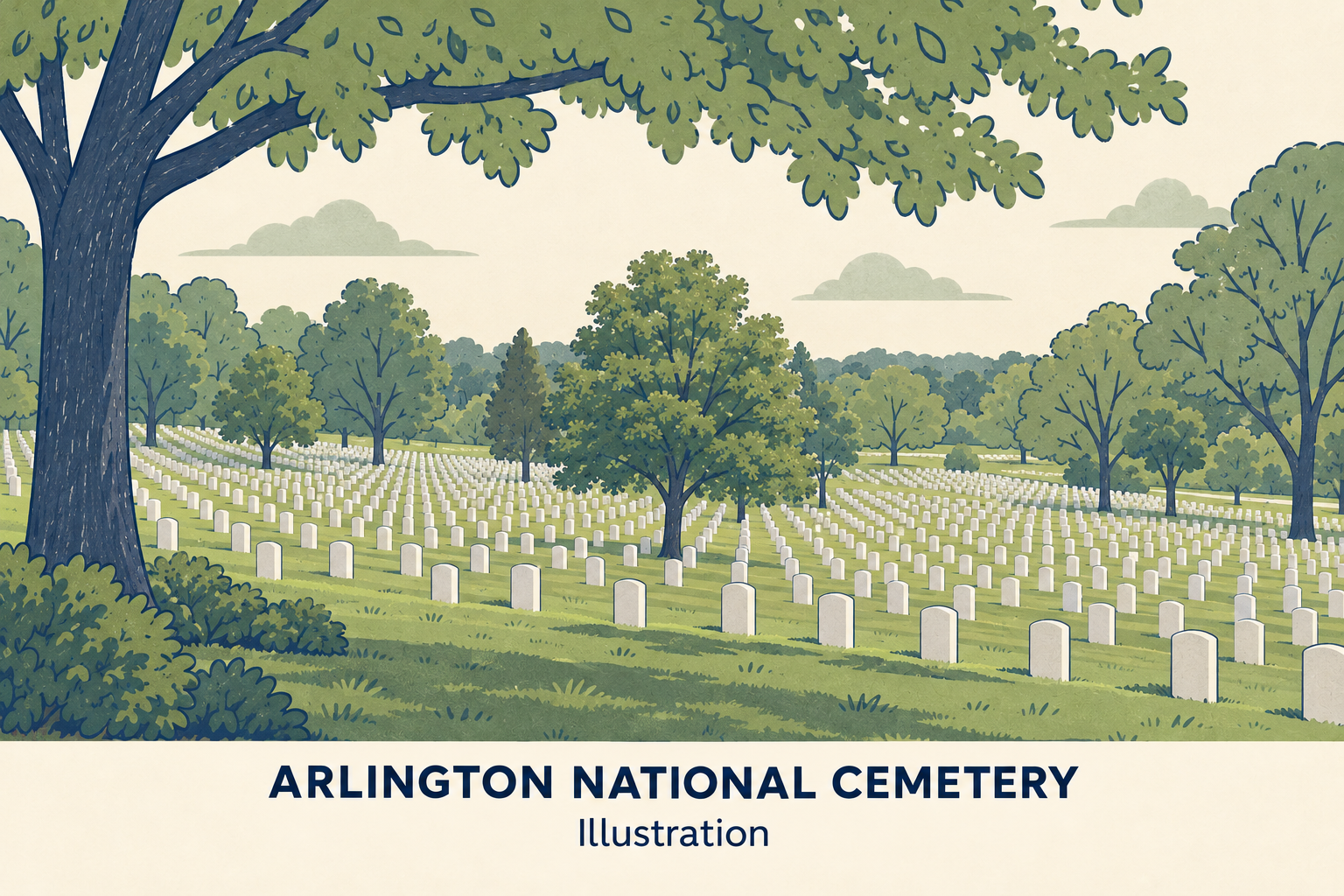
Arlington National Cemetery

Explore the symbols, people, and traditions visitors ask about.

Symbols and student questions

For current notices, see Arlington’s website or Arlington National Cemetery on Facebook. For stories and ceremony videos, visit Arlington’s YouTube channel.

What do red poppies symbolize?

The red poppy became a symbol of remembrance after World War I and John McCrae’s poem In Flanders Fields. The poppies on this family site are a tribute to Betty’s service and to those remembered at Arlington; they are not an official ANC emblem. Veterans Affairs history

Why do people leave stones on headstones?

Placing a small stone is a Jewish remembrance custom. It can mark a visit and honor the person buried there. Other visitors may leave stones for their own personal reasons, so we cannot know the meaning of each one. ANC prohibits commemorative items, so please do not leave stones here. National Park Service example

What do coins on a service member’s headstone mean?

A coin generally says someone visited and paid respects. A commonly shared tradition gives each coin a more specific meaning:

Photograph of a U.S. pennyPenny
Someone visited.
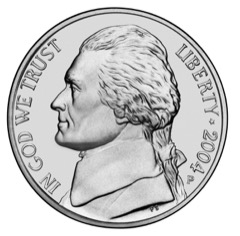
Photograph of a U.S. nickelNickel
The visitor trained with the service member at boot camp.
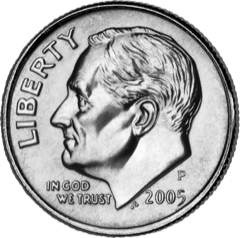
Photograph of a U.S. dimeDime
The visitor served with them.
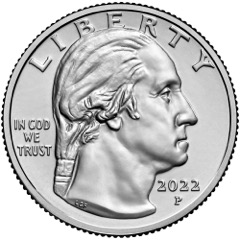
Photograph of a U.S. quarterQuarter
The visitor was with them when they died.

These meanings are a tradition, not a way to verify any particular visitor’s relationship. ANC prohibits commemorative items, so please do not leave coins here. American Legion post explanation

What do the symbols engraved on headstones mean?

Many are emblems of belief, chosen to represent the person’s faith or sincerely held beliefs. Arlington’s educational materials trace how the range of approved emblems has grown over time. Arlington’s education guide

Why do some older headstones have pointed tops?

Some government-issued markers for Confederate soldiers have pointed tops. Congress authorized a distinct design for Confederate graves in national cemeteries in 1906, using the same size and material as Union markers but omitting the shield and changing the top from rounded to pointed. Later regulations allowed a small Confederate Cross of Honor on the marker. The National Archives explains this history and shows an example from Arlington.

What is Section 16?

Congress authorized a section for Confederate burials at Arlington in 1900. Its graves were arranged in concentric rings, and a Confederate Memorial was erected there in 1914. The section reflects a contested period of national reconciliation, racial exclusion, and changing ideas about whom the nation commemorates.

The memorial’s bronze sculpture was removed in 2023; the graves remain. As of October 2026, Arlington says the Army expects to display the conserved Moses Ezekiel sculpture in Section 16 in 2027, with historical interpretation. Read Arlington’s Section 16 history and current plans

What is the Tomb of the Civil War Unknowns?

Near Arlington House in Section 26, on land that was once part of its rose garden, this memorial stands above a vault containing the remains of 2,111 unidentified Civil War dead. Dedicated in September 1866, it was Arlington’s first memorial to soldiers who died in battle and could not be identified. Nearly 1,800 remains came from the Bull Run battlefields; others were gathered along the route to the Rappahannock River.

The scale of Civil War deaths overwhelmed existing cemeteries. U.S. Army Quartermaster General Montgomery Meigs proposed using the Arlington estate, which the Army had occupied since 1861, as a burial ground. Arlington says the vault likely holds both U.S. Army and Confederate soldiers. This memorial is separate from the Tomb of the Unknown Soldier, dedicated in 1921. Read Arlington’s history of the Civil War Unknowns

Why are small flags placed at graves?

For Memorial Day, the 3rd U.S. Infantry Regiment places American flags at Arlington graves and niche rows in the tradition called “Flags In.” The flags honor those laid to rest here. Arlington ceremony information

How can I visit a gravesite?

Use ANC Explorer to find a grave and walking directions. Family vehicle passes are for gravesite visits only, not sightseeing.

Fresh cut flowers may be placed at any time. ANC permits artificial flowers October 10 through April 15 and wreaths December 1 through January 31. Do not attach anything to a marker. Other commemorative items are prohibited, and items left at graves may be collected during maintenance. Read ANC’s current gravesite guidance

For visitors: These explanations describe what you may see. ANC allows fresh cut flowers at any time, with seasonal rules for artificial flowers and wreaths. Coins, stones, and other commemorative objects are prohibited. Cemetery staff may remove faded flowers and collect items during maintenance. Do not attach anything to a headstone or niche cover; please leave existing tributes undisturbed. Read current gravesite guidance

More Arlington questions

What are the historic Officers’ Sections?

Sections 1, 2, and 3 grew into Arlington’s historic officers’ sections as high-ranking Civil War veterans sought burial here in the late 1870s. Section 2 includes Fleet Admiral William F. Halsey Jr. (Grave 1184), Gen. Claire L. Chennault, and Gen. Daniel “Chappie” James Jr. (Grave 4968). These sections also hold many other service members and notable graves. ANC section history · Notable military figures

Why is Section 21 called the Nurses Section?

Section 21 is the resting place of 653 nurses who served in the U.S. armed forces. The Nurses Memorial, a marble figure representing the Spirit of Nursing, was unveiled here in 1938. Explore the Nurses Memorial

Why are so many children buried in Section 15?

Section 15 once served as a burial area for people connected to Fort Myer, including service members, post employees, and their families. Many infants and young children rest there. An Army history article notes clusters of infant death dates in 1947 and 1951 and discusses illnesses circulating in those years, but it does not establish what caused each child’s death. The section also contains other burials, including foreign nationals. Read the Army’s Section 15 history

What makes Section 27 historic?

Section 27 is one of Arlington’s oldest burial areas. Its first burials in 1864 included Black and white U.S. service members side by side. After Arlington became a national cemetery that June, burials were segregated by race and rank, and Section 27 became an African American burial area. It holds approximately 1,500 United States Colored Troops and more than 3,800 Black freedpeople, as well as the graves of Arlington’s first four military burials. ANC says its records do not show residents of Freedman’s Village buried here. Read ANC’s Section 27 history

Which presidents are buried at Arlington?

Two U.S. presidents are buried here: William Howard Taft (Section 30) and John F. Kennedy (Section 30, Lot 45). See Arlington’s presidents guide

Are protests or political campaigning allowed?

Demonstrations are prohibited on cemetery grounds, and memorial services and ceremonies may not include partisan political activity. These are rules about activities at Arlington, not about a visitor’s political affiliation. Read the official visitor rules

What honors do spouses and dependents receive?

For an eligible spouse or other dependent of a service member, Arlington arranges a casket team or body bearers and can provide a military chaplain if requested. Additional military funeral honors are rendered only if the person being buried also served. Betty served in the military herself; the honors arranged for her are based on her own service. Read ANC’s military funeral honors fact sheet (PDF)

Why is a spouse’s name sometimes on the back of a headstone?

Eligible spouses and dependents are generally buried in the same gravesite as the service member, with all names on one marker. On many upright headstones, a spouse’s or dependent’s inscription is on the back, so it is worth looking at both sides. Marker styles and older practices vary. See Arlington’s guide to grave markers · ANC headstones and niche covers

Why do Arlington’s grave markers look different?

Arlington’s earliest graves were marked with wooden boards. Starting in 1873, the War Department replaced them with more durable markers. Families could also purchase private markers in older sections, which helps explain the range of shapes and materials seen today. A larger or more elaborate marker does not tell you a person’s rank. ANC stopped accepting requests for new private markers in 2017. See ANC’s illustrated grave-marker guide (PDF)

Why are some headstone letters darker?

Early Arlington headstones had personal information and a gravesite number etched into white stone. Later, lithochrome, a water-resistant paint, darkened the letters to make inscriptions easier to read. The blackening fades unevenly, even on the same headstone.

ANC now uses lithochrome only on headstones ordered for first interments in Section 60 and on niche covers in Columbarium Courts 1–9 and the Niche Wall. A replacement headstone ordered for another reason does not receive it; a replacement niche cover does. Read ANC’s lithochrome policy

Dark lithochrome letters on an Arlington grave marker
Example photo: Arlington National Cemetery
Why does ANC no longer accept private markers?

ANC says the original 13 sections designated for private markers were full by December 2017. Private markers need more space for their foundations and for grounds care than government-issued headstones. ANC also cites limited space, maintenance needs, and safety concerns, so it no longer accepts requests for new private markers. Read ANC’s private marker policy

Four firsts in Arlington’s burial history

First recorded burial on the estate: Mary Randolph died in 1828 and was buried near Arlington House along Custis Walk, decades before the property became a national cemetery. She wrote The Virginia House-Wife. Read her story · National Park Service

First military burial: Pvt. William Henry Christman of the 67th Pennsylvania Infantry was buried on May 13, 1864, in Section 27, Grave 19. He died of illness in a Washington hospital. Read Arlington’s account

First combat casualty buried: Pvt. William B. Blatt of the 49th Pennsylvania Infantry was buried on May 14, 1864, in Section 27, Grave 18, after being wounded during the Overland Campaign. Explore Section 27

First president buried: William Howard Taft was buried at Arlington in March 1930. His grave is in Section 30. Visit his gravesite page

For more stories from those first days, read Arlington National Cemetery Tours’ article on the first military burials.

Lives behind the headstones

Grave of the Day

Meet people buried at Arlington National Cemetery. Today’s feature follows the calendar in Eastern Time; choose any name to read it now.

Grave locations are from Arlington and National Park Service materials. Check ANC Explorer for a current walking route, and please keep visits quiet and respectful.

A place many visitors come to remember

President John F. Kennedy at Arlington

After President Kennedy was assassinated in November 1963, Jacqueline Kennedy wanted his grave to be accessible to the public. He was buried at Arlington on November 25, 1963. She lit the eternal flame that still marks his gravesite; the present memorial setting was completed in 1967.

Jacqueline Bouvier Kennedy Onassis and two of their infant children are buried alongside him in Section 30, Lot 45. His brothers Robert and Edward Kennedy are buried nearby. Kennedy had visited Arlington on Veterans Day in both 1961 and 1963, placing a wreath at the Tomb of the Unknown Soldier on his first formal visit.

The JFK Library describes the gravesite’s Cape Cod granite, its view toward the Lincoln Memorial, and the design that welcomes visitors to the eternal flame.

Kennedy faced anti-Catholic bias during the 1960 presidential campaign. His response helped shape a national conversation about religion and public office.

After his death, Jacqueline Kennedy shaped a state funeral that drew on traditions from Abraham Lincoln’s funeral. Black drapery at the White House expressed the nation’s mourning. The JFK Library’s funeral timeline follows the procession from the Capitol to Arlington, where Jacqueline Kennedy lit the eternal flame on November 25.

Television brought the mourning into homes across the country. ABC, CBS, and NBC stayed with the story for four days; NPR reports that the funeral procession was watched in 93 percent of U.S. homes with a television.

Read Arlington’s JFK gravesite historyExplore the gravesite design · JFK LibraryMeet the Kennedy family · JFK LibraryKennedy and religion · JFK LibraryHow JFK addressed anti-Catholic bias · HISTORYMourning JFK · White House Historical AssociationNovember 22 and the state funeral · JFK LibraryHow live TV helped America mourn · NPRJFK stories and activities for young visitors · NPSFind the gravesite on ANC ExplorerWatch Jacqueline Kennedy and family at the gravesites in 1972

Self-guided walking tour

Women’s Military Service

Walk through the stories of women whose service shaped military history. Arlington’s tour is about 4 miles and begins in Section 35; the full route is rated high exertion.

Open the Women’s Military Service tour (PDF)

Also explore Women’s Rights (PDF) and all of Arlington’s themed tours.

Places visitors often explore

Arlington highlights these places in its visitor materials; this is not a ranking by visitor count.

A year before Arlington dedicated its Tomb, Britain buried its World War I Unknown Warrior at Westminster Abbey. France honored its Unknown Soldier at the Arc de Triomphe that same day; his final burial there followed in January 1921.

Looking for a grave or a route? Yes, Arlington’s ANC Explorer map is also available on the web. Open the official ANC Explorer map

From Arlington’s YouTube channel

Sights and Sounds of Arlington

Listen to the solemn notes of Taps in this short video from Arlington National Cemetery.

Watch on YouTubeMore videos from Arlington

The year at Arlington

Traditions and annual observances

These traditions happen at different times of year. Check Arlington’s current ceremonies and event notices before planning a visit.

Memorial Day and “Flags In”

Before Memorial Day weekend, soldiers of the 3rd U.S. Infantry Regiment, The Old Guard, place small American flags at headstones and columbarium rows. The Army describes each flag as placed one boot length from the base of a headstone or niche. This is a Memorial Day tradition, rather than a Veterans Day event. Arlington also holds a national Memorial Day observance at the Memorial Amphitheater. Army: Flags In · Arlington: Memorial Amphitheater

Flowers of Remembrance Day

Around Memorial Day, Arlington has invited visitors to place a provided flower at the Tomb of the Unknown Soldier during this organized observance. The event honors the tradition of Decoration Day, first observed nationally at Arlington in 1868. Dates and participation instructions change each year. Arlington event information

Veterans Day · November 11

The national Veterans Day observance honors all who served. Arlington’s annual program includes a wreath laying at the Tomb of the Unknown Soldier and a ceremony at Memorial Amphitheater. Public access to each part can vary, so check that year’s announcement. Arlington’s 2025 example

Wreaths Across America · December

During this annual event, volunteers place remembrance wreaths at graves and columbarium niches under Arlington’s event instructions. Family pass holder and public volunteer opportunities can have different dates and entry rules. Arlington’s event page

Each Christmas, Dan and Dee Booth, Aaron’s parents, made a donation to Wreaths Across America in Betty and Dave’s honor as their gift. Sponsor a wreath at Arlington

Easter Sunrise Service

Arlington’s Memorial Amphitheater hosts an annual Easter sunrise service. This is a religious observance, distinct from the Memorial Day and Veterans Day national ceremonies. About the amphitheater

HomeNational Mall

Explore Washington, DC

The National Mall

Memorials, museums, and open space at the heart of the city. Choose a few stops and check the map before setting out.

The Smithsonian museums: where to start

The Smithsonian is a group of museums, each with a different focus. Admission is free at its Washington-area museums, though some require free timed-entry passes. These two Mall museums make an excellent first pair; check current hours and entry details before you go.

National Museum of American History

Start here for American life and history told through objects. One highlight is the original Star-Spangled Banner, the enormous Fort McHenry flag that inspired Francis Scott Key’s song. Made in 1813 by Mary Pickersgill and others, it originally had 15 stars and 15 stripes. The museum displays it in a specially protected gallery.

A surprise in the song: Francis Scott Key set his words to an existing English tune, “To Anacreon in Heaven.” The melody is generally credited to John Stafford Smith and was used by the Anacreontic Society, an 18th-century gentlemen’s music club in London. Hear the melody and read its history · Smithsonian

Plan an American History visitSee the Star-Spangled Banner exhibitionFacts about the flag · SmithsonianThe anthem’s wider history · HISTORY

Listen to the anthem

Two service-band performances. Playback starts only when you press play.

U.S. Army Field Band · chorus and bandOpen the Army recording and credits
U.S. Navy Band · Amy Broadbent, solo voiceOpen the Navy recording and credits

A different interpretation: José Feliciano’s personal rendition at the 1968 World Series drew criticism at the time and helped open the way for later artists to interpret the anthem in their own styles. Watch Feliciano’s rendition The 1967 guitar he played at that game is now in the National Museum of American History’s collection. Read the Smithsonian’s guitar story Hear NPR’s story of his World Series guitar

National Museum of Natural History

Explore the natural world through fossils, gems, oceans, animals, and human origins. The Hall of Fossils follows life across deep time, while the Hope Diamond is a favorite stop in the gems and minerals galleries. The museum map helps you choose a few exhibits without trying to see everything at once.

Plan a Natural History visitNatural History museum map

More Smithsonian choices

For another day, consider Air and Space, African American History and Culture, or the National Museum of the American Indian. The Smithsonian directory lists all its museums and current visitor information; check pass rules for the museum you choose.

Browse all Smithsonian museumsAir and SpaceAfrican American History and CultureNational Museum of the American Indian
Japanese cherry blossoms in Washington

Washington’s Japanese cherry trees began with a 1912 gift of friendship from the people of Japan. Eliza Scidmore spent years advocating for the trees, while botanist David Fairchild tested whether they would thrive near Washington. First Lady Helen Taft and Viscountess Chinda planted the first two trees beside the Tidal Basin. Their blossoms are a spring sight around the Tidal Basin and nearby memorials; Betty’s November gathering is outside bloom season.

History of the cherry trees · NPSWhere to see blossoms · Destination DCScidmore and Fairchild · SmithsonianFirst ladies and cherry blossoms · White House Historical AssociationCherry blossom history · NPR
The National Archives

What is there? The National Archives preserves federal records in many forms. Its Washington museum displays the Declaration of Independence, Constitution, and Bill of Rights in the Rotunda, along with other historical documents and exhibits. The museum is only one window into the much larger collection.

Visiting: The museum entrance is at 701 Constitution Avenue NW. Current posted hours are daily, 10 AM–5:30 PM. Admission is free and walk-ins are welcome; optional timed-entry reservations cost $1. Check the official visitor page before going.

Security: Everyone passes through screening. Each visitor may bring one bag no larger than 17 × 26 inches. Weapons, pepper spray, and aerosol sprays are among prohibited items. Review the full rules before arriving.

Explore from anywhere: The online National Archives Catalog lets you search descriptions of records and view digitized or electronic records where available. It is a valuable starting point for family and history research; many holdings still require an in-person or other research request.

Museum hours and exhibitsSecurity and visit tipsSearch the online CatalogNational Archives home
HomeWhite House & President

Around Washington, DC

White House & President

Answers to a couple of questions visitors often ask.

How do the three branches of government work?

Legislative: Congress makes laws. Executive: The president and executive agencies carry them out. Judicial: Federal courts interpret laws and decide cases. Each branch has ways to check the others’ power.

Dolley Madison and Washington’s portrait

Dolley Madison helped shape the public role now known as first lady while James Madison was president. As British forces approached Washington in August 1814, she arranged to protect Gilbert Stuart’s portrait of George Washington before leaving the White House. The portrait’s story connects two presidents and one of the capital’s most dramatic moments.

HomeBetty’s Favorite Games

A little room for curiosity

Betty’s Favorite Games

Akinator

Think of a public figure.

How this game works

The site bundles public facts from a CC0 Wikidata snapshot. It asks up to 20 questions, then offers a guess when the facts support one. The collection is limited and public data can be incomplete. Your answers stay in this browser.

Sudoku

Fill each row, column, and 3×3 box with the numbers 1 through 9.

Cryptograms

Decode the message. Each letter always stands for the same letter.

Conspiracy Corner
Why does Meghan Markle divide opinion?

Discussion brings together disagreements about royal duties, public interviews, privacy, and press scrutiny. These readings explore competing views and documented media treatment without assuming everyone shares one opinion.

Associated Press report (opens in a new tab)IPSO ruling on one column (opens in a new tab)British opinion tracker (opens in a new tab)
Is John Denver still alive? The facts

John Denver died in a plane crash on October 12, 1997. His official biography and the National Transportation Safety Board investigation document his death. A 2022 public-radio report mentioned an unsupported rumor identifying another man as Denver; it supplied no evidence that he survived.

Official biography (opens in a new tab)NTSB investigation (opens in a new tab)Public-radio report on the unsupported rumor (opens in a new tab)
HomeExplore Arlington & DC
Arlington history, trees, and visitor map

05 / The place

About Arlington

Arlington National Cemetery is both a place of remembrance and an active military cemetery. We ask guests to allow time, follow staff directions, and move through the grounds with care.

Visitor entrances, screening, accessibility services, and daily operations are managed by the cemetery. Details can change with security conditions, so the official visitor pages are the best source close to the day.

Atmospheric flat illustration of trees and rows of headstones at Arlington National Cemetery; it is not a map or a view of Betty’s grave.
Arlington landscape · family-approved illustration, not a route or grave location.
The Civil War: why it matters here

The Civil War began in 1861 after years of conflict over slavery and its expansion. Southern states seceded after Abraham Lincoln’s election, and Confederate forces fired on Fort Sumter. The United States fought to preserve the Union; as the war continued, emancipation became central to its outcome. The 13th Amendment ended slavery, while the 14th and 15th Amendments addressed citizenship and voting rights.

The war’s enormous loss of life led to new national burial grounds. Arlington National Cemetery was established on the occupied Arlington estate in 1864. Its graves, memorials, Arlington House, and the history of Freedman’s Village reflect different parts of that conflict and its aftermath.

Washington during the war

Across the Potomac, Washington was the Union capital and a base for its armies. Soldiers built a ring of defenses around the city, and wounded troops arrived from the front. The population grew rapidly as the war reshaped daily life. In July 1864, fighting reached Fort Stevens in northern Washington. Arlington’s occupation and eventual use as a cemetery belong to this wider story of a capital at war.

For a separate day of exploring, the American Battlefield Trust’s Civil War Washington itinerary connects nine sites, including Arlington House, Frederick Douglass’s home, Ford’s Theatre, and Fort Stevens. It estimates about 7½ hours. Check each site’s current hours and tour availability before setting out.

When civilians came to watch

At the First Battle of Manassas (Bull Run) in July 1861, curious civilians traveled from Washington expecting a quick Union victory. Some brought food and opera glasses, but food was practical for the long trip. Most watched from around Centreville, about five miles from the fighting; only a few moved closer. When Union troops retreated, spectators joined the congested flight toward Washington. The familiar “picnic battle” label makes the outing sound more carefree, and closer to combat, than it was for most onlookers.

People also visited battlefields after the fighting. In 1863, Julia Wilbur traveled with other women to the Manassas area. Her diary described wounded soldiers’ stories and traces of the dead still visible on the ground. Her account shows how different those later visits were from watching a battle at a distance.

How the war changed funerals

Before the war, many Americans died and were buried close to home. Soldiers died far away in unprecedented numbers, and families often wanted to bring them back. Embalming became more common because it could preserve remains for the journey. The demand also helped turn undertaking into a larger profession that arranged transport, preparation, viewings, and funerals. Writer Tom Poland also describes how earlier home funerals and locally made coffins gave way to new customs; Lincoln’s widely viewed funeral train helped people see what embalming made possible.
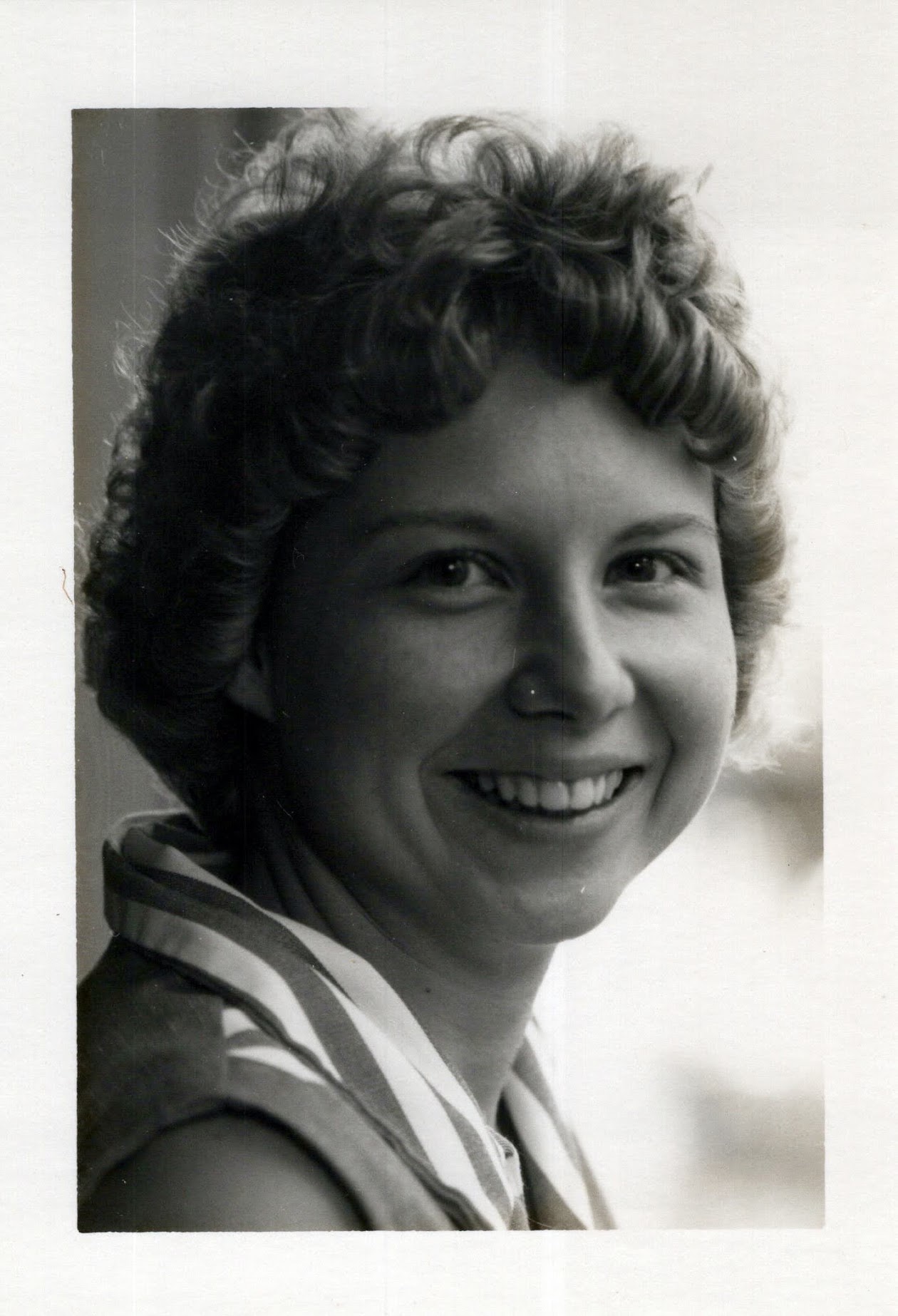
Civil War stories: fact and folklore

Some of the war’s most memorable stories happened beyond Arlington. The sources below help separate documented history from later legend.

Jackson’s arm and Sickles’s leg

After Confederate general Thomas “Stonewall” Jackson’s arm was amputated in 1863, it was buried in the Ellwood family cemetery near the Wilderness battlefield. A granite marker was placed there in 1903, but it identifies only the general area; archaeologists have not found the exact burial spot. The National Park Service also explains how the marker became part of later Confederate memorialization. Union general Daniel Sickles lost a leg to a cannonball at Gettysburg. He donated it to the Army Medical Museum and later visited the display, sometimes bringing guests.
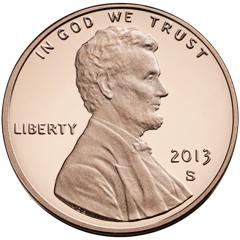
Why a shallow creek could still stop soldiers

At Antietam, the National Park Service describes a waist-deep creek with swift water, slippery footing, and steep banks. Wet wool clothing and ruined black powder added to the risk. The broader claim that most Civil War soldiers could not swim or feared even shallow water is not established by this example.

“Angel’s Glow” at Shiloh

A popular story says some wounds glowed and healed unusually well after the 1862 battle. The glowing bacterium Photorhabdus luminescens is a possible scientific explanation, but there is little historical evidence that glowing wounds were observed at Shiloh. The proposed cause and better survival are hypotheses, not established facts.

How legends spread

The National Archives’ list of unusual Civil War facts includes a correction to a Gettysburg horse-statue tale: the number of raised hooves does not reliably tell you whether the rider survived, was wounded, or died in battle. It is a useful reminder to check a striking story against records and the people who study the site.

Listen: Ghosts of Arlington podcast

A favorite of Eileen’s. Hosted by Jackson Irish, Ghosts of Arlington explores the cemetery’s history through the lives and stories of people buried there. It is an independent podcast, not an official ANC program. Nothing plays automatically.

How Arlington became a cemetery

Arlington National Cemetery was established during the Civil War on June 15, 1864. Its first military burial, Private William Christman, took place on May 13, a month before the formal designation. The first national Decoration Day observance, a predecessor of Memorial Day, was held here in 1868.

Before it was a cemetery, the Arlington estate was a plantation sustained by enslaved African Americans. Freedman’s Village began on the grounds in 1863 for people who had been enslaved; it offered schools, churches, and other services. The government removed the remaining residents in 1900. These histories are part of understanding the place today.

How large was the estate? John Parke Custis purchased 1,100 acres in 1778; his son George Washington Parke Custis later inherited the property. The Army designated 200 acres of that estate for military burials in 1864. Through later expansions, Arlington National Cemetery grew to 639 acres. See ANC’s historical expansion

Before it was a cemetery, the Arlington estate was a plantation sustained by enslaved African Americans. George Washington Parke Custis, Martha Washington’s grandson and George Washington’s stepgrandson, had Arlington House built there between 1802 and 1818 as a memorial to George Washington. Enslaved African Americans built the house. The house later became home to Custis’s daughter Mary Anna Custis Lee, an artist and writer, and her husband Robert E. Lee, who left the U.S. Army and led Confederate forces during the Civil War. The U.S. Army occupied the strategically placed estate in 1861. Freedman’s Village began on the grounds in 1863 for people who had been enslaved; it offered schools, churches, and other services. After a Supreme Court ruling over the property’s seizure, the federal government purchased the estate from the Lee family in 1883. The government removed the remaining village residents in 1900. These histories are part of understanding the place today. The National Park Service preserves the house as Arlington House, The Robert E. Lee Memorial.

A Virginia cookbook from the same era

Mary Randolph published The Virginia House-Wife in 1824, a book the Library of Virginia calls the first American regional cookbook. She was a cousin of George Washington Parke Custis and, according to the National Park Service, the first person recorded buried on the grounds that later became Arlington National Cemetery. The Arlington Historical Society explains how plantation cooking depended on the labor of enslaved people. Mary Randolph was a different person from Mary Custis Lee. This book is historical context, not one of Betty’s recipes.

Why are there so many memorials to Robert E. Lee?

Lee became a prominent symbol after the Civil War. Veterans’ groups, descendants, and later memorial organizations placed his name and image on monuments, schools, and public spaces. Many presented him as an emblem of honor and national reconciliation.

That remembrance was also shaped by the Lost Cause, an interpretation that downplayed slavery’s central role in the war and supported segregation and the exclusion of Black Americans. Historians have since examined Lee and these memorials more critically. At Arlington House, the fuller history includes the Custis and Lee families, the people they enslaved, and Freedman’s Village. In 2022, descendants of both the Lee family and people enslaved at Arlington House supported a proposal to rename the site. As of October 2026, the National Park Service still uses the official title Arlington House, The Robert E. Lee Memorial.

Arlington’s space and Southern Expansion

ANC says it is the final resting place of nearly 430,000 service members and eligible dependents. It projects running out of space for new burials by 2041 under unchanged eligibility rules, or by 2060 with the Southern Expansion project. These are ANC’s planning projections, not fixed closure dates.

Arlington and the U.S. Soldiers’ and Airmen’s Home National Cemetery are administered by the Army. The VA’s National Cemetery Administration manages most of the others: its August 2026 list includes 158 national cemeteries. See the VA list

2020 proposal to change burial eligibility

The Army published a proposed rule in September 2020, and its public comment period closed November 16, 2020. The federal regulatory agenda still lists it at the final-rule stage; the agenda’s August 2026 target was an estimate. These are proposed categories, not the current eligibility rules. ANC says any eventual change would not affect previously scheduled services or VA and state veterans’ cemetery eligibility.

Proposed in-ground interment

  • Service members killed in action, including repatriated remains
  • Medal of Honor recipients; ANC planned to reserve 1,000 gravesites
  • Silver Star or higher award recipients who also have armed conflict service
  • Purple Heart recipients
  • Service members whose deaths resulted from preparations or operations related to combat, as defined in the proposal
  • Former prisoners of war
  • U.S. presidents and vice presidents
  • Veterans with armed conflict service who also held positions of significant governmental responsibility, as defined in the proposal

Proposed above-ground inurnment

  • World War II-era veterans, including legislated active-duty designees
  • Armed Forces retirees eligible for retired pay who are not otherwise eligible for in-ground interment
  • Veterans with at least two years of active duty and armed conflict service
  • Veterans without armed conflict service who held positions of significant governmental responsibility, as defined in the proposal
Why “Department of War” appears on newer pages

1789: Congress established the Department of War under President George Washington. Henry Knox became its first secretary under the Constitution.

1947–1949: The National Security Act created the National Military Establishment in 1947. Congress renamed that organization the Department of Defense in 1949.

2025: An executive order authorized “Department of War” as a secondary title for the Department of Defense. The order says references to “Department of Defense” in law remain controlling unless Congress changes them. The order described the secondary title as a way to emphasize military strength and readiness.

How the Pentagon got its name and shape

The Pentagon was built in Arlington during World War II to house the growing War Department. Its first proposed site was near Arlington National Cemetery. After objections to building there, the site moved downriver, but the architects kept the five-sided design. Ground was broken on September 11, 1941, and construction was completed in February 1943. The building became home to the National Military Establishment in 1947, then the Department of Defense in 1949.

The trees, the Moon Tree, and seasonal walks

Arlington is also a memorial arboretum. Its published overview describes more than 9,800 trees representing about 400 species and varieties. The tree inventory (opens in a new tab) is dated 2015, with a 2018 summary; use it as a guide, not a live map of every tree.

A second-generation American sycamore in Section 48 is known as the Moon Tree. It was planted in 2005 near Apollo 14 astronaut Stuart Roosa’s grave in Section 7A. Seeds from its ancestor traveled around the Moon with Roosa in 1971; the Arlington tree itself did not. Read the Moon Tree story (opens in a new tab)

Cherry trees bloom mainly in spring. The cemetery notes that the Autumnalis variety can sometimes bloom in fall, even November, but blossoms are never guaranteed. Its published cherry guide (opens in a new tab) mentions Section 45 and Crook Walk; Crook Walk has steep steps. For a longer visit, ANC’s mapped arboretum walk (opens in a new tab) is about 2.5 miles and rated moderate.

ANC’s research and conservation archive (opens in a new tab) documents work across different years, including boxwood evaluation, chestnut planting, turf and soil studies, rain gardens, and seed collecting. These are historical project accounts, not a claim that every study is underway now. Explore trees with Medal of Honor stories (opens in a new tab)

The Tomb of the Unknown Soldier

Dedicated on November 11, 1921, the Tomb first honored an unidentified American service member from World War I. The idea arose from the vast number of unidentified dead of World War I and related memorials established by other nations. Britain buried its Unknown Warrior at Westminster Abbey on November 11, 1920, a year before the American dedication. France honored its Unknown Soldier at the Arc de Triomphe that same day and completed the burial there on January 28, 1921. Unknown service members from World War II and the Korean War were interred in 1958. President Reagan presided over the interment of the Vietnam War Unknown in 1984.

DNA testing identified the Vietnam War Unknown as Air Force 1st Lt. Michael Joseph Blassie in 1998. His family reinterred him at Jefferson Barracks National Cemetery in St. Louis, Missouri. The Vietnam crypt remains empty; it was rededicated on September 17, 1999, to honor missing U.S. service members from that war. ANC marked the Tomb’s centennial on November 11, 2021.

Seeing the Changing of the Guard

At the Tomb of the Unknown Soldier, the guard changes every hour on the hour from October 1 through March 31. If you hope to see it on Monday, consider an 11:00 AM or noon visit, with generous time for the approximately 0.7-mile walk from the Welcome Center to the Tomb, uphill sections or a tram, ordinary visitor screening, and your return to the funeral vehicle staging area by 2:15 PM. Tram routes may change around funerals.

A sightseeing visit follows normal visitor access and parking rules; it does not authorize early entry for a funeral vehicle. Funeral-party vehicle entry begins no earlier than 2:00 PM. Check ANC’s current plan and follow staff directions on the day.

08 / If you have extra time

Explore the area

Optional stops for the wider weekend, not a route to fit in before the burial. Time estimates are for the visit itself and exclude travel and screening. Check each official site before setting out.

Browse Arlington and D.C. places
On Memorial Avenue

Military Women’s Memorial

Exhibits honor women who have served. Allow roughly 30–60 minutes during regular public hours; special events may limit access.

Plan a visit (opens in a new tab)
Near Arlington

National 9/11 Pentagon Memorial

A place to remember the 184 people killed at the Pentagon and aboard Flight 77 on September 11, 2001. Check the official site for current access before visiting.

At the Pentagon: Its 184 memorial benches honor people from 3-year-old Dana Falkenberg to 71-year-old John Yamnicky, arranged by birth year. Explore the memorial’s design (opens in a new tab)

Across all the September 11 attacks: The youngest victim was Christine Lee Hanson, age 2½, aboard United Flight 175 with her parents. The oldest was Robert Grant Norton, age 85, a World War II Navy veteran aboard American Flight 11 with his wife, Jacqueline. Their names are remembered at the 9/11 Memorial in New York, not at this Pentagon memorial.

Pentagon Memorial visitor information (opens in a new tab)Christine’s story (opens in a new tab)Robert’s story (opens in a new tab)
Inside Arlington

Nurses Memorial

A quiet tribute in Section 21 by sculptor Frances Rich, who later served in the Navy WAVES. Allow roughly 15–25 minutes at the stop; check the walking route and terrain.

See ANC’s page (opens in a new tab)
Near Rosslyn

Netherlands Carillon

A 53-bell gift from the Dutch people with views across the capital. Allow roughly 20–40 minutes on the grounds. The tower is closed to visitors; do not count on a live concert.

Read the NPS guide (opens in a new tab)
Downtown DC · ticketed

Clara Barton Missing Soldiers Office

A small museum telling the story of Barton’s search for missing Civil War soldiers. Allow roughly 45–60 minutes. Published walk-in days are Thursday–Saturday; Saturday, October 31 may suit some guests.

Check hours and admission (opens in a new tab)
Favorite treats and DC food trends
The Smithsonian museums

Choose a museum that speaks to you. Smithsonian admission in the DC area is free, though a few museums require free timed-entry passes. Check the museum’s current hours and pass rules before visiting.

Browse all museumsAmerican HistoryNatural HistoryAir and Space · passesAfrican American History · passes
Getting around with DC Metro

Metro is a great way to explore the city. Use the official Metro Pulse app for live arrivals and service updates, and check your route before leaving.

Get the Metro Pulse appTrip planner and schedulesMetro map
DC events during the weekend

For visitor activities around November 1–3, browse Destination DC’s current event listings and November guide. Event dates, admission, and availability can change.

Browse DC eventsNovember 2026 ideas

Places to remember

Memorial of the Day

Each day features one memorial in Washington, DC. Explore familiar sites by the Mall and others across the city.

What is the difference between a monument and a memorial?

The National Park Service describes monuments as honoring people, events, or activities, and memorials as recalling people who died or things lost. The ideas can overlap: a place may both honor someone and invite us to remember them.

Read the NPS explanation (opens in a new tab)
Browse memorials on and beyond the Mall

This collection covers major sites and smaller memorials in DC; it is not an exhaustive inventory. For more, explore the National Park Service’s places directory and Destination DC’s monuments and memorials guide.

Mall and Tidal Basin area

    Elsewhere in Washington, DC

      NPS places directory (opens in a new tab)Destination DC guide (opens in a new tab)
      What do DC evacuation route signs mean?

      Some DC street signs have a small District flag and a blue “Evacuation Route” marker. They identify streets in the city’s emergency route network. Other signs point “To Interstate” or “To Downtown.” The signs stay in place all the time; seeing one does not mean an evacuation is underway.

      During an actual emergency, the safest action may be to stay indoors. Follow current instructions from DC officials and police rather than choosing a route from a sign or an older map.

      Explore DC’s route reference map (opens in a new tab)See HSEMA’s Ward 8 map and guide (opens in a new tab)Get current DC alert information (opens in a new tab)Visitor safety tips from Destination DC (opens in a new tab)

      The linked maps are planning references, not live instructions.

      The Potomac River: more than a DC backdrop

      The Potomac runs beside Arlington and Washington, DC. George Washington helped launch an early canal project to make the river more useful for trade. Later, the C&O Canal carried goods between the mountains and Georgetown.

      The river was also a route sought by enslaved people escaping to freedom and a strategic boundary during the Civil War. Pollution damaged it as the region grew; cleanup continues today. The National Park Service says the Potomac supplies about 80% of DC’s water.

      Read 250 Years on the Potomac River · NPS (opens in a new tab)
      Why do DC residents push for statehood?

      Washington, DC is a federal district, not a state. Its residents vote for president, but they have no senators, and DC’s delegate cannot vote on bills before the full House. Statehood supporters want voting representation in Congress and greater control over local affairs.

      One proposal would keep the White House, Capitol, and National Mall in a smaller federal district while admitting DC’s residential and commercial areas as a state. This remains a proposal; DC has not become a state.

      Read DC’s statehood FAQ (opens in a new tab)
      Embassies: diplomacy and surprising stories

      Embassy: A country’s main diplomatic office in another country, usually in the capital and generally led by an ambassador. It manages the relationship between governments and may also provide services to travelers and citizens.

      Consulate: An additional office, often in another city, that focuses on practical needs such as passports, visas, and help for citizens abroad. Services vary by country and office.

      In Washington, the embassies you see represent other countries to the United States. U.S. embassies serve America abroad.

      Look a little closer

      Wondering why a U.S. flag is at half-staff? The National Flag Foundation explains the custom and points readers to current presidential proclamations and local government notices for the reason on a particular day. Read its half-staff guide (opens in a new tab)

      Embassy visits and events depend on each country’s own public access rules.

      More embassy stories · Trip Hacks DC (opens in a new tab)What is a U.S. embassy? · State Department (opens in a new tab)Foreign embassies and consulates in the U.S. (opens in a new tab)Embassy and consulate comparison · Ellis (opens in a new tab)
      Explore DC neighborhood clusters

      DC’s Office of Planning groups the city into stable areas for research and planning. These clusters are useful for exploring the city, but they are not official neighborhood boundaries.

      Use the official D.C. map below to explore the city’s neighborhood clusters.

      Explore the official map (opens in a new tab)
      Get to know Washington, DC

      Read about the city beyond its monuments. Destination DC traces its history from Indigenous communities through the capital’s founding and later growth. EBSCO’s research starter covers DC’s geography, people, landmarks, symbols, and history. The Architect of the Capitol shares stories about the Capitol campus, its art, and the people who care for it.

      Explore the Capitol campus · Architect of the Capitol (opens in a new tab)Read Destination DC’s history (opens in a new tab)Read the EBSCO overview (opens in a new tab)

      A little local curiosity

      A different side of DC, every day

      Curated history and a debunked local legend for extra time between visits. These are for fun, not burial-day directions.

      Today in Washington, DC

      The daily pair follows the calendar date in Washington, DC. Browse at your own pace; nothing is generated by AI.

      HomeWeather

      Check before you travel

      DC & Arlington weather

      Public National Weather Service data for the Arlington area. Observations come from nearby Reagan National Airport; forecasts describe the coming days.

      A look at the skies

      Observed conditions

      Loading current National Weather Service conditions…

      Short-range forecast

      Loading the next forecast periods…

      The National Weather Service forecast generally covers the coming days. A November 2 forecast will appear only when it is within range.

      Open official Arlington forecast (opens in a new tab)
      HomeContact

      11 / A person to ask

      Need a hand?

      Eileen is your main point of contact and is happy to help.

      When possible, please check this guide or Ask Jeeves first, or see if a fellow guest can help. Eileen is happy to answer questions by text or call at 414-379-2960.

      Please be patient if she cannot reply right away during the event weekend; this is an emotional time for her.

      Text Eileen Call Eileen414-379-2960
      Optional: add this site to your home screen

      You can always use the website through its link; no installation is needed. This is an optional browser-based web app, not an App Store download. Live weather and sports scores need an internet connection.

      • iPhone or iPad (Safari): Open the site, tap Share, choose Add to Home Screen, then Add. If shown, choose Open as Web App.
      • Android (Chrome): Open the site, tap the three-dot menu, choose Install and create shortcut, then Install. The menu wording may vary by device.
      • Desktop (Chrome): Open the site, choose the browser menu, then Cast, save, and share → Install page as app, if offered.

      Browser instructions: Apple · Chrome for Android · Chrome desktop.

      Family-approved illustrations provide visual orientation. Follow official signs and staff for actual routes.